My friend Kurt and I have known each other since 7th grade English class, and to this day, I still hold it over him about how he “stole” and dated the girl I had a crush on (to be fair, their relationship lasted about two weeks.)
The same girl ( I won’t give her name away in case they are reading this, and if she is, I truly hope she is doing well) moved away before I could try to make my move, but we did stay in touch and even managed to go to my Senior Homecoming. We even went to the same college, but by then, despite our friendship, I realized she would almost always be out of my league.
As much admiration that I have for Wes Anderson and his films, it wasn’t until recently that I found out I haven’t actually done a proper review of one of his films in some time.
Much of this I will attribute to cowardice on my part: I admit to not being able to completely dissect all he is as an artist. Still, it should not give off the idea that I am not a fan of his films. Very few filmmakers are as unique and eclectic as Anderson is. So distinct is his style that many a youtuber (AI or otherwise) have made their own WA trailers for a menagerie of classic movies, though that joke does not last long after the second or third one viewed. Basically, AI can’t compete with the original.
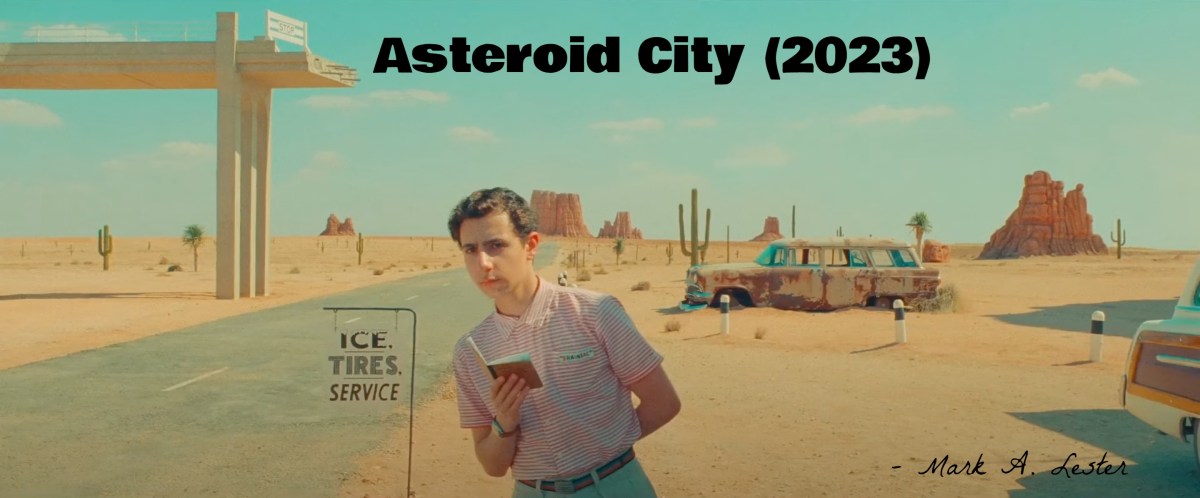
In any case, there is still enough here in Anderson’s 11th film, Asteroid City, to satisfy all fans of this brilliant filmmaker (I myself was surprised to see so many fans in my viewing.) The story centers around a play named Asteroid City, and the back and forth between the making (so to speak of the play) with scenes of the play itself.
Said play takes place in a very remote desert town in 1955, where the visitors for a Junior Stargazer Convention. Events in the play occur that will greatly shift the lives and relationships of the characters.
As is the case with every film by Anderson, the cast is not only stacked quantity wise, but quality wise (thought this is his first film not to star Bill Murray: he reportedly had to back out due to catching COVID). Here are just a few of the stars: Jason Schwartzman, Scarlett Johanson, Tom Hanks, Jeffrey Wright, Tilda Swinton, Edward Norton, Adrien Brody, Jeff Goldblum, Liev Schreiber, Maya Hawke, Steve Carell, Bryan Cranston, Hong Chau, Matt Dillon, Willem Dafoe, and Margot Robbie. It would take too long to describe each of the performers’ roles, and would (more importantly) rob you of finding them out for yourself. The cast is more proof that Anderson is one of the most respected director’s in an actor’s eyes, and to read just a few lines of dialogue is a chance to jump upon.
Admittedly, Anderson was one of the first directors I discovered to show me how a shot could be framed. When the camera is still (which is a majority of the time), you can admire all the detail centered around the character, from the backgrounds to the angles of the walls to a single cup on the floor. It is always quietly breathtaking, especially on a big screen.
Parents, this is one of the rare examples of a PG-13 movie with graphic female frontal nudity (although it is very brief and non sexual). The rest is casual swearing. Make of that what you will (remember that Titanic was the same rating and had more nudity in it.)
I am still not sure what it is entirely that does not completely work about the film. Perhaps it is just not in the same league of Anderson’s best works, like The Royal Tenenbaums (2001), Fantastic Mr. Fox (2009), Moonrise Kingdom (2012), and The Grand Budapest Hotel (2014). It could be that the director threw much at the window before he saw what stuck.
Either way, even if it isn’t his best, that does not mean it is unenjoyable.
Until recently, I had that unbearable feeling that all maestro movie goers get: that they are agreeing too much with other critics.
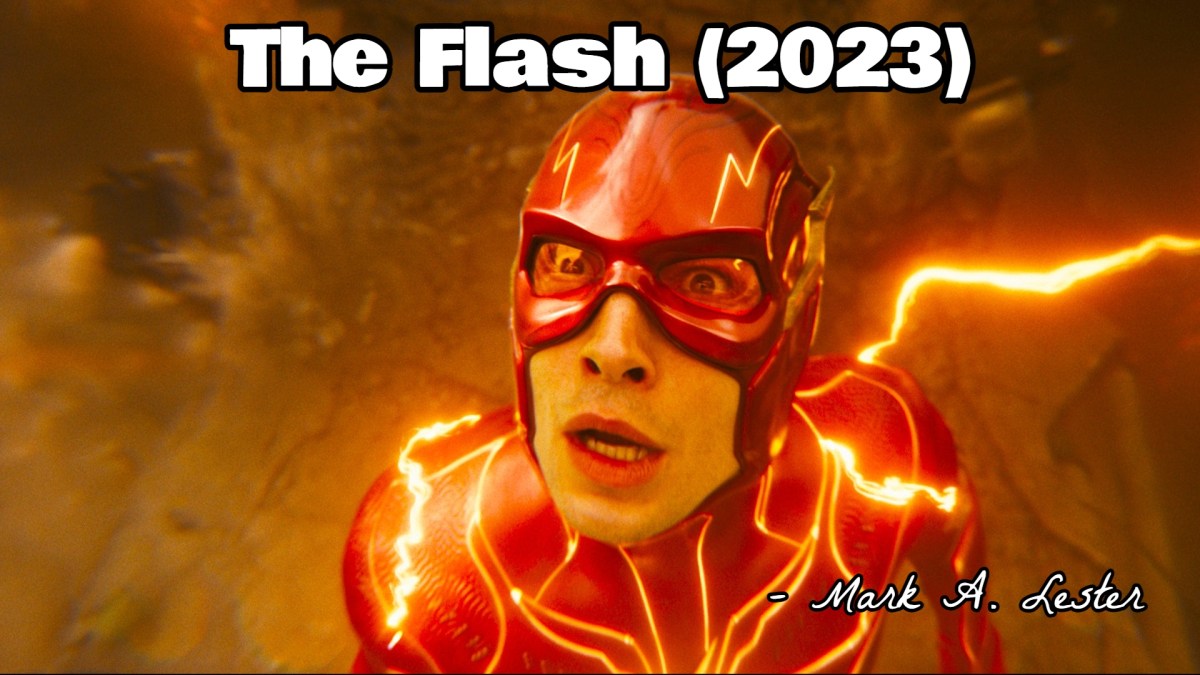
Nowadays, all one has to do is go to Rotten Tomatoes and/or Meta Critic and see where one stands against one’s peers. As of late, it seems I have been agreeing with most people on the taste of recent movies. Now comes The Flash, which is sitting at 67% on the tomatometer. That it gives me a chance to disagree with the tomatometer is one of the few positives of the film I can think of.
Like many a nerd, I have spent the last few weeks glued to my Nintendo Switch playing The Legend of Zelda: Tears of the Kingdom (which I admit to playing as I do this review)
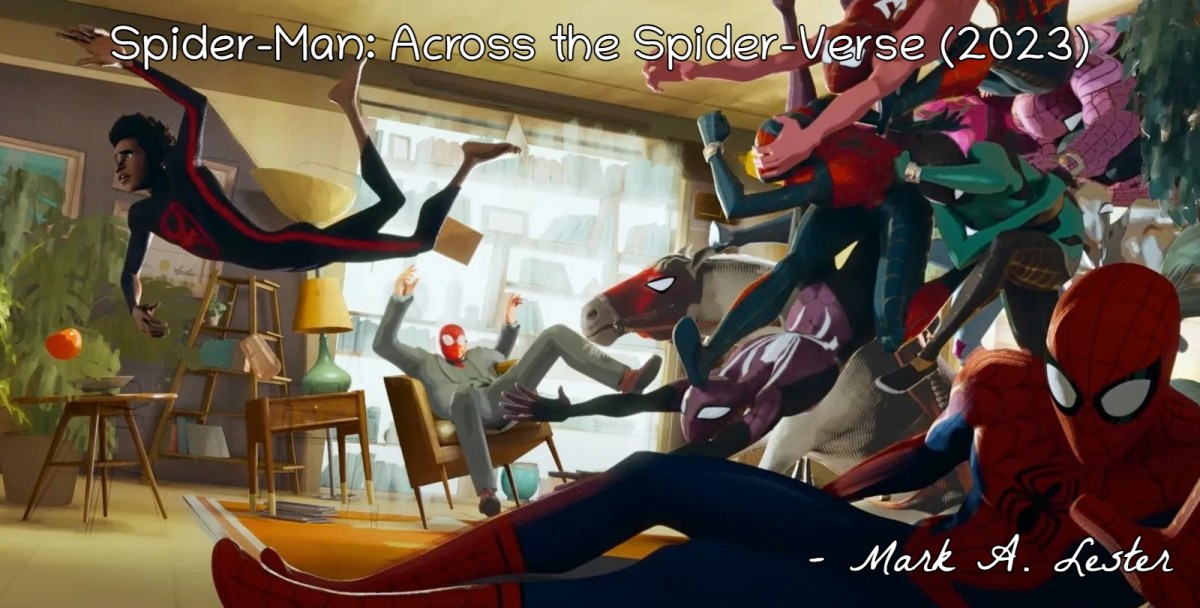
What makes it a truly effective sequel to the brilliant Breath of the Wild is not just the story (which has elements of Infinity War, time travel, and even Spirited Away) is that it expands upon its already vast world into new heights. The same can be said about Spider-Man: Across the Spider Verse, the sequel to the animated masterclass Into the Spider Verse.
 Nothing else to say