As someone who has yet to visit New York City (still near the top of my bucket list), I in no way feel I can say what director in the history of cinema has best captured the city.
A few names do come to mind: Martin Scorcese, Nora Ephron, Sidney Lumet, and Woody Allen (despite his troubled personal life). Then of course there is Spike Lee. While he has not entirely relied on New York for all of his films, his best ones (namely Do the Right Thing in 1989) have helped shape parts of the city that never sleeps in our movie going psyche.
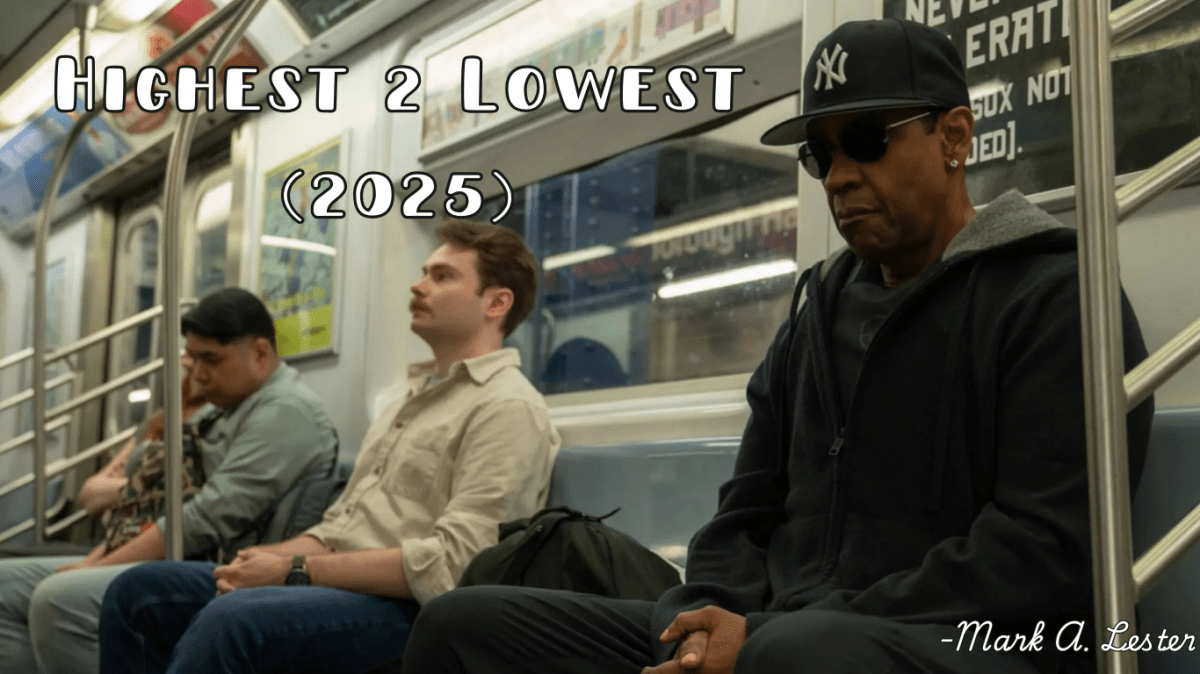
Unlike Do the Right Thing, Lee opens his latest film, Highest 2 Lowest (based off of the classic Akira Kurosawa film High and Low), romanticizing the city (and continues to do so for the first twenty minutes of the film). There is no other way to describe someone using “Oh what a beautiful morning!” from Oklahoma!. We then zoom in on veteran music producer David King (Denzel Washington, in his 5th collaboration with Lee), known to have the best ears in the business.
After he and his driver/friend Paul (Jeffrey Wright) drop their sons off at a basketball camp, they go about their day, only to find out not so later that David’s son Trey (Aubrey Joseph) has been kidnapped for money, while no one seems know the whereabouts of Paul’s son Kyle (Elijah Wright, the real life son of Jeffrey Wright).
Like any noteworthy director, Lee is able to put the right song in at the right time (which makes sense, since the film revolves around a music producer), which is apparent even to someone like me who is not the most knowledgeable of the music world. Each song choice already adds to the film’s kinetic energy.
Parents, you would think a movie directed by Spike Lee that is rated R would be more than enough to say to keep the kids at home (the swearing and thematic material more than makes up for the minor amount of violence and sexual content). Sadly, no one mentioned this to the audience members who brought a crying baby to my theater. Sigh.
This is not so much a remake of the Kurosawa film (despite some nice call backs, especially the end of the original) so much as it is a retelling. It is Lee’s own take on it, which does not make it better than the Kurosawa film: It makes the new film its own, and is absorbed as easy as newly discovered exceptional music.
Overall:
 Nothing else to say