Even the most casual of filmgoers have, in some way, shape, or form, heard of the name Akira Kurosawa.
The legendary filmmaker is still felt today in films both domestically and globally, having inspired people such as Steven Spielberg and George Lucas (shown here giving Kurosawa an Honorary Oscar). Of his films, Seven Samurai has got to be his most influential: it has been the inspiration for films ranging from The Magnificent Seven (the original and the remake) to Disney/Pixar’s A Bug’s Life. While I am still trying to work through his filmography (thank you Criterion Channel), I would argue the most moving film of his would be what he made two years prior to Samurai: Ikiru (which, translated, means “To live”).
Truth be told (which I know I must do, especially after last week’s review), I had no real intention to review Stargirl.
My only interest in the film was that it starred former America’s Got Talent winner Grace Vanderwaal, who I admit to being a fan of a few of her songs. Add in the fact that this is the 16-year old’s first film and it is safe to say that I had cause for alarm.
Over time, many a movie made for children (or anyone, for that matter) are going to be forgotten, sought after only by die hard fans and film buffs. There are movies of my own childhood that I have seen many times, yet now are known only to a few of my generation. This is even true with the powerhouse of Disney.
Had it not been for Disney Plus, certain films of lesser popularity like Oliver & Company (1988), Meet the Robinsons (2007), The Black Cauldron (1985), Robin Hood (1973), The Sword in the Stone (1963), The Great Mouse Detective (1986), A Goofy Movie (1995), and The Princess and the Frog (2009) would be almost swept under the rug, especially when compared to other monolith films like Snow White and the Seven Dwarves (1937), Bambi (1942), Beauty and the Beast (1991), and The Lion King (1994), just to name a few (not to mention the Pixar ones).
“The fact that you prevented it from happening doesn’t change the fact that it was going to happen”.
The line of dialogue from John Anderton is also his core belief, and one of the many lines of dialogue that has stuck with me for the countless times I have seen Minority Report (2002) over the years. It is a film that asks you to think long after, but not to a degree that certain films (especially science fiction) would make some viewers need to take a Tylenol. That, and it is as engaging as any film that has come out in the first two decades of the 21st century.
In the 1910s, the world was introduced to Chaplin’s tramp, who would go on to be possibly the first recognizable character the film world ever knew.
Starring in numerous amounts of shorts, Chaplin later made full length movies with his famous mustached character: So famous, even Adolf Hitler (who was only four days younger than Chaplin) was said to have based his mustache off of the tramp.
At the 92nd Academy Awards, when Bong Joon Ho was accepting his Oscar for Best Director (for Parasite), he paid tributes to each of his fellow nominees. The first (and most memorable) was toward Martin Scorsese, which prompted an unexpected standing ovation. It was clear that Bong Joon Ho was paying tribute to a mentor.
In the filming industry, perhaps no other career is more vocal of paying tribute to mentors than that of a director. Most (if not all) have stated they have been in total admiration of a certain director that came before them, often rewatching their films almost to a degree of pure obsession. Certain names come to mind: Hitchcock, Kubrick, Welles, Kurosawa, Spielberg, Scorsese, Eastwood, Coppola, Lucas, Tarantino, and Spike Lee, to name a few. However, all the big named directors seem to have one person they all agree on that had influenced their career. That name is John Ford. Famously, when Orson Welles was asked the directors he admired most, he said, “John Ford, John Ford, and John Ford.”
Around the age of 11, I was sitting at a cluster of desks in my fifth grade class when two of my classmates (Mary and Kelly) were talking about something. They both were holding a colored bottle of liquid. I asked what it was. It was some form of scented hand sanitizer.
Since I was such a victim of peer pressure, I went home and told my mom about this new “fad”. We eventually had a lemon scented bottle in our down stairs bathroom that seemed to last until some point when I was in High School.
Coming up this November will be the quarter century mark of the release of Toy Story (1995), which was the birth of Disney/Pixar (though Pixar had done some of the animated shorts beforehand). Having seen all but two of their full length films (2015’s The Good Dinosaur and 2017’s Cars 3 got past my radar), the quality of the films of Disney/Pixar have nearly always been able to exceed all expectations, despite how high they may have been. With very few “duds” to their credit (most of the non-Toy Story sequels and Brave), the combined duo shows no sign of stopping, even if they make films of lesser quality. Which, sadly, brings us to Onward.
The brief history of magical creatures states that magic has been nearly lost and almost forgotten. While magic once thrived, scientific discovery had replaced it. Still, there are a few who still believe it exists, mainly the over eager Barley Lightfoot (Chris Pratt). After the death of his magic loving dad (because this is Disney, so the one parent rule is almost always in effect), he tries his darndest to be somewhat of an influence to his younger teenage brother Ian (Tom Holland).
As the film begins on his 16th birthday, the somewhat introverted Ian tries to stay somewhat distant from his much more extroverted older brother. That is, until his mom Laurel (Julia Louis-Dreyfus, in her second Disney/Pixar film since A Bug’s Life) reveals a present to be given to both her sons when they turned sixteen. It is a staff, which will be able to bring there dad back (with the help of a rare phoenix stone their dad gave them as well) for one day. Unfortunately, trouble with the spell brews (pun intended?), and only the legs of their dad appear. They must then set forth on a quest to find another phoenix stone if they wish to see their whole dad before the 24 hour spell is over. Along the way in his (somewhat) trusty van Gwinivere, Barley passes on his knowledge of magic to his brother (who we discover is the one with magical abilities).
Compared to other films in the Pixar canon, there seems to be fewer supporting characters that stick out. The ones that do include a manticore (Octavia Spencer), Laurel’s new boyfriend cop, Colt Bronco (Mel Rodriguez), and some hard headed (and often funny) motorcycle pixies. And yes, we still get the Disney/Pixar treasured voice of John Ratzenberger, but it was so brief I admit I missed it.
There is also one (very minor) character, Officer Spector (Lena Waithe), who is officially the first openly gay character in a Disney/Pixar film. Sadly, this is more politicized than memorable. If you are going to include a homosexual character (in general, not just in animation), make it needed in the story itself. If Spector had not mentioned she was gay (though she does not use those exact words), I doubt it would make any difference to the outcome of the film.
The idea of being able to spend time with a dead loved one is indeed moving, but the way they established it seems just…awkward. I can understand the filmmakers wanting to add a twist of some kind, but just the legs? Yes, they find a way to communicate (somewhat) with them, but it just seems not as original or daring an idea that would expect from the studio.
Speaking of originality, when Disney/Pixar is at the top of their game, they give us worlds of endless possibilities. They have created countless universes with toys, bugs, monsters, cars, superheroes (even before the MCU), robots, emotions (!), and rats in the kitchen. Very few studios can say they have done something like that (save for Studio Ghibli).
That said, the universe of the creatures of Onward seems like it is from the minor leagues. Through out the film, I seriously had to remind myself I was watching a Disney/Pixar film, and not something from a lesser quality studio (I won’t name examples, but even the heads of other studios have to admit they have to almost always compete with Disney/Pixar).
Parents, the film is okay for kids provided you plan to have a conversation about the lesbian character, but I do admit I think the humor for the adults will be harder to find than it was in other Disney/Pixar films.
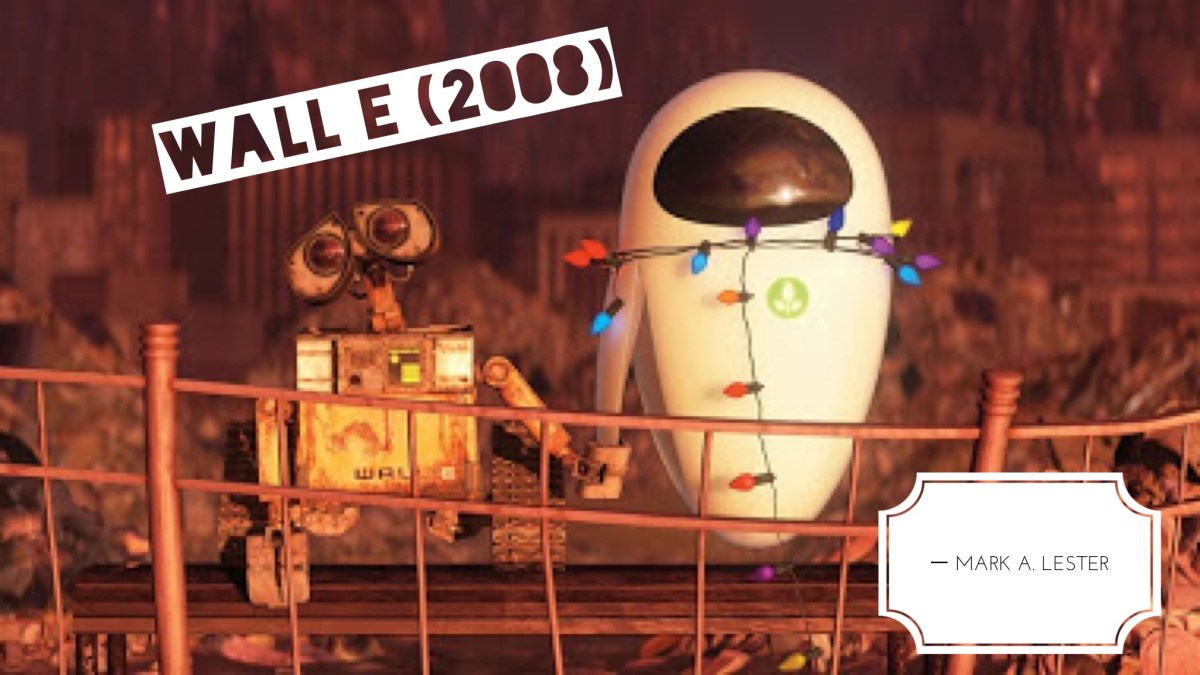
The deeper issues with being able to talk to a deceased family member did hit me at times (having lost my own dad a little less than a decade ago), but not as much as it could have. Consider the other great touching moments in the history of Disney/Pixar: Andy saying goodbye to his toys, WALL-E not recognizing EVE, Boo realizing (at the time) she won’t see Sully again, Miguel singing to Coco, the goodbye at the end of Toy Story 4, and, of course, the first ten minutes of Up. I would argue these (as well as moments which would produce “happy tears”) are groundbreaking moments for a child’s life as a movie goer (and some adults as well).
Disney/Pixar will, I am confident, still produce classics in the years to come (they have another film this year called Soul, which does look promising), but they need to remember to go Onward before going upward.
Despite being an extroverted child with Asperger’s, it still seems to surprise some of my friends who did not know me growing up that I never once had a detention. Of course, it helps when nearly every person in your family history was a teacher in some capacity.
When I mentioned this to one of the minister’s at my church, he said he found that rather hard to believe. I responded simply, “That’s because you never met my dad”. That is not to say my dad was deeply strict or anything. My dad was totally loving and supportive. The issue was that, as a High School social studies teacher turned Dean turned Assistant Principal, he would tell me stories at the dinner table about what all the “bad” kids did (to be fair, it was more entertaining than what the “good” kids did). These stories, which must have started as far back as when I was a 1st grader were ingrained in my mind to know when to not mess around (despite being a self confessed class clown from time to time.)
In the 2000s, one of my favorite review sites to go to was that of “Mr. Cranky”. It was a satirical site (now no longer available), in which the reviews would state how bad the film really was (the highest rated were for films deemed “almost tolerable”).
Of the many reviews I had seen, my favorite header came from the review of Apollo 13, which read along the lines of “Spoiler: They survive.”