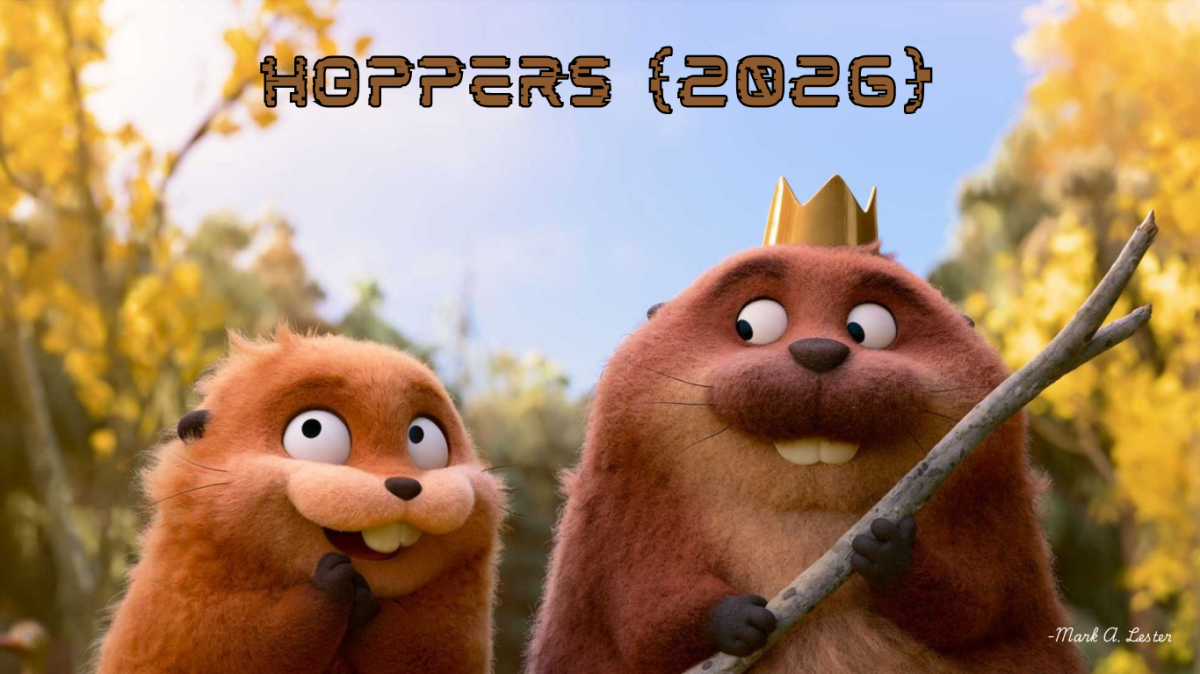
As Disney/Pixar now approaches their 30th film with Hoppers, it has me looking back at previous films revolving around animals (especially when it comes to human interaction).
Except for the two masterpieces Finding Nemo (2003) and Ratatouille (2007), the rest of them have been, at best, passable (I also exempt 2001’s Monster’s, Inc., due to those characters being more fantastical than realistic). Add in the fact that the last truly great classic was 2017’s Coco (though I can see defenders of 2020’s Soul, which I do need to rewatch), and you can see why Hoppers has a lot riding on its shoulders.
Looking back at my Letterboxd ratings of the first two Avatar films, I realize that there is a slight decline.
That is not at all to say that “The King of the World,” James Cameron, is losing his touch as a filmmaker. His original world-building of Pandora and the Na’vi is so mesmerizing to see that it is becoming redundant to say so. In Avatar: Fire and Ash, the tradition of outdoing the previous film with truly special effects continues. The problem, as has been stated, is the writing (which is also by Cameron).
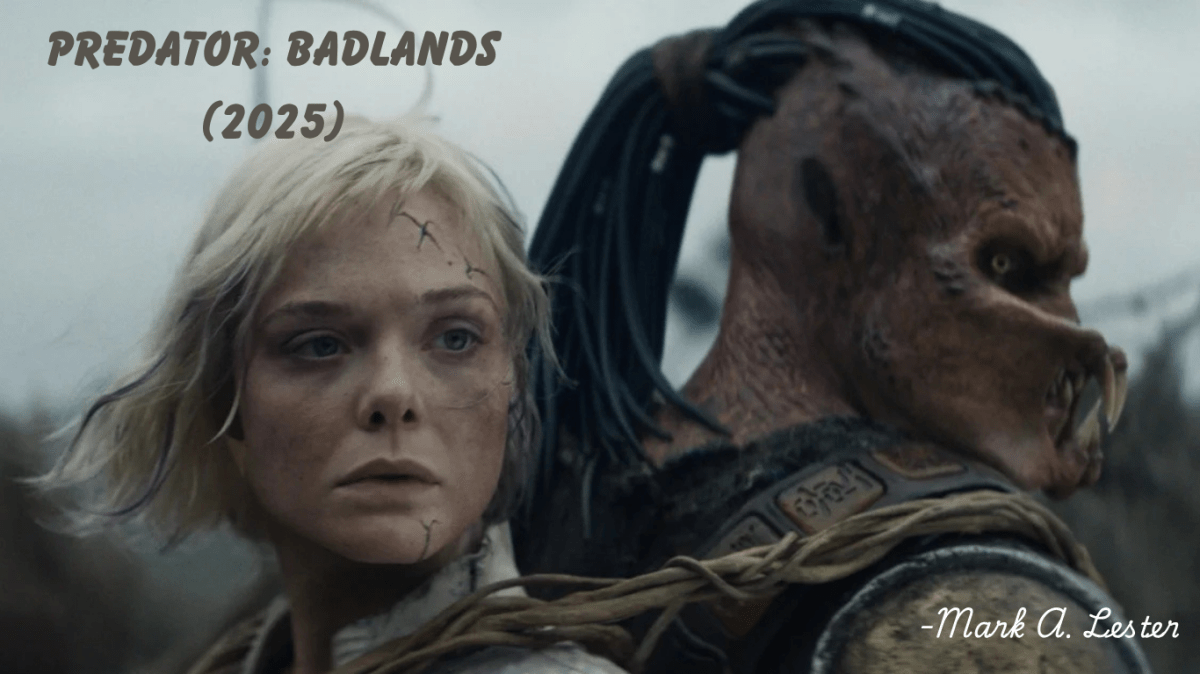
Who would have thought that a Predator had personal problems?
Apparently, director Dan Trachtenberg.
The formula for the first few Predator films (I have only seen the first two of the ones made before Trachtenberg) was reminiscent of the Alien films (which, oddly enough, I also have only seen the first two of that franchise): a bunch of humans are in the near vicinity of an extraterrestrial monster, and only a few survive. Then, in 2022, Trachtenberg came in and made the film Prey, which used somewhat of the same approach but in the early 1700s with Indigenous peoples. Now, he flips the script with Predator: Badlands, asking the question: What does it mean to actually be a Predator?
The predator protagonist in question is Dek (Dimitrius Schuster-Koloamantangi), considered the runt of the clan (and in the Predator species, runts are seen as too weak to be allowed to live), but still eager to prove himself. So eager, in fact, that when it comes to finding the adversary, he must hunt to be accepted, he goes after an unkillable monster called a Kalisk.
Upon landing on the creature’s home planet of Genna, Dek runs into Thia (Elle Fanning), a damaged android who is only accepted by Dek (since Predators only work alone) when she is seen as a “tool”. She is in search of her counterpart, Tessa (also Fanning), whom she was separated from after their last encounter with the Kalisk. They also encounter a monkey-esque creature that Thia names Bud, whose true objective is to steal every scene it is in (and succeeds with hardly any effort).
The planet of Genna itself is indeed dangerous, but not “bad”. It does have some rather inventive naturalistic dangers to behold, such as blade grace, an unstable purple cactus thingy, and exploding caterpillars/slugs. The result is (mostly) rather profound CGI that does not feel like a low-rent MCU film that is almost always in front of a green screen.
Parents, this is a rare case where I actually agree with a film being PG-13 instead of R. There is indeed violence and blood (albeit green blood, since that is what a Predator’s blood color is), but there is no sexual content or nudity. There is some swearing, but nothing drastic. In my theater, I saw a dad with his two sons, who were probably between 10 and 15. I would argue this is a great “guys’ night out” type of film.
There are clear homages to other films such as Aliens and The Empire Strikes Back (Thia is basically C-3PO even before she is being carried around like him). I read on Wiki how Trachtenberg is hoping to do at least one more film in this universe if Badlands makes enough money back.
I’d be down for it because he definitely has a caring mind for the material. Plus, I am a fan of Elle-3PO…or maybe it should be C-3P Elle.
Perhaps I am late to this realization, but with short films, it is much easier to find out the intent of the filmmaker(s) since there is not too much to worry about plot wise.
Such was the case with two new short films I saw by Chris Paicely and Miles August (“Chris and Miles”): Silk (directed by August) and The Girl in the Street (directed by Paicely), both of which each of them wrote.
Recently, there was news that a company named Particle6 had created the world’s first AI actress, and that certain agencies were looking into hiring her.
The idea of this actress (named Tilly Norwood) has understandably upset most of Hollywood. I read one actress said one of the main reasons this won’’t work is because Tilly lacks one of the most crucial tools an actor needs: past experiences to draw from. This is one of the main ingredients that makes Dwayne Johnson’s performance in The Smashing Machine so remarkable.
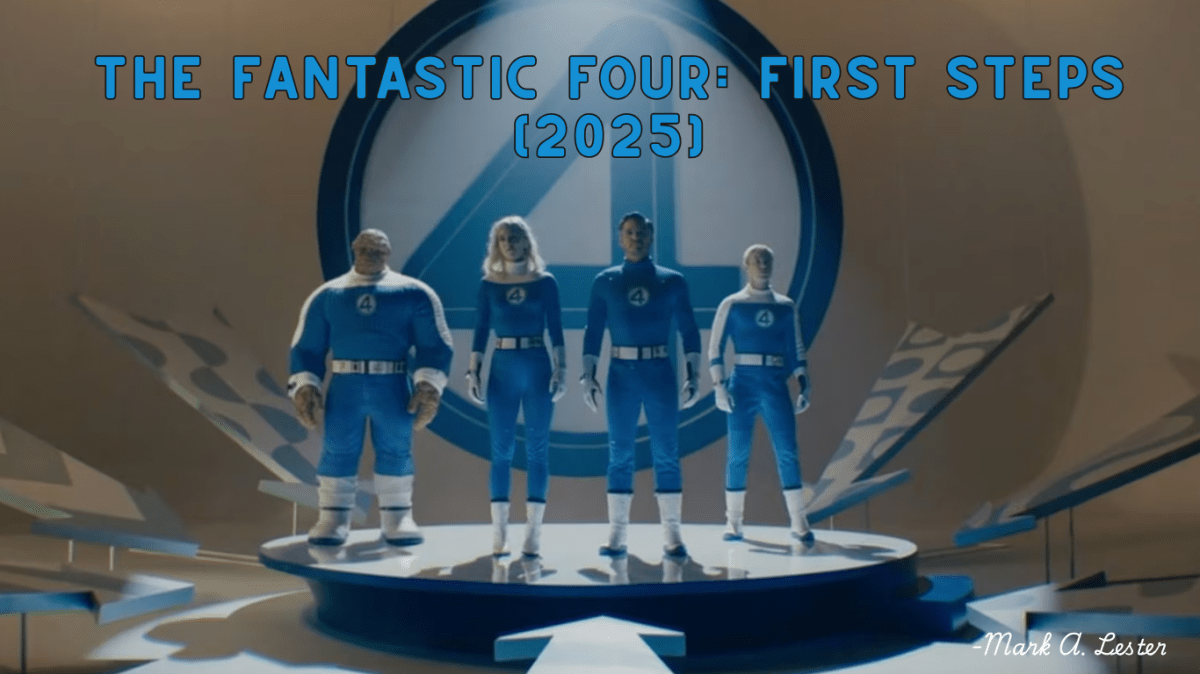
The Fantastic Four: First Steps is the first MCU entry in some time where prior knowledge of previous films/TV Shows is not entirely needed.
Admittedly, I was thrown off at the start when I found out the setting was Earth-828, which is not the main earth from the prior MCU films (that was…let me check…oh right, Earth-616). This is an interesting approach, since the Fantastic Four are, as far as I can tell, behind only Spider-Man and the X-Men when it comes to the most prominent of Marvel characters.
I won’t lie and pretend I know the history of online dating apps, but I am pretty sure that the last 15-20 years or so are when they began to explode in popularity (two of my brothers met their wives that way).
The thing is, I can not think of every coming across anyone in my life who used an in person match making service like the one shown in Materialists. Still, that is focus taken by writer/director Celine Song (who, I have learned, was once a match maker herself for a few months before becoming a film maker).
In what I believe was my sophomore year of High School, I was at a Marching Band practice when, after telling a joke of some kind, one of my directors stated he could see me hosting SNL in fifteen years (that was about twenty years ago, but oh well). What I did not mention was, at the time, I honestly was not sure what Saturday Night Live was.
Obviously, I caught up, and would spend time looking up past sketches deemed essential viewing (some I am still discovering). I admit I am not an expert on the history of Television, but one shouldn’t need to be if asked what other show is responsible for the career successes of its talents (both in front of the camera and behind it.)
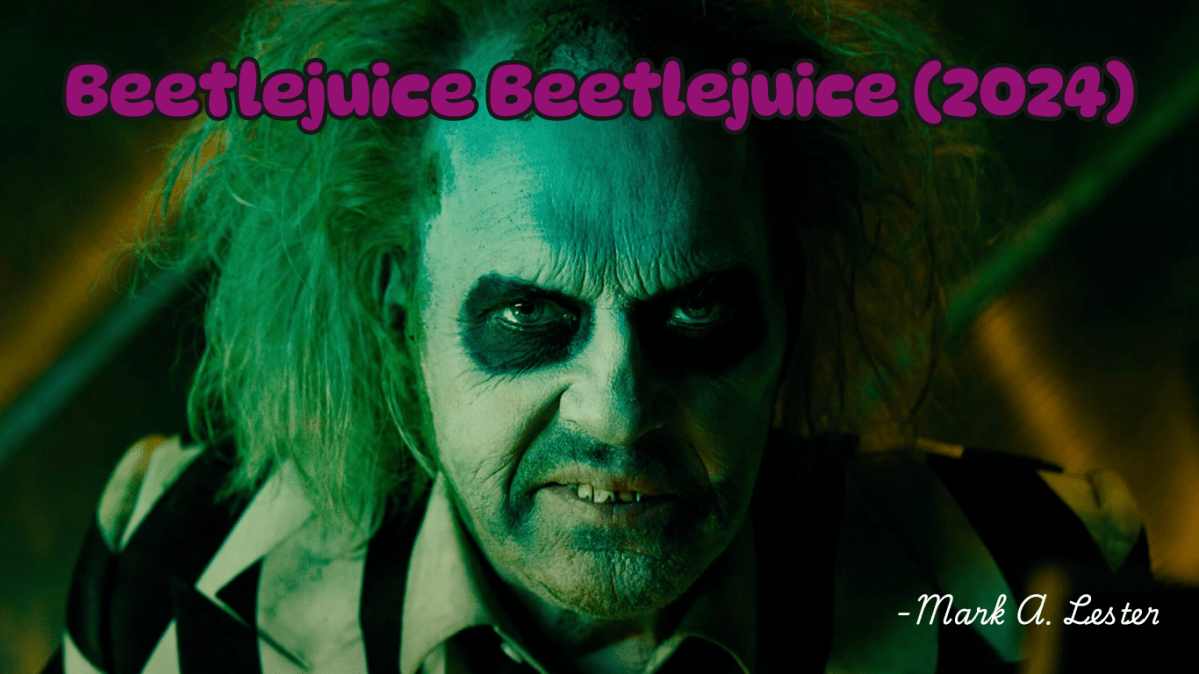
Like many my age, my cinematic discovery of Michael Keaton was the same as my cinematic discovery of Tim Burton (well, it was actually Batman Returns before Batman.) The third for each would end up being Beetlejuice.
As a kid, it took me a lot of convincing that the guy behind the Batman mask was the same playing the bio exorcist. Still, it was a near perfect introduction to the mind of Tim Burton (I did not get to Pee Wee until later in life), as it made me aware at a young age directors could have there own sense of style.
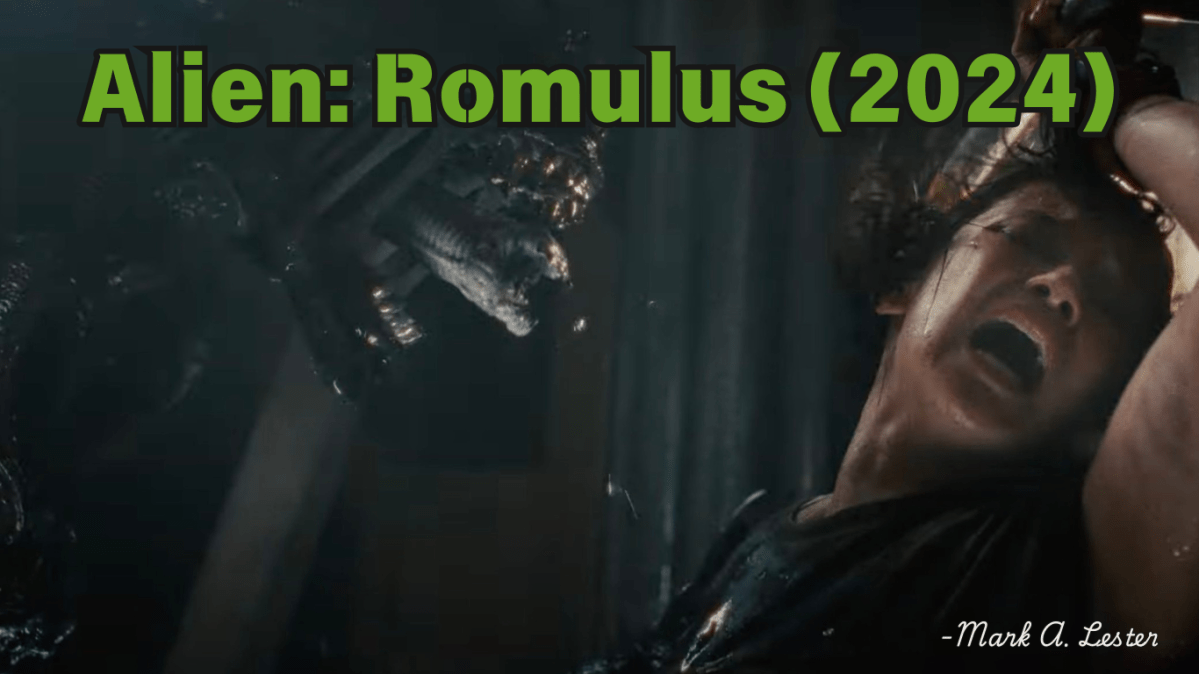
Regardless of your knowledge of the Alien franchise, it is basically general knowledge that the first two films occupy the top tier. Personally, I feel good about that as I have recently only seen those two along with 2012’s Prometheus.
Obviously, this makes me not at all an expert of any kind about the franchise, but that does not mean I can’t try to enjoy the films individually, which brings us to Alien: Romulus. Oddly enough, the events of this film actually take place between the first two films, while paying homage (both effectively and not effectively) to them.





 Nothing else to say