In the week or so I spent catching up and rewatching the previous Mad Max films, a rather unrelated film scene popped into my head.
In 1941, there was a film released called Hellzapoppin’. While I have not seen the film, I have seen what is arguably the film’s most popular scene when the characters do a dance called “The Lindy Hop”. When you watch it on YouTube, you will most likely have trouble concluding that these talented people are not being sped up on film: they are just that bleepin’ fast.
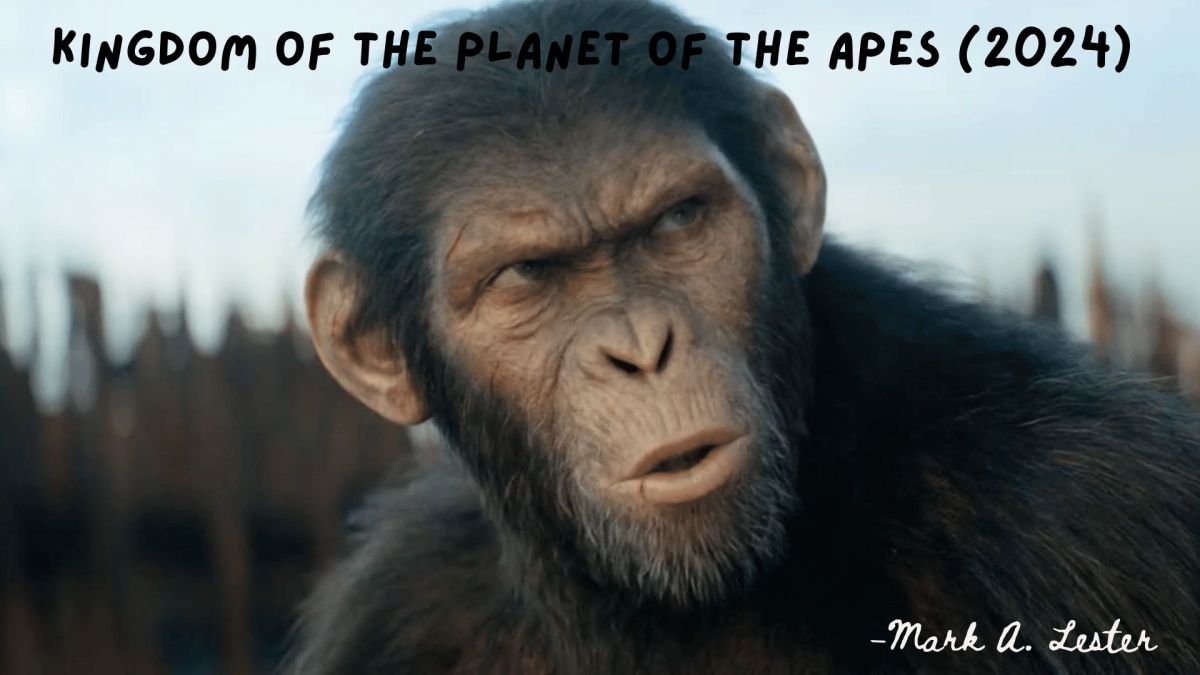
Sadly, it was only until a few years ago that I finally saw the OG Planet of the Apes from 1968.
My reasoning was mainly due to the fact that I had already had the famous plot twist spoiled for me as a kid (most likely from The Simpsons), and was unfortunately introduced to the idea of talking apes in Tim Burton’s disastrous 2001 film. Thankfully, the 2010s gave us a trilogy (all of which I just recently revisited) that was nothing short of solid entertainment, to the point I was worried this new film would be a de-evolution, as it were.
Most recently, I finally got around to seeing 1928’s Steamboat Bill, Jr.
It was this film where Buster Keaton (arguably the most influential leading man who did his own stunts) stood perfectly still as the side of a house fell on him, only unscathed due to an open window (your move, Tom Cruise!). Every since Keaton’s days, the stunt man has been risking all for the purpose of the shot (more than enough have sadly died in the process).
Going as far back as Kurosawa’s 1961 classic Yojimbo (and probably even before that), the revenge flick always has a unique place in the heart of the audience.
Whether it be a samurai, a war vet (ala Rambo), a 21st century Liam Neeson role, or (most recently) the John Wick films, we all have that inner being that wants to exact revenge. Whether it be a bully, a boss/co-worker, or someone who cut you off in traffic, our (much safer) alternative to vengeance is watching it dished out on screen.
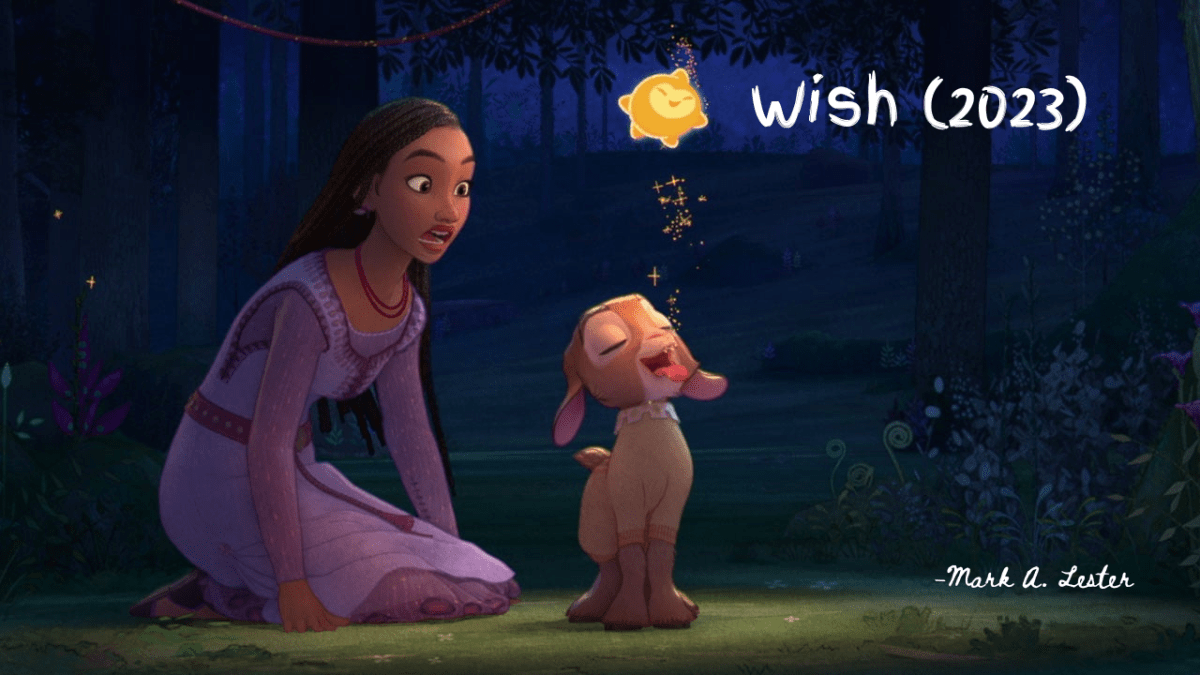
Just as I was a few minutes away from the theater to see Wish (the 62nd animated feature from the company), I thought to myself: How many times has that word been used in their past films?
Songs that came to mind include “I’m Wishing” from Snow White and the Seven Dwarfs (1937), “A Dream is a Wish your Heart makes” from Cinderella (1950), and, of course, the king of all Disney songs, “When you wish upon a star” from Pinocchio (1940). If one were to make a word cloud of the dialogue (and songs) in Disney films, “Wish” would most likely turn up more than any other word (with the possible exception of “Dream”). With that logic, it seemed a movie like Wish would be inevitable to be released on the centennial of the most known movie studio in history.
It’s been a little less than a year and a half since we got Baz Luhrmann’s Elvis biopic with Austin Butler.
At first glance, one could easily assume it is poor timing to have another film about the king of rock n roll, but that is not the situation. The title of the film itself should prove that the film is not about Elvis, but his wife Priscilla.
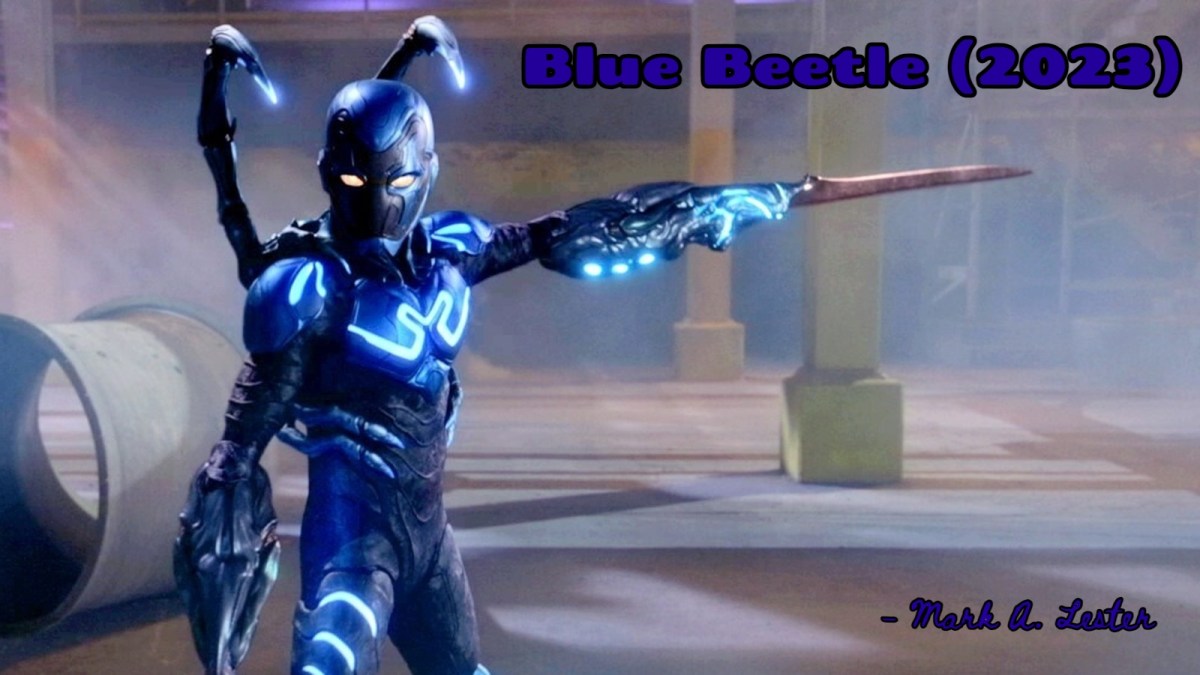
Sometimes, it is hard for us to remember what it was like seeing a superhero movie where we knew very little about them going into it.
When this happens, it makes the film more intriguing, such as the original Iron Man (2008) and first Guardians of the Galaxy (2014), films that were massive successes regardless if you knew the source material or not. It also helped that (at the time of release) the characters were not entirely in the first class for their creator’s. In the case of Blue Beetle, the DC character is barely in the third class of characters, but that is not entirely a bad thing.
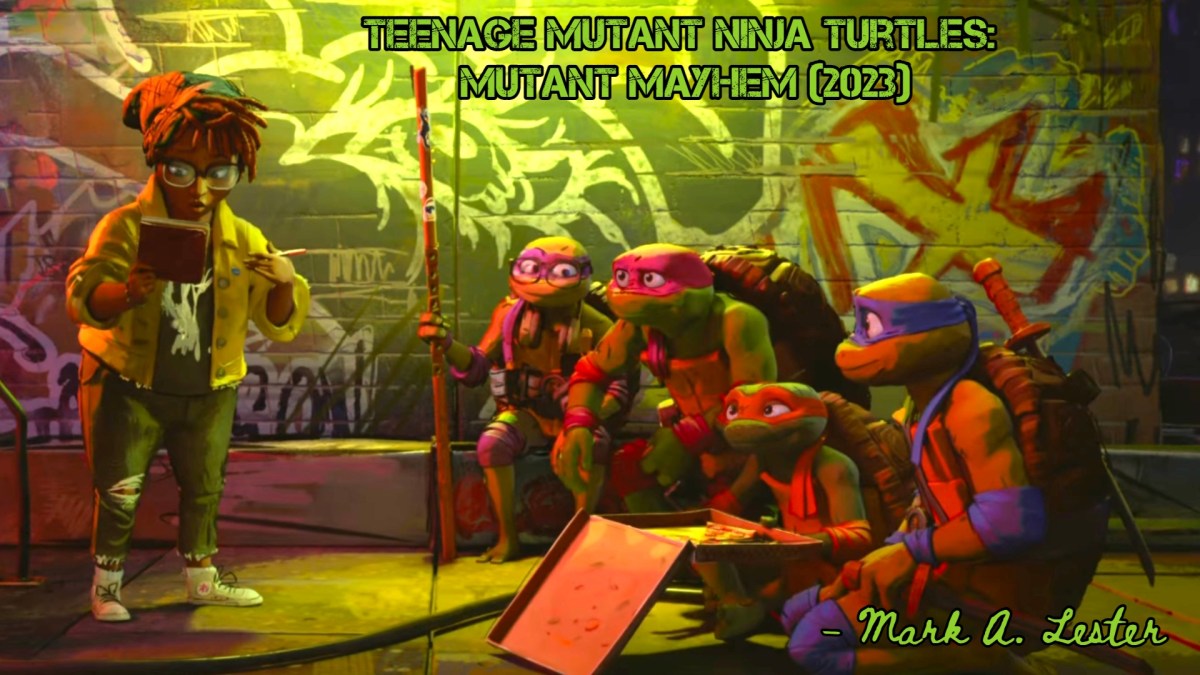
My five year old self is dancing in his shell right now.
There is no denying my childhood was impacted by the shelled heroes in green, and I won’t be able to complete this review without reminiscing. They were on at 6:30 in the morning every day before my dad would drive me to day care. Somewhere out in the ether is a photo of me as Leonardo for Halloween (I vaguely remember being upset the swords were not real). I remember countless time playing the arcade game (still one of the greatest arcade games ever made), and watching the live action films (even the third one, which was bad even when I was a kid.)
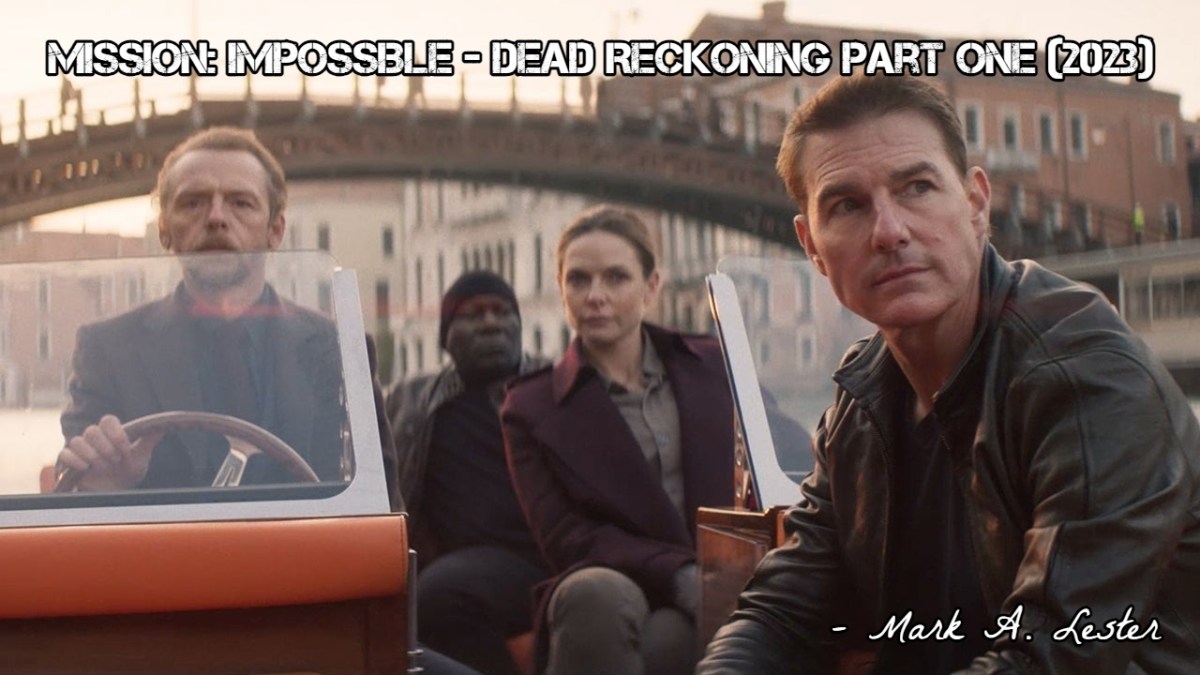
Up until a few months ago, I had only seen the first two Mission Impossible films. Believe me, I know. It is somewhat sad that it took me this long to get caught up.
Perhaps I was just not yet willing to accept the mission ahead of me.
As much admiration that I have for Wes Anderson and his films, it wasn’t until recently that I found out I haven’t actually done a proper review of one of his films in some time.
Much of this I will attribute to cowardice on my part: I admit to not being able to completely dissect all he is as an artist. Still, it should not give off the idea that I am not a fan of his films. Very few filmmakers are as unique and eclectic as Anderson is. So distinct is his style that many a youtuber (AI or otherwise) have made their own WA trailers for a menagerie of classic movies, though that joke does not last long after the second or third one viewed. Basically, AI can’t compete with the original.
In any case, there is still enough here in Anderson’s 11th film, Asteroid City, to satisfy all fans of this brilliant filmmaker (I myself was surprised to see so many fans in my viewing.) The story centers around a play named Asteroid City, and the back and forth between the making (so to speak of the play) with scenes of the play itself.
Said play takes place in a very remote desert town in 1955, where the visitors for a Junior Stargazer Convention. Events in the play occur that will greatly shift the lives and relationships of the characters.
As is the case with every film by Anderson, the cast is not only stacked quantity wise, but quality wise (thought this is his first film not to star Bill Murray: he reportedly had to back out due to catching COVID). Here are just a few of the stars: Jason Schwartzman, Scarlett Johanson, Tom Hanks, Jeffrey Wright, Tilda Swinton, Edward Norton, Adrien Brody, Jeff Goldblum, Liev Schreiber, Maya Hawke, Steve Carell, Bryan Cranston, Hong Chau, Matt Dillon, Willem Dafoe, and Margot Robbie. It would take too long to describe each of the performers’ roles, and would (more importantly) rob you of finding them out for yourself. The cast is more proof that Anderson is one of the most respected director’s in an actor’s eyes, and to read just a few lines of dialogue is a chance to jump upon.
Admittedly, Anderson was one of the first directors I discovered to show me how a shot could be framed. When the camera is still (which is a majority of the time), you can admire all the detail centered around the character, from the backgrounds to the angles of the walls to a single cup on the floor. It is always quietly breathtaking, especially on a big screen.
Parents, this is one of the rare examples of a PG-13 movie with graphic female frontal nudity (although it is very brief and non sexual). The rest is casual swearing. Make of that what you will (remember that Titanic was the same rating and had more nudity in it.)
I am still not sure what it is entirely that does not completely work about the film. Perhaps it is just not in the same league of Anderson’s best works, like The Royal Tenenbaums (2001), Fantastic Mr. Fox (2009), Moonrise Kingdom (2012), and The Grand Budapest Hotel (2014). It could be that the director threw much at the window before he saw what stuck.
Either way, even if it isn’t his best, that does not mean it is unenjoyable.