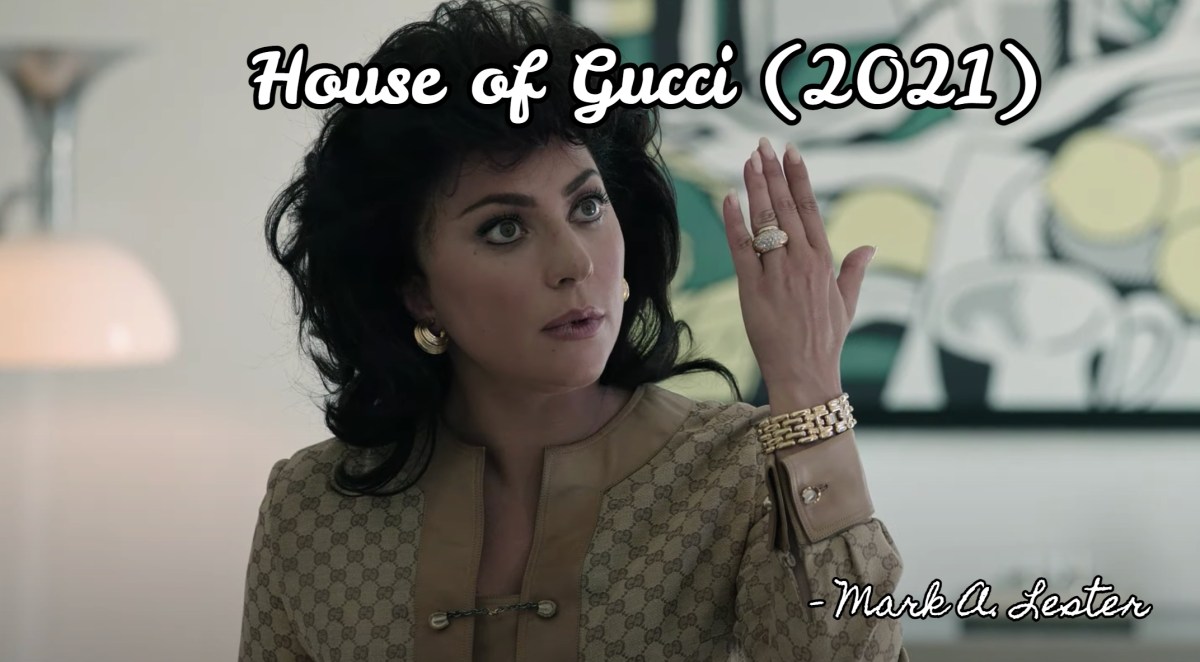
It is a bit poetic that House of Gucci was released on Thanksgiving Weekend.
Like a big meal, House of Gucci will look appealing to many who may end up being surprised at the taste. It has parts that will be an acquired taste, while others will find it takes some time to digest.
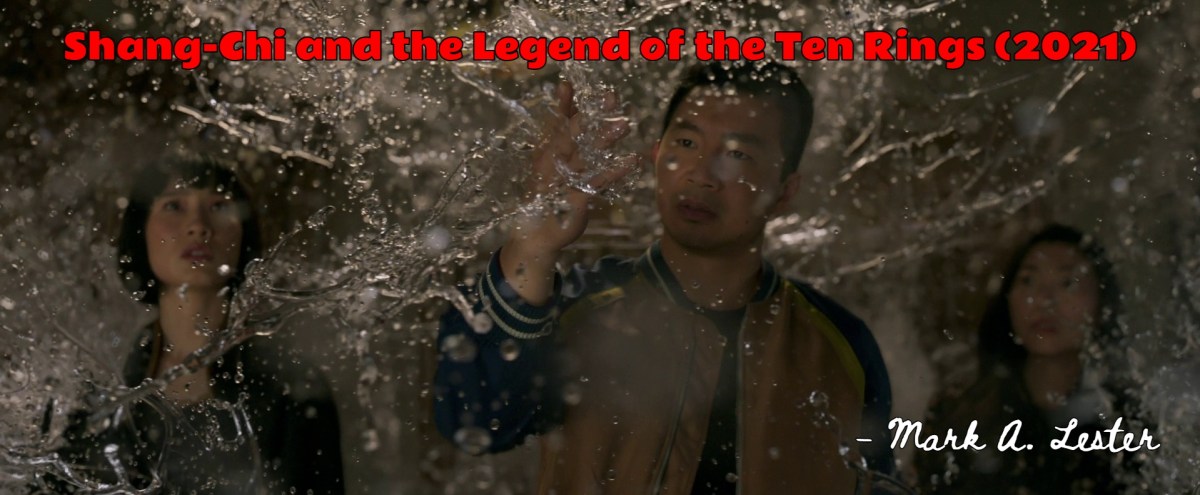
As the second film of the MCU’s Phase 4, Shang-Chi and the Legend of the Ten Rings also holds the distinction of being the first true origin story film of the MCU since 2019’s Captain Marvel.
Of course, one could argue that Black Widow was also an origin story, but we have seen Natasha since 2010’s Iron Man 2. Shang-Chi is a character we had no interaction with until now. Like a good amount of the films in the series, it showcases a character that only true comic book fans know something about (I can still remember when non fanboys like myself needed the movies to introduce the likes of the Guardians of the Galaxy, Thanos, Black Panther, and even Iron Man.)
It wasn’t the hair. It wasn’t the look. It wasn’t even the fact that dogs may get killed.
Around the age of five, what got me scared right off the bat of Cruella De Vil was simply that she seemed to always be yelling. Even when she was not upset (which was rare), she was at a high volume.
Truth be told, my knowledge of “March Madness” is very low (which would surprise no one who knows me). I truly picked Gonzaga to win without knowing until later that they were undefeated, so it should come as no surprise that I have not really watched any games this year.
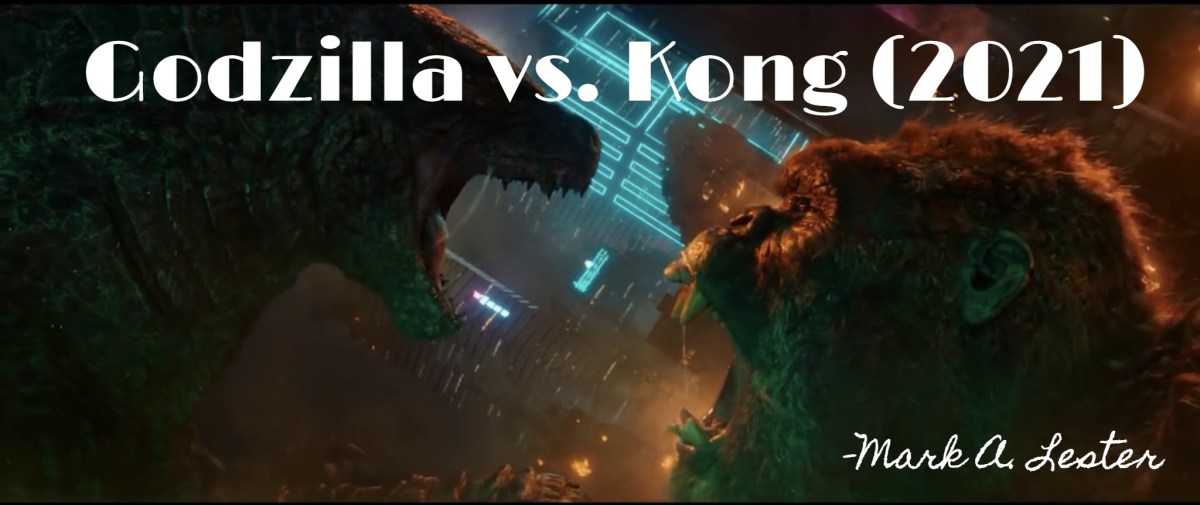
Why do I say all this? Because the real march madness I have waited for (even more than the “SnyderCut”) since witnessing the ending credit scene of 2017’s Kong: Skull Island has finally arrived, in the ultimate movie monster matchup of Godzilla vs. Kong. In fact, I quickly realized that I have awaited this film since my dad showed me the original (and rather badly dubbed) 1960s version, which has had me on #TEAMKONG ever since.
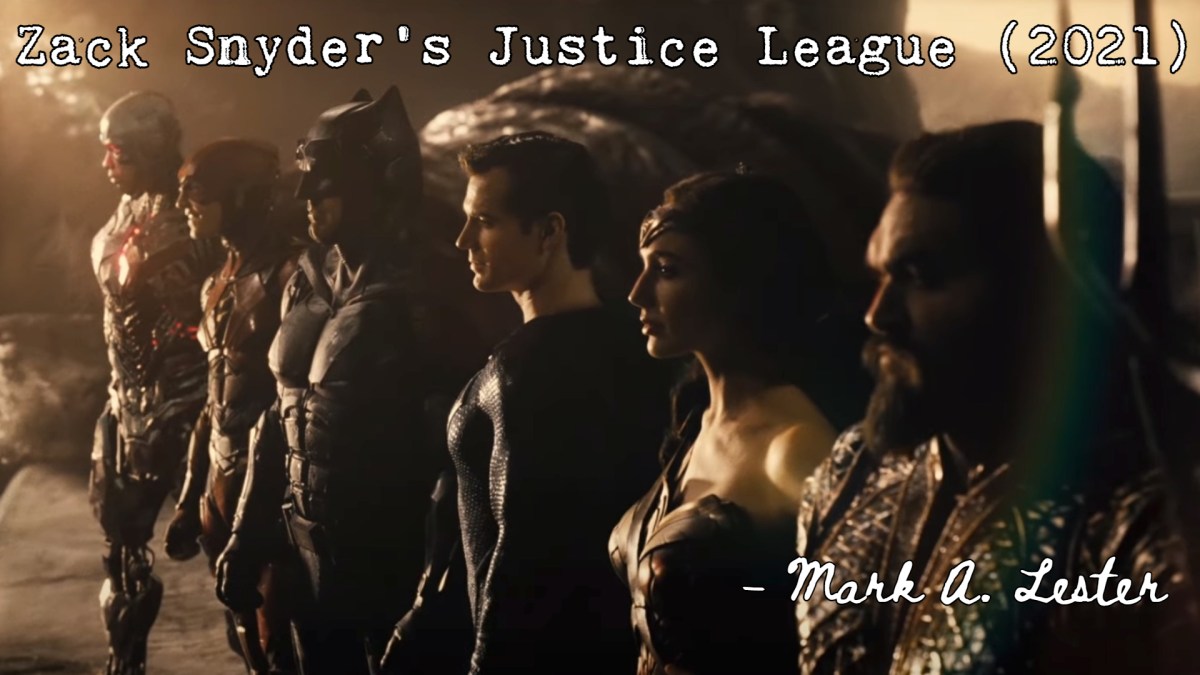
IMDB may have the director of 2017’s Justice League as Zach Snyder, but that was far from his original film.
The origins of the “Snyder Cut” are now well known: When the film was being finished in early 2017, Snyder had to back out after the tragic suicide of his daughter, Autumn. Joss Whedon (who helmed the first two Avengers films for the MCU) stepped in, and the film was changed drastically. The film’s 4 hour run time was basically cut in half to two, the tone of the film was much lighter, and composer Thomas Holkenborg (better known as Junkie XL) was replaced by Danny Elfman.
Since the mid-2010s, “binge watching” has become a thing of human nature.
TV series and mini-series have been gulped up faster than pizza at a teen sleep over, which has happened even more so in the last year with people spending more time at home due to COVID-19. While most binging seems to be associated with TV series (most notably reruns of “The Office”), some series undoubtedly have taken a more cinematic approach (this was what started with “The Sopranos” and one of the main reasons why it was so revolutionary.) While I have more than enough TV/mini series I have yet to catch up on (since I watch too many movies), I have yet to see the line get more blurred between mini-series and movies as I have after watching the five “episodes” of Small Axe.
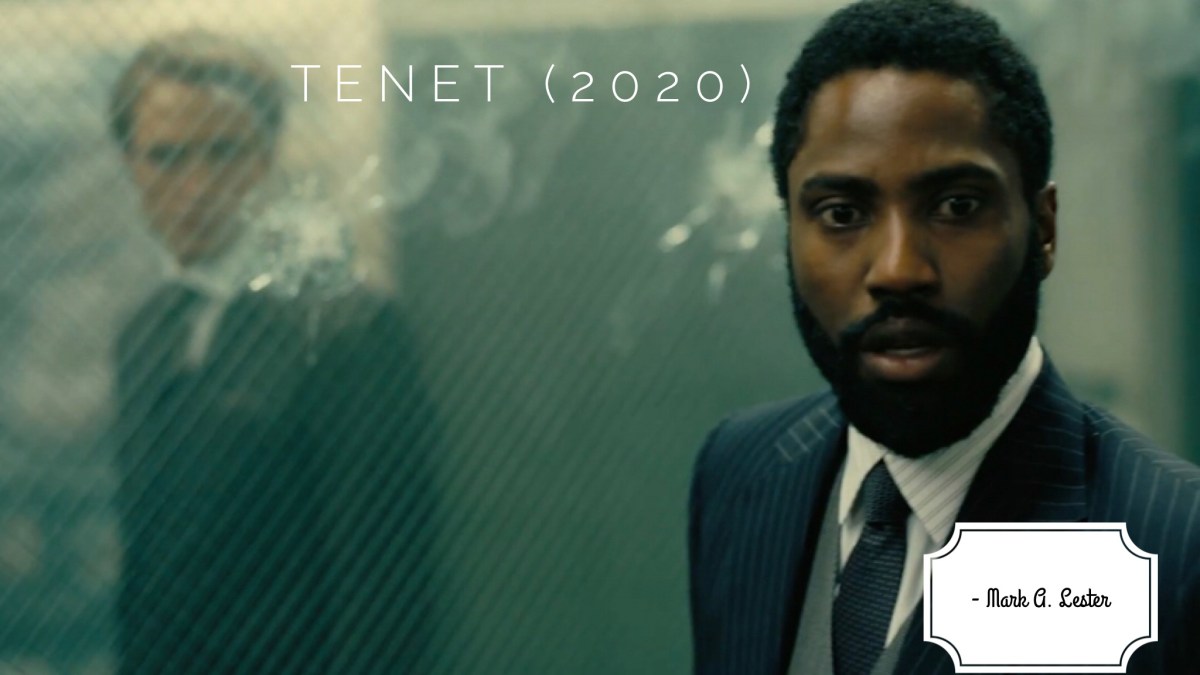
In short, if you were confused too much by Christopher Nolan’s Inception (2010) a decade ago, then his new film Tenet is not for you.
Watching the first hour or so of Tenet is like walking slowly into the ocean, unaware that the floor beneath you is not as flat or reliable as you would like (such as in a pool).
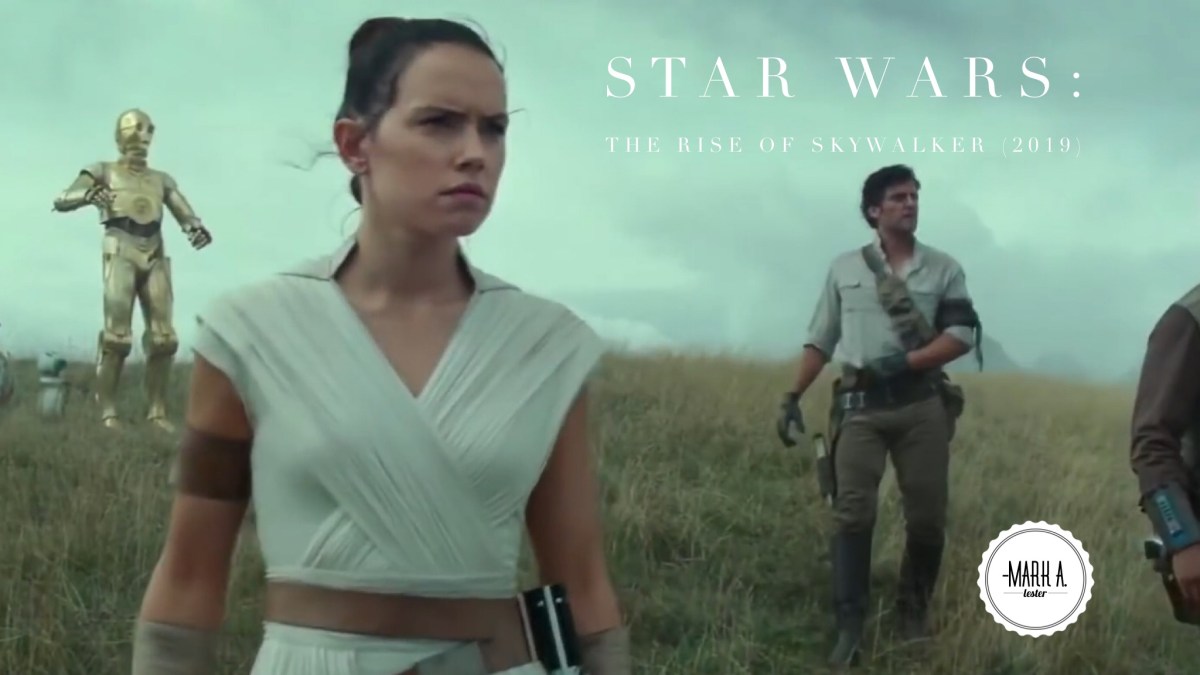
Since the age of 9 or so, I have always considered myself a moderately strong member of the light side of the force. That said, I would be worse than a Sith Lord if I were to even begin to start spoiling what happens in the final saga of the nine episode epic. Though the film is far from perfect, The Rise of Skywalker is still going to offer satisfaction of some kind to anyone who is related to the force.
If you have seen the trailers (and if you haven’t you should
probably stop reading), you know we are getting the return of Emperor Palpatine
(Ian McDiarmid, owner of one cinema’s greatest cackles). All that is left in
his way of returning the Sith to power is the remains of rebels in his way.
Leading the charge, of course, is Rey (Daisy Ridley), still in search of the
mystery of her past, with the tutelage of Leia (the late Carrie Fisher). Also still
in rebellion (so to speak) is Finn (John Boyega) and Poe (Oscar Isaac), along
with Chewbacca (Joonas Suotamo, filling in for the late great Peter Mayhew), Rose
(Kelly Marie Tran), and, of course, droids R2-D2, BB-8, and C-3PO (Anthony
Daniels, the only actor to appear in all nine films). I would also be remiss if
I did not mention Billy Dee Williams returning as Lando Calrissian.
As is always the standard for a Star Wars film, we get a handful of new characters. Again, I won’t try to spoil much, but two come to mind that I was a fan of. The first is a small droid called D-O (voiced by the film’s director, J.J. Abrams). The second is a character played by Richard E. Grant (last seen being nominated for an Oscar for 2018’s Can You Ever Forgive Me?). When you see him, you will see how he fits the role perfectly, and you wish the producers had gotten him earlier on in the series.
Perhaps what lacks in this film is how is does not continue the flow of episodes seven and eight. True, The Last Jedi is the one that is the oddball of the three (and I still defend it), but it seems like there are many elements where the story takes a step back instead of forward. What made the original trilogy so great (probably the best film trilogy there is) is that it not only worked as a trilogy, but as three individual films as well (The Godfather Trilogy would have if part three was up to par). For Star Wars Episodes 7-9, they work as individuals, but lack enough connection as a whole.
Parents, it is a Star Wars film, so it is likely your kids will be begging you to see this. There is mild violence and some swearing (very mild for a PG-13 movie). There is no nudity, and the only sexual content are a couple kisses (1 of them very briefly is between two female pilots and is completely unnecessary to the film; virtual signaling by Abrams).
The Rise of Skywalker indeed has a blissful conclusion, but the road there was rocky at best: Like traveling to Rome via Colorado’s Million Dollar Highway. A colleague of mine also mention how much the film has many similarities towards Avengers: Endgame (mainly in the last act).
Still, it is a satisfying conclusion to the saga that will as the tagline (and the immortal music of John Williams) informs us: No one is ever really gone.
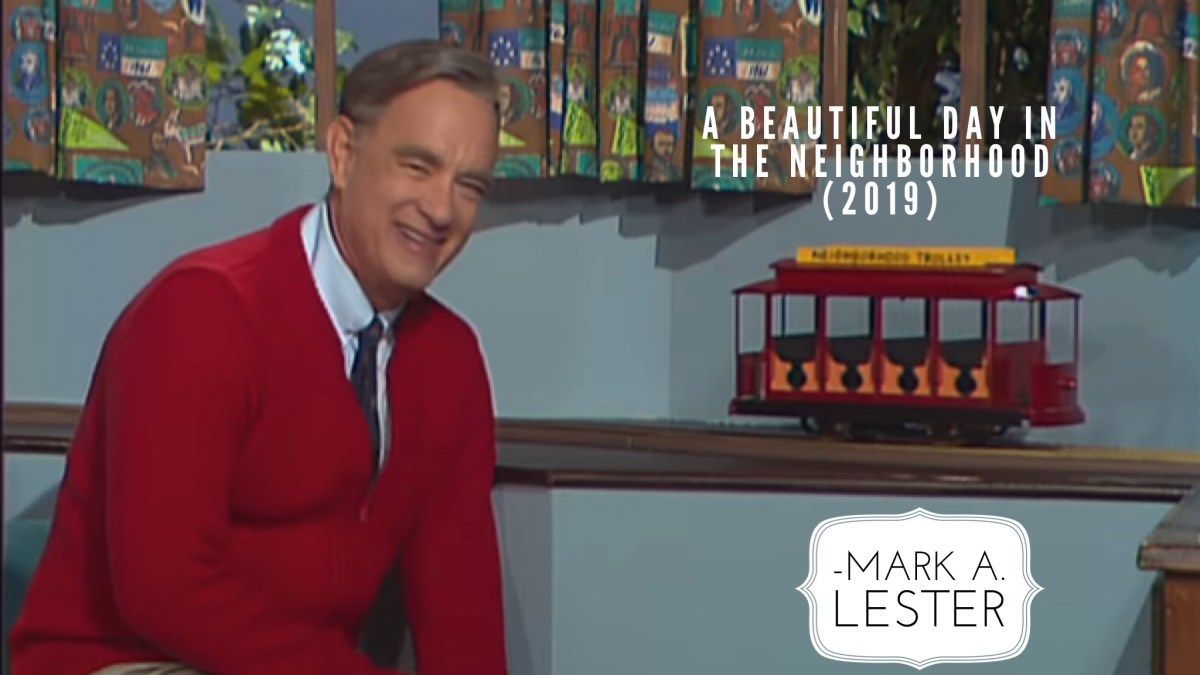
For one reason or another, I was very worried when I first heard that Tom Hanks would be playing “Mister” Fred Rogers, especially only a year after the superb documentary Won’t you be my Neighbor? (which I am surprised was not nominated for an Oscar). The great Fred Rogers was someone we all, to some extent, truly took for granted. A soul of pure kindness that everyone would have given anything to have called neighbor, and ended up being the host of one of the greatest children’s programs in TV history (probably second only to Sesame Street). Truly one of a kind, I did not even think someone like Tom Hanks could replicate the aura of Rogers.
Obviously, I was wrong. It is the best Hanks has been in years, even though he is not the true center piece of A Beautiful Day in the Neighborhood. That falls on Lloyd Vogel (Emmy winner Matthew Rhys), a journalist known for writing profiles that seem to always bring the negative out in the subject. When asked to do a piece on heroes, no one wants him to do the profile. No one, that is, except Mr. Rogers. When he mentions it to his wife Andrea (Susan Kelechi Watson from the TV show This is Us), she begs her husband, “Please don’t ruin my childhood”.
It does not take long for the viewer to realize Lloyd’s own troubles, as he has a rather rocky (to say the least) relationship with his father Jerry (Oscar winner and always reliable Chris Cooper), resulting in some punches thrown at the beginning of the film (he assures others who see his wounds that it was a softball incident). This part of the plot does teeter a bit towards the mundane, if only because experienced movie goers will know the expected outcome. Thankfully, that does not mean it is not effective at times. This mainly occurs when Lloyd finally begins to open up about his feelings, first with Rogers.
One of the more interesting things of the film is how director Marielle Heller (who was at the helm of 2018’s Can You Ever Forgive Me?) structures it like an actual episode of Mr. Roger’s Neighborhood. I found this both effecting and sometimes perplexing. It is how we are introduced to the Lloyd Vogel character (who is based on real life journalist Tom Junod), as Rogers asks us if we know what it means to “forgive” (something all ages need to remember these days). I was okay with the fourth wall breaks that occurred, but some segments seemed almost superfluous, such as Rogers spending a few minutes showing us how a magazine is made.
There is no way for me to continue with the review without talking about Tom Hanks. It must have been truly inevitable that, when the time came for Mr. Rogers to be portrayed on screen, only Hanks could have done so. When looking back, perhaps I was worried about the casting because Hanks does not show much of a physical resemblance to Fred (my expectations can be high at times). Thankfully, I soon realized that did not matter, because the attributes of Mr. Rogers’ character were the crucial part, and Hanks has those in spades. The kindness. The smile. The heart. The unrivaled sense of decency.
There are very few (if any) celebrities who have been labeled as being one of the nicest people ever than Hanks. Think about it: When was the last time you heard Tom Hanks in the headlines for a scandal, or seen in the tabloids? His quality of the “every man” has resonated with him for years, similar to acting icon (and also acclaimed nice guy) James Stewart. This is not to even mention his highly underrated sense of humor (he is one of the funnier guests I have seen on late night talk shows). In a nutshell, my little brother Connor put it best: “When Tom Hanks dies, the world will be sad.”
Parents, the film is a rather soft PG rating. Along with the
one brief early fight scene, I counted only a couple of the most minor of
swearing, and nothing else. This is the type of film families are perfectly
fine with seeing.
The film did not hit me in the feels as much as the documentary Won’t you be my Neighbor? (though few films have done so like that in the last few years), but the lessons are still clear (Rogers clearly is breaking the fourth wall when he asks Lloyd to take one minute to think of all the people who have helped him in life, something the real Rogers did many times). The lesson of everyone needing to give a little kindness. The lesson of how to forgive. The lesson of how (as Rogers says in the film),
“Fame is a four-letter word. What matters is what we do with it.”
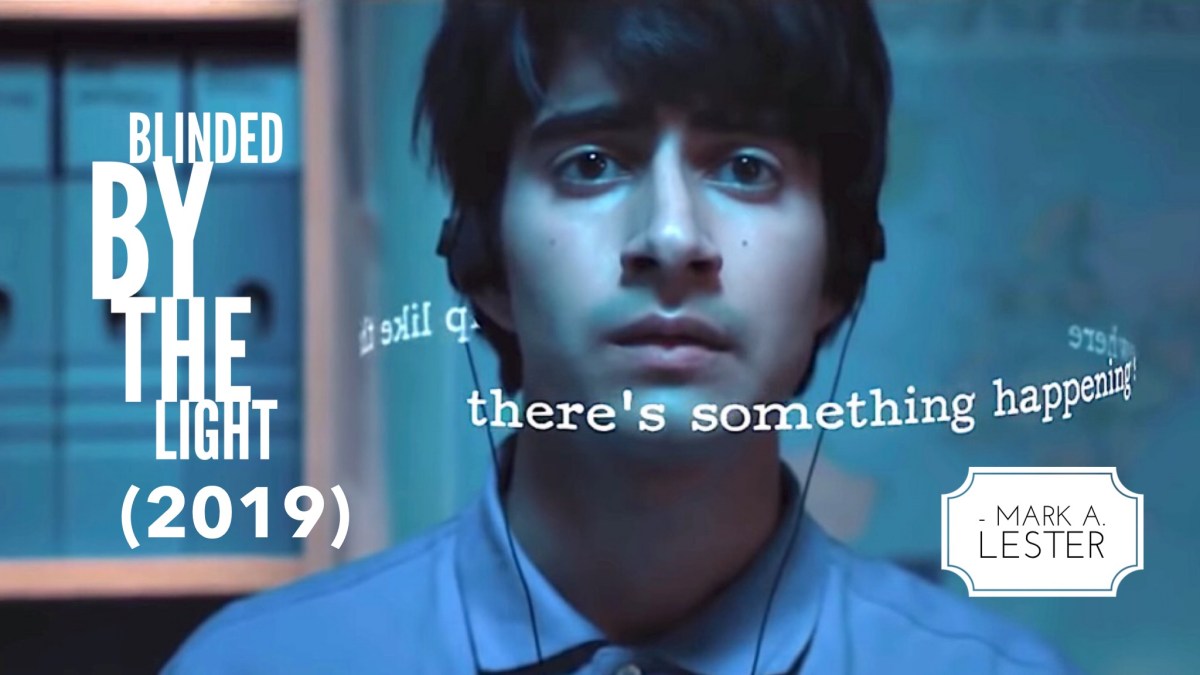
In just under twelve months, we have seen films that have glamourized the music of Queen (last year’s Bohemian Rhapsody), Elton John (Rocketman), and The Beatles (Yesterday), not to mention other music icons such as Ray Charles (2004’s Ray), Johnny Cash (2005’s Walk the Line) and Bob Dylan (2007’s I’m Not There). As is the case with any viewer, my familiarity with each artist varied as each movie started. The same is true for the film Blinded by the Light, the most recent film by director Gurinder Chadha (who made the unsung gem of a film Bend it like Beckham back in 2003), about a soul discovering the music of “The Boss” Bruce Springsteen.
Based on a true story, the film is set during 1987 England, during the times of Margaret Thatcher and increased chances of unemployment. It has been seven years since the Khan family has had to flee Pakistan due to the invasion of the Russians. With two older sisters, teenager Javed (newcomer Viviek Chadra) has many more problems than the average High Schooler. Perhaps the most stressful source in his life is his rather domineering (but still loving) dad Malik (Kuvinder Ghir), who is in danger of losing his job. He wants to make sure his son studies hard and “stays away from girls” (which he yells out for all to hear). His mother Noor (Meera Ganatra) is sewing clothes all day in order to make more money. One of his sisters, Yasmeen (Tara Divina), is set to be married, though he does get along well with his other sister Shazia (Nikita Mehta). He constantly seeks the attention of classmate Eliza (Nell Williams), though is still shy to come out of his shell. His only true escape is writing, but even though he tries to write lyrics for his lifelong friend Matt (Dean-Charles Chapman) and his band, the school paper still won’t publish Javed’s work. He does get inspired to keep at it by one of his teachers, Ms. Clay (Hayley Atwell, once Peggy Carter of the MCU).
All this changes when Javed meets Roops (Aaron Phagura), who insists that a listen to Bruce Springsteen will alleviate him. Indeed, when we experience Javed’s experience of his first Springsteen song (“Dancing in the Dark”), the words are so powerful to him that they almost literally jump off the screen.
The screenplay is rather predictable and borderline trite, as we know that Javed will be inspired to open up about his writing, show his true self to his family (something also very relevant in Bend it Like Beckham), express his feelings, and even interact with Eliza. Yet the film still works because of the nearly effortless charm of everyone in the cast, from Chadra in the lead role to Mr. Evans (David Heyman), the neighbor next door who turns out not to be all Javed believes him to be.
In my review on the film Yesterday (of which I was not a fan), I said that one thing that film got right was the zeal that the film’s character Jack (Himesh Patel) had for The Beatles. The same is true for Javed’s zeal of The Boss. Looking at Javed’s face as he listens to the music, it is easy to imagine back to the time when you were captivated by the Word of God. Not just reading it, but understanding it and letting its power guide your character. The same could be said of looking into the eyes of Javed, as he actually is oozing out intensity as he explains his love of Bruce Springsteen.
Parents, the film is a solid good PG-13. Most of this is do
to swearing (including words not considered swearing in the United States), but
there is a fair share of racism and mild violence (just a bloody nose when one character
is punched in the face). There is kissing, but nothing beyond that. Basically,
trust the rating.
As teenagers, we all had forms of escapism (no doubt mine were movies, both past and present). Undoubtedly, the real source we need to “escape” to is Jesus, which requires effort. Or better yet, as we learnt to live as Christ, we learn to live in the world and not escape from it.


 Nothing else to say