At the 92nd Academy Awards, when Bong Joon Ho was accepting his Oscar for Best Director (for Parasite), he paid tributes to each of his fellow nominees. The first (and most memorable) was toward Martin Scorsese, which prompted an unexpected standing ovation. It was clear that Bong Joon Ho was paying tribute to a mentor.
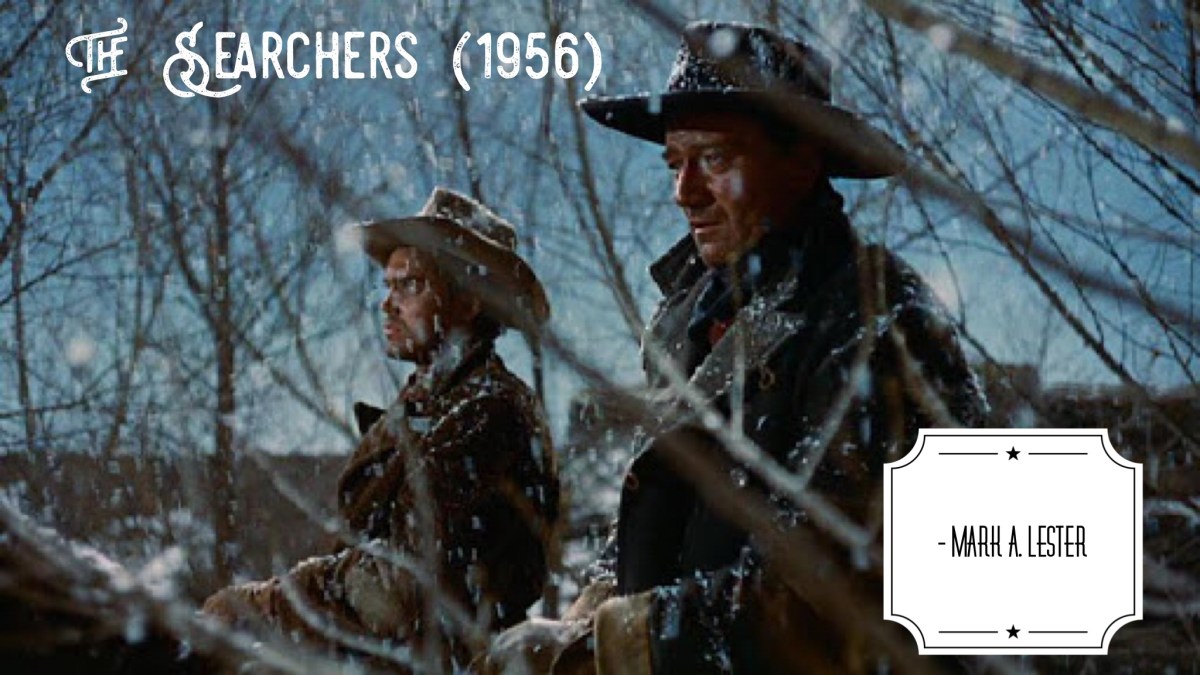
In the filming industry, perhaps no other career is more vocal of paying tribute to mentors than that of a director. Most (if not all) have stated they have been in total admiration of a certain director that came before them, often rewatching their films almost to a degree of pure obsession. Certain names come to mind: Hitchcock, Kubrick, Welles, Kurosawa, Spielberg, Scorsese, Eastwood, Coppola, Lucas, Tarantino, and Spike Lee, to name a few. However, all the big named directors seem to have one person they all agree on that had influenced their career. That name is John Ford. Famously, when Orson Welles was asked the directors he admired most, he said, “John Ford, John Ford, and John Ford.”
Around the age of 11, I was sitting at a cluster of desks in my fifth grade class when two of my classmates (Mary and Kelly) were talking about something. They both were holding a colored bottle of liquid. I asked what it was. It was some form of scented hand sanitizer.
Since I was such a victim of peer pressure, I went home and told my mom about this new “fad”. We eventually had a lemon scented bottle in our down stairs bathroom that seemed to last until some point when I was in High School.
Despite being an extroverted child with Asperger’s, it still seems to surprise some of my friends who did not know me growing up that I never once had a detention. Of course, it helps when nearly every person in your family history was a teacher in some capacity.
When I mentioned this to one of the minister’s at my church, he said he found that rather hard to believe. I responded simply, “That’s because you never met my dad”. That is not to say my dad was deeply strict or anything. My dad was totally loving and supportive. The issue was that, as a High School social studies teacher turned Dean turned Assistant Principal, he would tell me stories at the dinner table about what all the “bad” kids did (to be fair, it was more entertaining than what the “good” kids did). These stories, which must have started as far back as when I was a 1st grader were ingrained in my mind to know when to not mess around (despite being a self confessed class clown from time to time.)
In the 2000s, one of my favorite review sites to go to was that of “Mr. Cranky”. It was a satirical site (now no longer available), in which the reviews would state how bad the film really was (the highest rated were for films deemed “almost tolerable”).
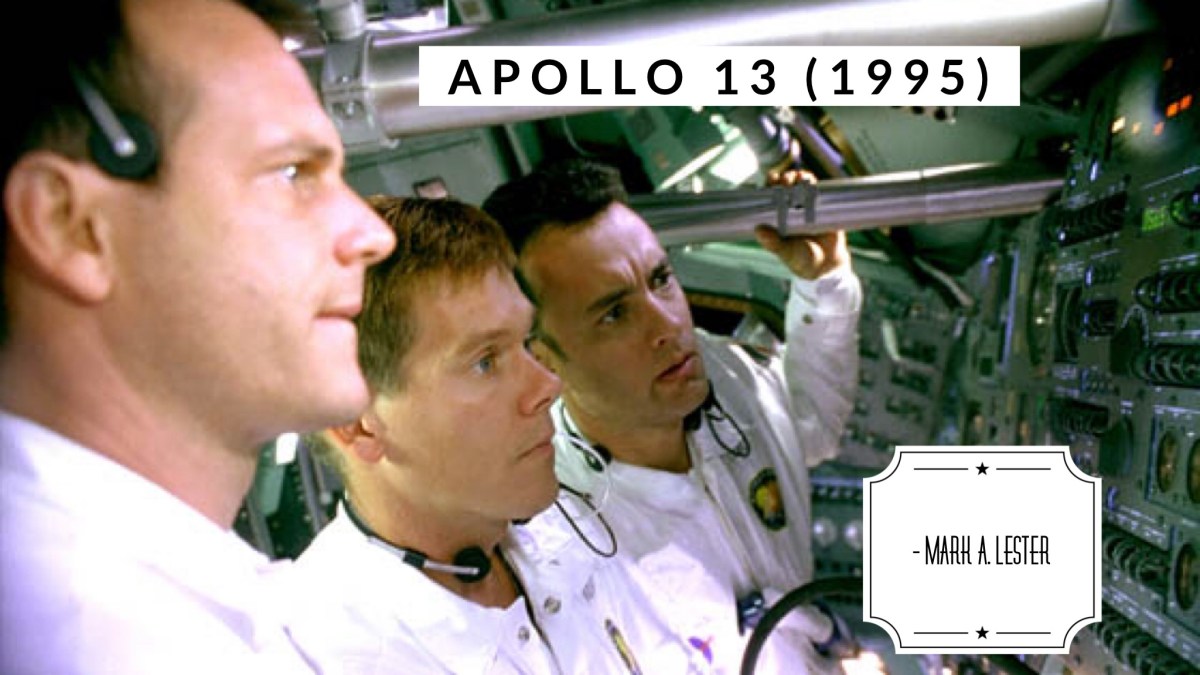
Of the many reviews I had seen, my favorite header came from the review of Apollo 13, which read along the lines of “Spoiler: They survive.”
Despite the fact that Superbowl LIV (2020) was the first title for the Kansas City Chiefs, the story most talked about was the half time show, featuring latin pop stars Shakira and Jennifer Lopez performing in ways that offended many.
Though I paid little to no attention to the show (it was not my type of music), it is understandable to see why many were concerned: it seemed to many to send a message that this is how women can act. Certainly, this is a vast difference from 1953, when Roman Holiday came out.
A older couple begins to quarrel. As the situation dies down, we see two young people look up from their books and notice each other. Had this happened in a movie these days, they would be texting, asking each other for their Snapchat profile. Since the film is long before the time of social media, the only thing these two strangers can really do is talk.
The whole opening dialogue on the train sets up what to expect from Before Sunrise: It is not about the content of the conversations, but the outer connection of the two leads.
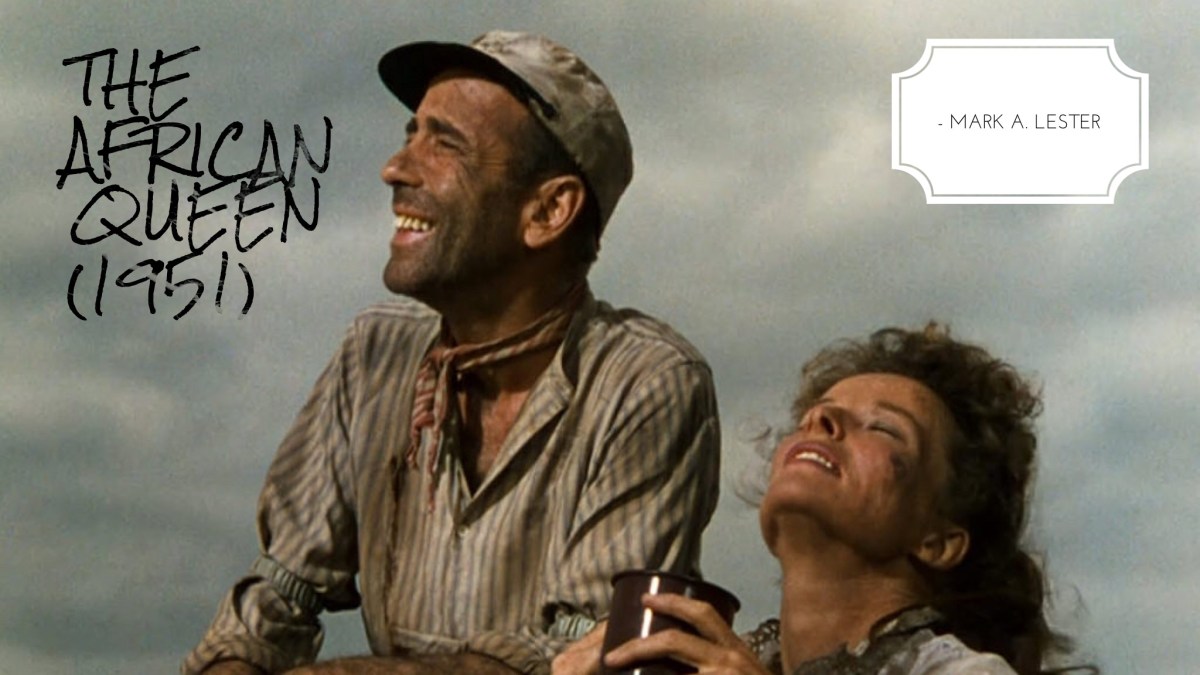
“Nature, Mr. Allnut, is what we are put in this world to rise above.”
This line, as said by Rose Sayer (Katharine Hepburn) to the ship’s Captain Charlie (Humphrey Bogart) is indeed central to the 1951 classic The African Queen. Yes, the film is basically about two strangers who fight the wilderness, but that is not all the nature we are witnessing.
Last year, when Netflix released the masterful film Roma, it was clear they were wanting the Academy to take them seriously. While it did win a good amount of awards (including Best Director), it did lose the big one, Best Picture, to Green Book (a film that, while charming at first, may be destined to be forgotten as time goes on). Much of this had to do with voters not liking the fact that a movie on a streaming service would win the night’s biggest honor, hoping instead for the winner to be one that was released theatrically.
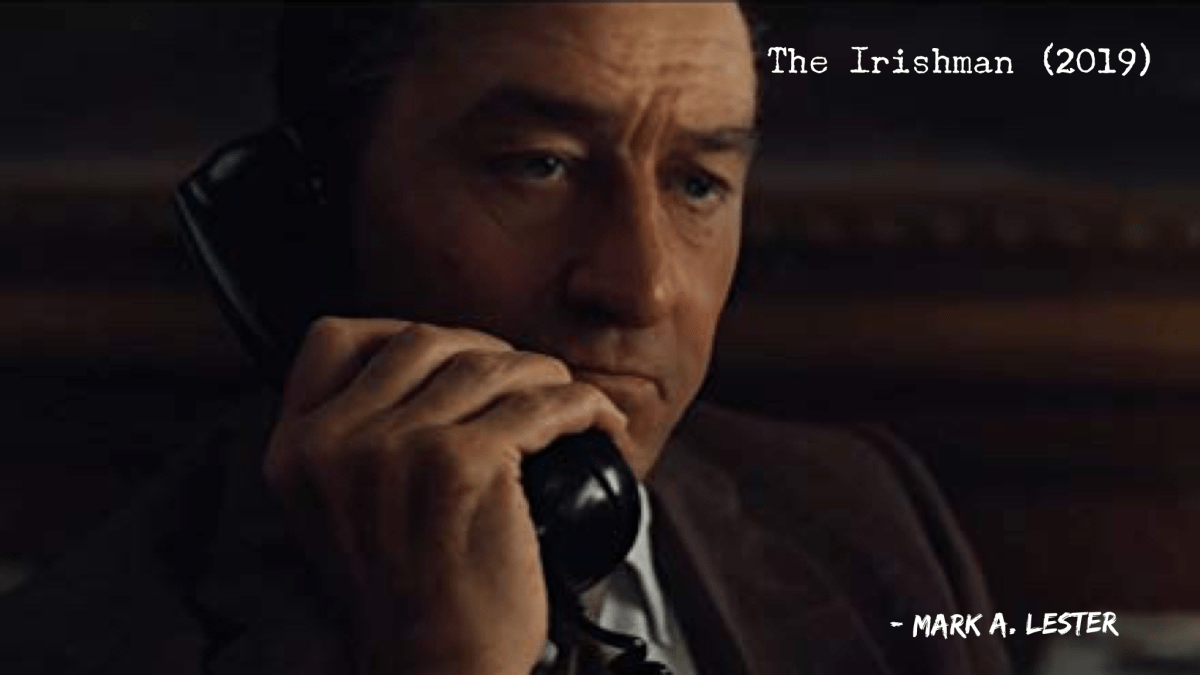
Somewhat ironically, during the same Oscar telecast, we got the first (and very brief) teaser trailer for Martin Scorsese’s The Irishman, the film I personally have waited for all year. Along with Scoresese, names like De Niro, Pacino, Pesci, and Keitel filled the screen.
With Roma, Netflix was clearly swinging for the fences. With The Irishman, they are swinging for the parking lot past the outfield bleachers, which, bluntly put, is the result we get.
I admit that it takes me more than a viewing or two to totally understand even the best of mafia themed films, but I will do my best. The film tells the story of a real life mob hitman named Frank Sheeran (Robert De Niro, in his first Scorsese film in almost a quarter century). Towards the end of his life, we hear him narrate as he recalls making his way through the mob with the Buffalino Family, after encountering Russell Buffalino (Joe Pesci), Frank’s new employer who reports to the big boss Angelo (Harvey Keitel). Eventually, they make there connections with helping the infamous union leader Jimmy Hoffa (Al Pacino), the man now most famous for his mysterious disappearance.
There are others in the cast who fill their roles with uncanny professionalism, as we see actors like Jesse Plemons and Bobby Cannavale. Though the film is indeed a male dominated one, Anna Paquin does some of her best work in years as Peggy, one of Frank’s grown up daughters. Still, I was most delighted and surprised to see Ray Romano as Russell’s cousin who acts as Hoffa’s main attorney. I have always loved Romano ever since I saw Everybody Loves Raymond as a kid, but it never crossed my mind that he would be cast a lawyer in a Scorsese crime drama, much less be as good as he is.
The normal themes of Scorsese films are present. I am not just talking about the swearing and the violence. The master film maker has indeed been vocal about being influenced by his cathlocism, which is evident in his films (at least the ones I have seen). The thought of having one’s occupation take priority over one’s morality. The idea of characters feeling utter remorse after the act of sinning, and seeking forgiveness afterwards (similar to Raging Bull and Goodfellas).
Though The Irishman does stand as its own achievement, it probably has more in common with Goodfellas than any other Scorsese film. Both are about two separate men rising in the mob world, only to enter that aforementioned remorse at the end. Goodfellas did dive more into the “family” aspect of the mafia, as well as it being more biographical than The Irishman (which centers more on a part of life than the whole life).
Parents, there is no beating around the bush: the film is
rated R for good reason. Even if there is no hint of sexual content (despite
one or two times characters kiss), it is more than compensated for with the
swearing and graphic violence.
It is not much of a surprise that the 2010s have not been the best of decades for either Robert De Niro, Al Pacino, or Joe Pesci (mainly since Pesci came out of retirement to do this film), at least when compared to past decades. That said, it is easy to say that it is the best any of them have been in years. Much of that credit should also be given to the film’s screenwriter, Oscar winner Steve Zallian (Schindler’s List, American Gangster, Moneyball).
We get a much more subtle De Niro than we are used to, but that does not make him any less affective. It is a little strange seeing Pesci being the authoritative figure to De Niro, but Pesci is just as brilliant even if he is not as bulldog crazy as he was in Goodfellas. The one with the most to do is Pacino. To me, Pacino has always been the only actor who you can always hear even if you put the mute button on. Here, he is not overacting because he chooses to, but because we sense that is how the character would be.
The three main lead actors are in their mid to late 70s, yet the special effects mixed with the superior acting makes us not think of anything but the story. The only flaw with the film (and it is as minor a flaw as can be) is that some moments do show the actor’s age (they can make the face look younger, but certain body movements do seem a lot slower for that young age).
One thing I have not yet mentioned is the runtime, which stands at nearly 3 ½ hours. Yes, that is a long time, but I assure you not one second of that is wasted. If the film seems slow, it is because it is patient in the storytelling (most notably in the last hour when we see Hoffa’s outcome. Nothing is on screen that does not need to be.
The Irishman clearly marked all of my expectations, and then some.
I am on one heck of a narrow tight rope here, discussing Parasite. This is a movie that deserves to be seen cold: very little foreknowledge going in is essential. It’s not every day you travel an hour to the movie theater, pay over twice the amount of the ticket for parking (thank you Chicago), only to see a two hour movie from South Korea.
It was worth every cent.
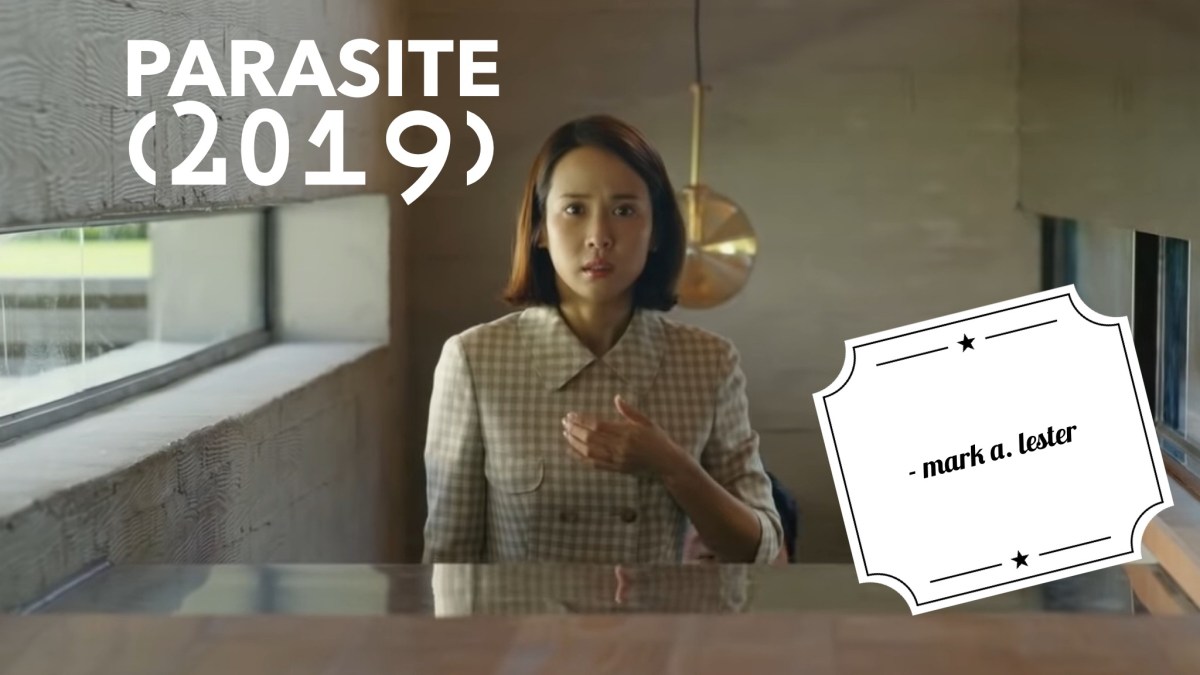
For the plot, I will tread as lightly as possible (there will be no spoilers, but I would not at all blame you for stopping at this point in the review, only to return after seeing the film.) Set in modern day South Korea, we meet the Kim family, living in a run-down basement as they are all scraping by to survive. The father Ki -taek (Kang-ho Song) is flawed but loyal to his wife Chung-sook (Hye-jin Jang), and supportive of his (somewhat) kind hearted son Ki-woo (Woo-sik Choi) and daughter Ki-Jung (So-dam Park), who is truly street smart to say the least.
The family finds themselves soon in the company of a much
weathier family, the Parks, also a family of four. The wife Yeon-kyo (Yeo-jeong
Jo) is simple (to say the least) but kind, as she looks over her teenage
daughter Da-hye (Ji-So Jung) and her son Da-Song (Hyun-jun Jung) while her
husband Dong-ik (Sun-kyun Lee) is at work.
The true star of the film, without question, is director Bong Joon Ho (who also wrote the film). If you have not heard the name before, get used to the name now. I admit I have only seen two of his other films (I guess I am late to the party): 2013’s Snowpiercer (with the MCU’s Chris Evans) and 2017’s Okja. The plan to see many more of his films is cemented in my mind, and I would hope in others’ as well (Okja is a Netflix original and Snowpiercer is streaming on the service at the moment as well).
All three films talk a good amount about the clashing of class in society to one degree or another. I have virtually no knowledge at all when it comes to the economy of South Korea, but I am also sure that is not necessary. We all have been guilty to a certain extent of being guilty of coveting our neighbor, be it for money (the root of all evil) or other things . What is great about the characters of Parasite is that there is no real sense of who is “good” and “bad”. Virtually all the characters are, in a sense, very gray.
Parents, the film is rated R, and for good reason. There is a good amount of swearing and some violence. There is also a scene of sexual content (very brief nudity) with two character lying on a couch that lasts about two or three minutes. Trust the rating on this one.
A few months ago, during my review of Once upon a time…in Hollywood, I mentioned how Quentin Tarantino is one of the few filmmakers today who can truly surprise me, giving me the truly unexpected. Bong Joon Ho (who Tarantino has said he is a big fan of) can now be added to the list. Parasite is more than just a thriller. It has plenty shares of laughs (sometimes out loud), wonderful performances (in particular Kang-ho Song and Yeo-jeong Jo), stellar set design (I am bewildered to have found out the locations were made for the film and are not actually legitimate places), and thought provoking to the core.
This is clearly one of the best films of 2019, and anyone who calls themselves a cinephile needs to seek it out.
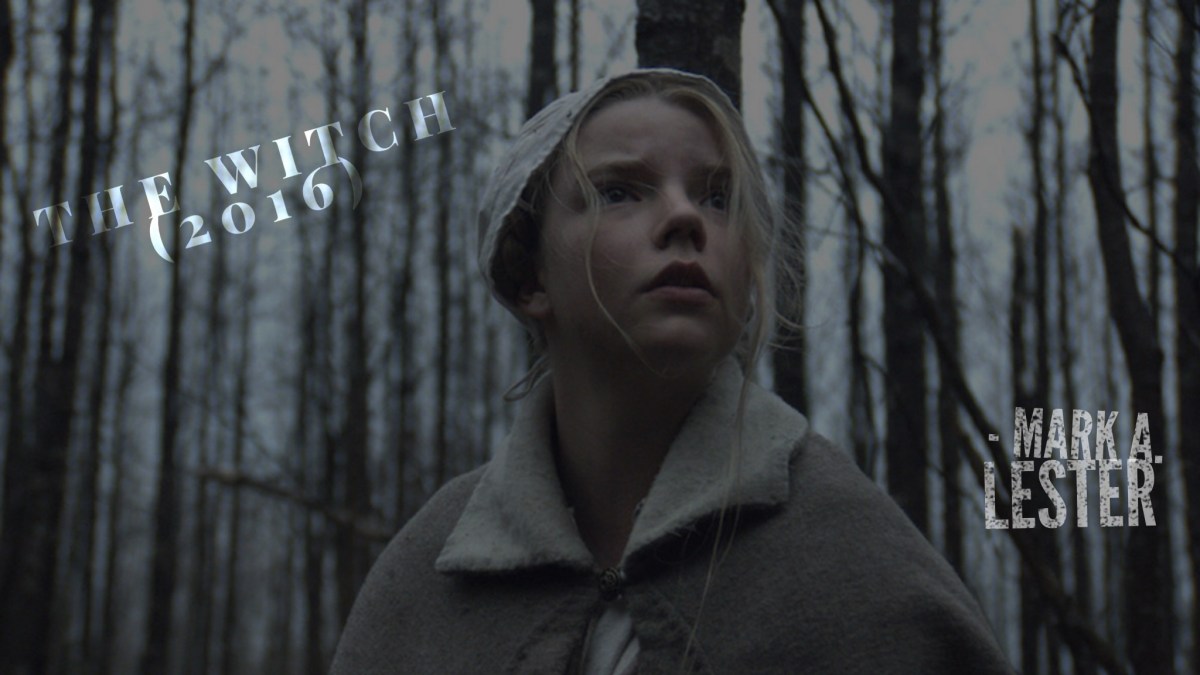
When it comes to paranoia, very few historical events are brought up before that of the various witch hunts (actual ones) that have occurred throughout human history (Salem being one of the most popular). I am not an expert (though I was rather intrigued when I did visit Salem), but it is hard to think that many of these incidents actually involved truth behind the accusations that were deployed. Of course, the fear behind the accusers would be more than understandable if they had been witness to the events of Director Robert Egger’s The VVitch, one of the best horror films of the decade (which has produced quite a good amount of horror classics).
Set in New England during the 1600s (a prime time of witch
hunting), God fearing William (Ralph Ineson) and his Katherine (Kate Dickie)
are kicked out of the local puritan village after accusing the villagers of
being false Christians. Along with their five children, they set out to edge of
the forest to start anew (“We will conquer this wilderness. It will not consume
us.”). While it is clear that the family tries as hard as they can to be humble
servants of God, things begin to slowly fall apart for them, as their newborn baby
Samuel vanishes without a trace.
While the family believes a wolf had taken the baby, we the
audience learn right away that it is indeed a witch (no real spoilers, since
that is the title). What causes the sudden mysterious acts soon leads to the
members of the family blaming each other, including Katherine, the oldest
daughter Thomasin (Anya Taylor-Joy) and even the young twins Mercy (Ellie
Grainger) and Jonas (Lucas Dawson). The only two who seem to start having a
cool level head about it is William and his second born son Caleb (Harvey
Scrimshaw).
The imagery of the film is terrifying (only amped up by the
searing soundtrack). What Eggers does so wonderfully (alone with cinematographer
Jarin Blaschke) is there is little to no added light to any of the scenes: it
is all purely natural (which is fitting, since electricity was nonexistent at
the time). When you revisit the film (if you are not too frightened), you can
honestly almost stop paying attention the narrative and just look at the
artistry of the landscapes and texture of all that is onscreen. It is said that
there needs to be darkness in order for light to shine, and the example here is
pitch perfect. In short, it is breathtaking.
One of the true hidden gems of the film is how the script (also written by Robert Eggers) uses the common speech of the times, yet it does not confuse us. When we hear phrases like “Wouldst thou…” and “thy”, we may at first be a bit uneasy (since no one uses those phrases anymore). However, it does not take us long to put that aside and realize that we not just watching some English pilgrims talking weird: we are watching humans experiencing emotions both relatable and terrifying.
When it comes to horror films, one of the crucial elements is the pacing. A close friend of mine (and horror film fan) told me that, while he likes this film, he thought it went a little slow. I told him I thought it was perfectly paced. While other cheap horror films try to give you a lot of “gotcha!” moments all over the place, the true great horror films build the suspense, and (as Hitchcock would say) play you like a piano.
All of the performances are highly affective, but the three that stand out are Ineson, Taylor-Joy, and Scrimshaw. Ineson’s William is indeed loving but still firm, making sure his family knows he will put God first in any circumstances. Though I have not seen him in anything since, Scrimshaw still shows talent beyond his young years (especially in one scene). Overall, it is Anya Taylor-Joy who steals the show, and is still showing promise of being a star in the making (since this film, she went on to star in 2016’s Split and 2019’s Glass, both by M. Night Shyamalan).
Parents, this film is High School and above, by far. There
is haunting imagery that will scare people of any age, not to mention some rather
graphic (albeit brief and mostly non sexual) nudity. Kids today may think of
witches as something intriguing (no doubt due to Harry Potter), but this deals
with the true horror of the nature of witches. It makes you realize for certain
why the bible did say to stay away from witchcraft.
As the movie progresses, we find out that each member of the
family has hidden sin to confess (even Caleb). For Christians, unconfessed sin
is a bad thing, and something that Satan always will feed off of (not just a
witch). While God always wins over Satan,
the movie shows what can happen when true evil takes over. That is the true
horror of the film.
That, and the goat and rabbit. Those will plague you for sometime.



 Nothing else to say