Categories
"Top Tens", and others Movies

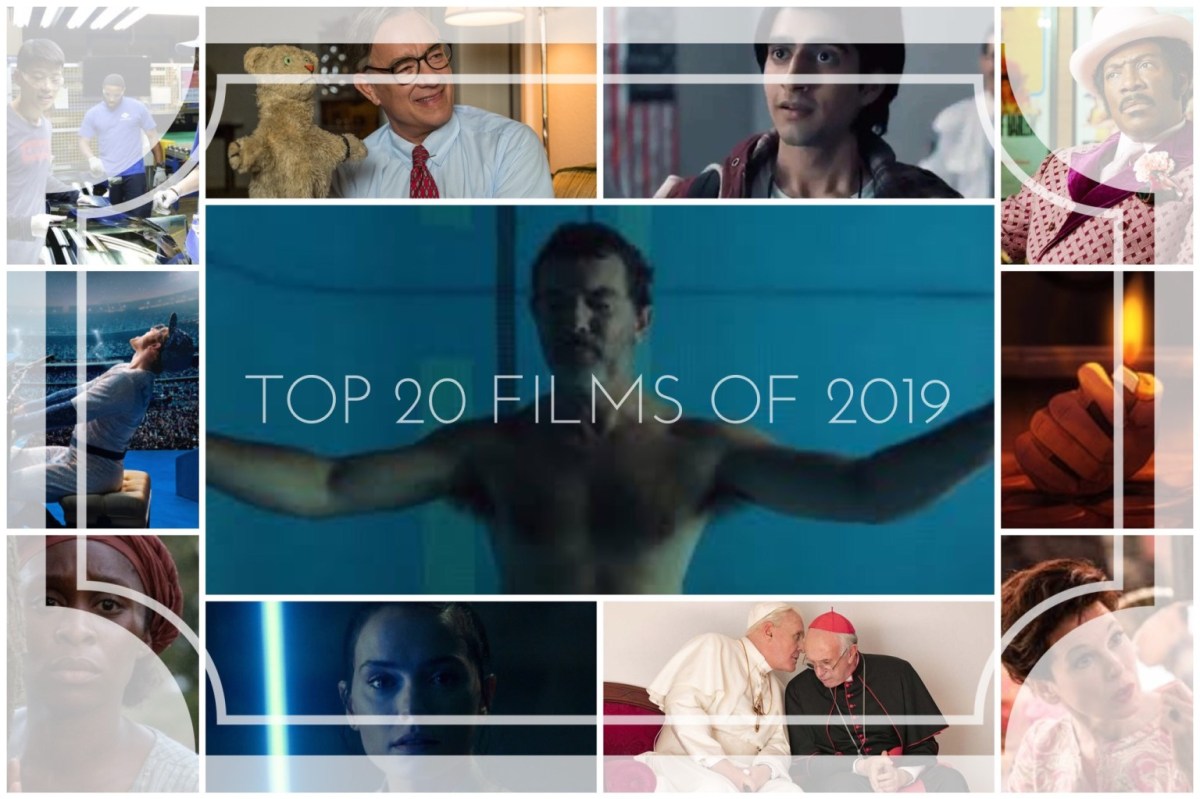
Top 20 Films of 2019

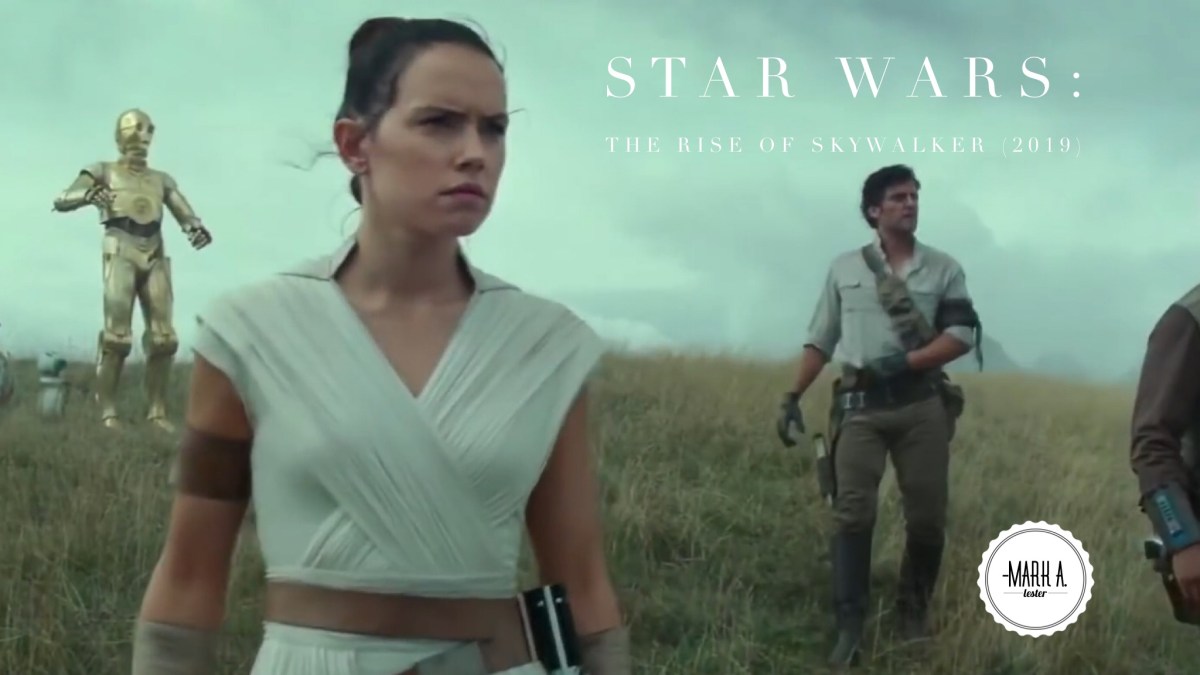
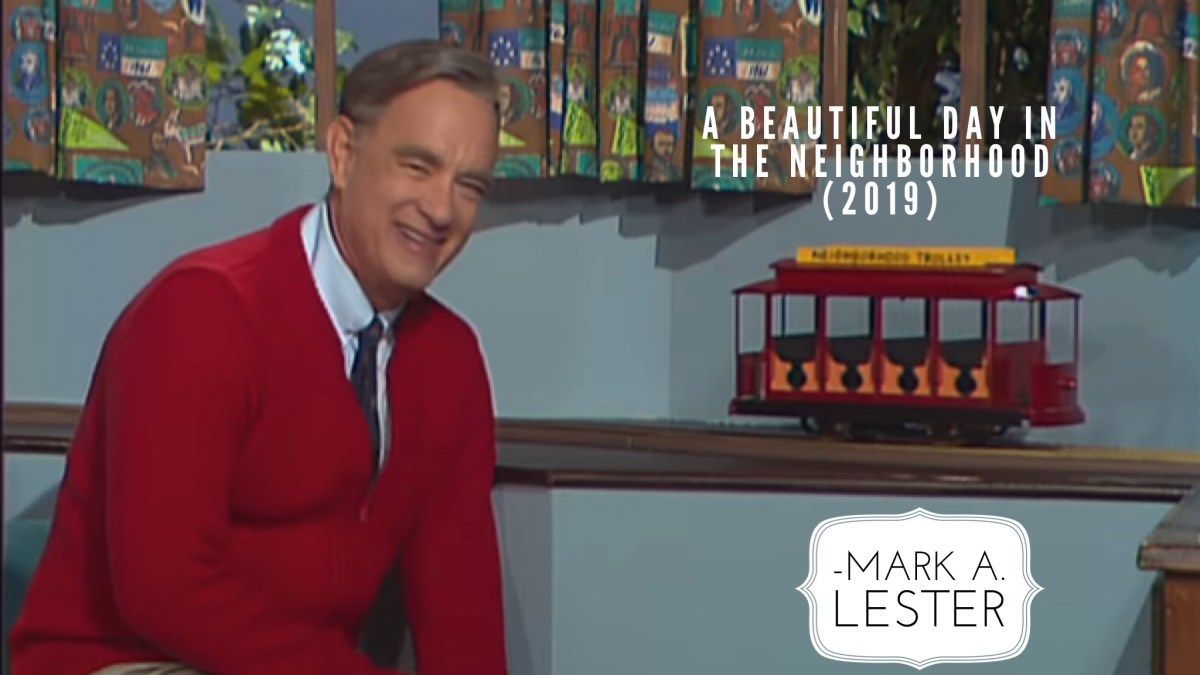
Toward the end of 2019, only when looking back did I realize how truly strong of a year this was for movies. As I progress in life as a movie goer, finding the good movies becomes easier. I always equate it to picking raspberries when I was a kid: the better ones are not always out in front. As has been the case of the past few years, I have decided to do a top 20 instead of a top 10. Even with 20, movies shown above such as The Two Popes, A Beautiful Day in the Neighborhood, Pain and Glory, and Star Wars: The Rise of Skywalker did not make the cut.

So without further ado…

Cinephiles!…ASSEMBLE!

Categories
4 Stars Movies

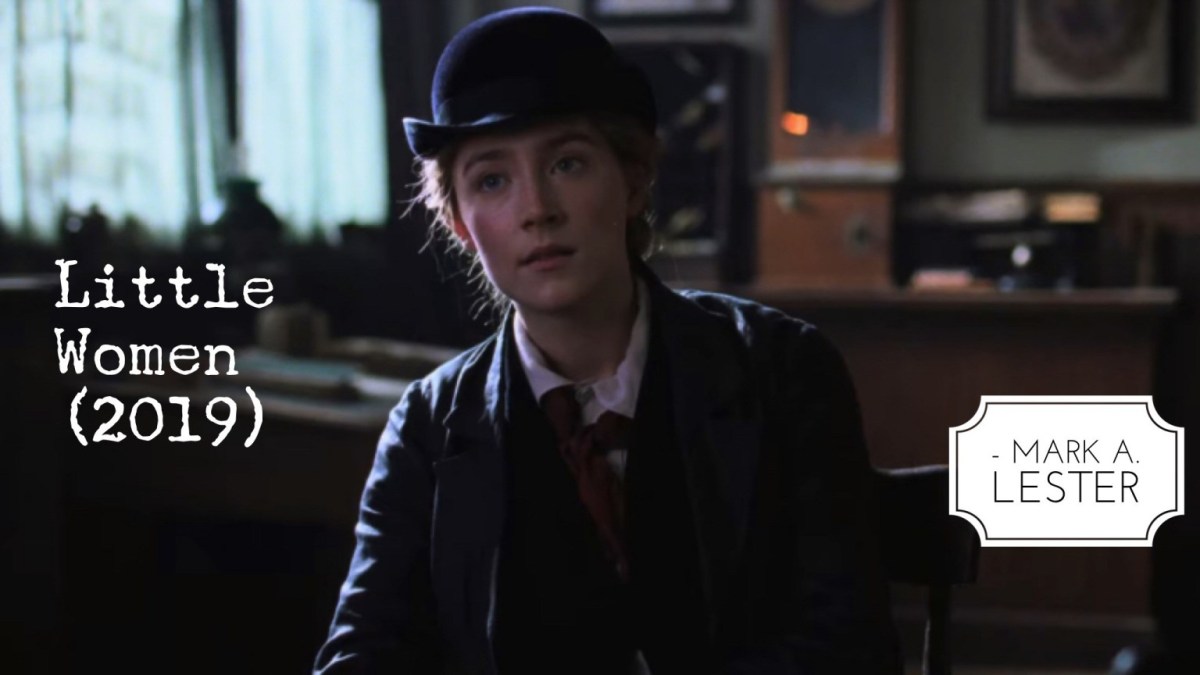
Little Women (2019)

Except for the fact that it was a classic book that had been remade numerous times over the decades, my knowledge of Little Women was practically nil. Of course, as a kid, I would rather have been reading Robin Hood, Frankenstein, or Tom Sawyer over a book with a title clearly meant for the female audience. This left me entering the newest adaptation of Louis May Alcott’s beloved book mystified as to what I would experience, though I had some hopes since it was directed (and adapted) by Oscar nominee Greta Gerwig.

The result was, to say the very least, surprisingly heart warming, as Gerwig and the knockout cast deliver to both newbies (like me) as well as fans. While I may be wrong on some of the characters and their relationships, I will do my best (thankfully, there was an older couple two seats down the aisle from me, and I could here the woman explaining things to her husband.) The film is told in two separate times, seven years apart. The earlier days is during the civil war, where we meet the four march sisters. They are Jo (Saoirse Ronan, teaming up again with Gerwig after their 2017 film Lady Bird), Meg (Emma Watson), Amy (Florence Pugh), and Beth (Eliza Scanlen).

Their father is off serving the North in the Civil War, so they try to make the best of things alongside their mother, Marmee (the wonderful Laura Dern). We also meet their neighbor, Mr. Laurence (the ever reliable Chris Cooper) and his grandson Theodore, aka “Laurie” (Timothee Chalamet, also from Lady Bird). And, of course, let us not forget Aunt March, played by Meryl Streep. There are many actresses who can proclaim they are “not always right, but are never wrong.”, but can you think of any you would want to have say that over Streep?

As is the case with all siblings (not just sisters), there is love, envy, forgiveness, resentment, and mischief. This is mainly shown in the earlier time, since the sisters are younger and less mature. Each sibling has their own unique strength: Meg (who I believe is the eldest) is drawn to the theater. Jo is a writer of stories. Amy is a painter. Beth is musically inclined on the piano. A good chunk of the film is how each sister (especially Jo) realizes that growing up means going down different roads. As Meg states,

“Just because my dreams are different than yours, it doesn’t mean they’re unimportant.”

 They also have their different character traits as well (which I can only assume is true to the original material). While Meg and Beth are on the gentler side (especially Beth), it is Jo and Amy who are more head strong, which could explain why both are having feeling for Laurie. Jo herself states how she is amazed she was not born a boy. Even so, she is still prone to show her vulnerability.

One of the best examples of this is toward the end of the film, when Jo is talking to her mother about love (one of countless scenes of nearly impeccable acting). When asked if she loves a certain character, Jo responds,

“I care more to be loved. I want to be loved.”

Marmee responds,

“That’s not the same as loving.”

As humans, we are all looking for love. As children, we look towards our parents (or guardians). As we get older, we enter the stage of wishing for a significant other (once we realize cooties are not actually a thing.) Yet we realize that actual love is not a one way street: relationships don’t work if the love is not reciprocal.

Jo also has a moment of trying to defy God (which is an action that sums her character up in detail). While caring for a sick family member, Jo is told,

“We can’t stop God’s will.”

Jo responds,

“Well, God hasn’t met my will yet. What Jo wills shall be done.”

Regardless of where we are in our walk with God, we have all tried to defy God and/or his will at one point or another. This is one of the most raw forms of pride we possess. Of course, when we have a loved one who is sick, injured, or depressed, we feel bad for them as well as ourselves. It is when we start thinking along the lines of “Well God, if you won’t do anything, then I will!” that we start going down the wrong path.

All the performers make their mark, but the two that stand out are Saoirse Ronan and Florence Pugh. As of this writing, both of their awards buzz has died down a little, but I would still not at all be surprised if they heard their names when the Oscar nominations are announced.

Perhaps the best part of the film, however, is how Gerwig (who clearly has a great film making career ahead of her) adapted the story. She balances the classical nature of the story with the right amount of contemporary energy that makes the film seem almost like a relic, yet still relatable.

Parents, this may be the family holiday movie that you don’t know your family actually needs (though I can see young boys not wanting to see this.) It is rated PG, mainly for the thematic elements. There is no swearing or violence, and only two kisses I can remember. I would guess a girl of any age would heart this film.

Little Women does have moments were it tends to drag on a bit, but very few times: I was basically enthralled the whole time. When you think of it, making this film was very risky. A PG family movie with mainly a female lead cast, no action or songs (basically, a film not steered by the Mouse House). Yet that does not take away from the films morals of life, heartbreak, romance, and all the little things in between. As one character states,

“Morals don’t sell nowadays.”

Little Women is nothing short of a delight.

Overall:
Rating: 4 out of 5.
Categories
3 1/2 Stars Movies

Star Wars: The Rise of Skywalker (2019) – Spoiler Free

Since the age of 9 or so, I have always considered myself a moderately strong member of the light side of the force. That said, I would be worse than a Sith Lord if I were to even begin to start spoiling what happens in the final saga of the nine episode epic. Though the film is far from perfect, The Rise of Skywalker is still going to offer satisfaction of some kind to anyone who is related to the force.

If you have seen the trailers (and if you haven’t you should probably stop reading), you know we are getting the return of Emperor Palpatine (Ian McDiarmid, owner of one cinema’s greatest cackles). All that is left in his way of returning the Sith to power is the remains of rebels in his way. Leading the charge, of course, is Rey (Daisy Ridley), still in search of the mystery of her past, with the tutelage of Leia (the late Carrie Fisher). Also still in rebellion (so to speak) is Finn (John Boyega) and Poe (Oscar Isaac), along with Chewbacca (Joonas Suotamo, filling in for the late great Peter Mayhew), Rose (Kelly Marie Tran), and, of course, droids R2-D2, BB-8, and C-3PO (Anthony Daniels, the only actor to appear in all nine films). I would also be remiss if I did not mention Billy Dee Williams returning as Lando Calrissian.

As is always the standard for a Star Wars film, we get a handful of new characters. Again, I won’t try to spoil much, but two come to mind that I was a fan of. The first is a small droid called D-O (voiced by the film’s director, J.J. Abrams). The second is a character played by Richard E. Grant (last seen being nominated for an Oscar for 2018’s Can You Ever Forgive Me?). When you see him, you will see how he fits the role perfectly, and you wish the producers had gotten him earlier on in the series.

Perhaps what lacks in this film is how is does not continue the flow of episodes seven and eight. True, The Last Jedi is the one that is the oddball of the three (and I still defend it), but it seems like there are many elements where the story takes a step back instead of forward. What made the original trilogy so great (probably the best film trilogy there is) is that it not only worked as a trilogy, but as three individual films as well (The Godfather Trilogy would have if part three was up to par). For Star Wars Episodes 7-9, they work as individuals, but lack enough connection as a whole.

Parents, it is a Star Wars film, so it is likely your kids will be begging you to see this. There is mild violence and some swearing (very mild for a PG-13 movie). There is no nudity, and the only sexual content are a couple kisses (1 of them very briefly is between two female pilots and is completely unnecessary to the film; virtual signaling by Abrams).

The Rise of Skywalker indeed has a blissful conclusion, but the road there was rocky at best: Like traveling to Rome via Colorado’s Million Dollar Highway. A colleague of mine also mention how much the film has many similarities towards Avengers: Endgame (mainly in the last act).

Still, it is a satisfying conclusion to the saga that will as the tagline (and the immortal music of John Williams) informs us: No one is ever really gone.

Overall:

Rating: 3.5 out of 5.
Categories
"Top Tens", and others Movies

50 Worst movies of the 2010s

“The point is not to avoid all Stupid Movies, but to avoid being a Stupid Moviegoer.” – Roger Ebert

I imagine many occupations are ones where you can say you “learn on the job”. As a (potential) movie critic, I can say that you never stop learning.

Still, I am not immune to making mistakes, and the following are the fifty movies of the 2010s that left that taste in your mouth that you are grateful to get rid of, but cannot forget the experience.

In short, I would rather watch the Sharknado films.

Categories
4 Stars Movies

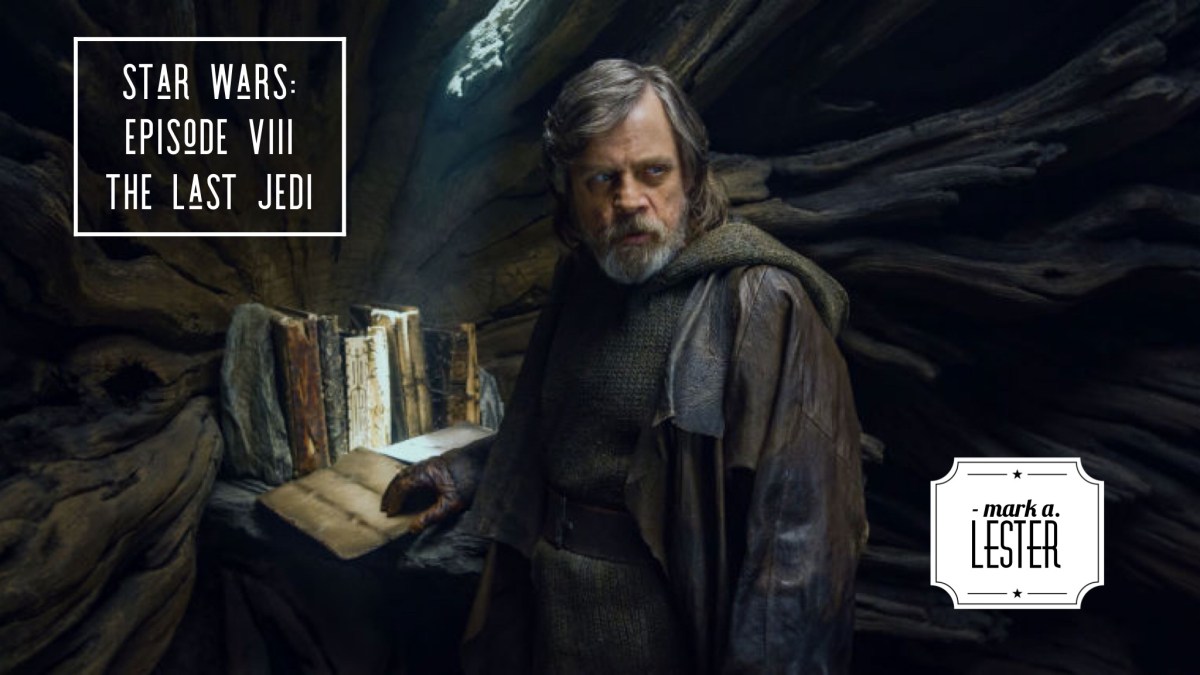
Star Wars: Episode VIII – The Last Jedi (2017)

Update: With The Rise of Skywalker less than a week away, it was inevitable that I would return to watching The Last Jedi. I am confident in saying that no other movie in my life time has ever been this divisive, splitting the opinions of families and friends world wide. I am still sticking to my guns (or blasters, as it were).

No one can overstate the fandom of the Star Wars Universe. Even so, regardless of how many times you have seen the movies, the amount of books you read, the hours of gameplay you have spent on KOTAR (Knights of the Old Republic) and the Lego versions, and even if you know the difference between a fambaa and a Tauntaun (actual creature names in the Star Wars Universe), you are still going to be surprised by Star Wars: Episode VIII – The Last Jedi. The dialogue from Luke Skywalker (Mark Hamill) says it best:

“This is not going to go the way you think!”

Set right after the events of The Force Awakens, this film shows the rebels under attack and virtually cornered by the first order, led by Snoke (Andy Serkis) and his apprentice Kylo Ren (Adam Driver). Despite efforts by Poe Dameron (Oscar Isaac) and others, the rebel’s star ships seem to be running low on fuel and are at the end of their rope. Still, hope is still being held onto, mainly by Leia (the late great Carrie Fisher, whose final film performance both melts your heart and warms it at the same time). Meanwhile, Rey (Daisy Ridley) has finally found Luke Skywalker, but getting him to join the fight is no easy feat.

That is all I will say of the plot, because I would never dream of dropping any spoilers. I can say that this film does seem to be in a class of its own in the Star Wars franchise. It has shown us parts of the force we have not experienced before. Yet where it differs, the similarities are still there (there are vibes you get of The Empire Strikes Back as well as Return of the Jedi). There are twists we do not see coming, and I was shocked many a time during the film. That is a positive thing.

Obviously, the film is a technical marvel. It is so wondrous to see that, even after all these years, the Star Wars films can still give us imagery that we have not yet seen (the same goes for the music, done, once again, by the legend that is John Williams.) The credit of taking a risk with going in a different direction has got to go to director Rian Johnson (who also helped write the screenplay). This even includes some unexpected, yet delightful humorous moments.

The Last Jedi does have some faults that keep it from the likes of Episodes 4 and 5. The movie is long (the longest, in fact, of the franchise, at 2 1/2 hours). There is also a character played by Benecio Del Toro (undoubtedly an amazing actor) who, I feel, was totally redundant to the film. His character, DJ (which really seems a little odd for a Star Wars film, somehow) is in a situation to help the rebels, but that situation alone was awkward writing in the first place. One of the main arguments of the film (and there are too many to count from Star Wars fans) is that the subplot with the Casino does not work, and I agree.

Still, we get some fresh new faces that add to the franchise that are more than welcome. The two stand out characters are Rose Tico (Kelly Marie Tran), a rebel fighter helping Poe and Finn (John Boyega), and Vice Admiral Holdo (the always wonderful Laura Dern). All these characters (and others) get at least one moment in the film to shine (some of which will have you applauding). 

The one main scene involving Dern’s character has been debated constantly, with haters of the film saying that her decision would not work at all in the vast scheme of things. My response to that would be to simply ask, “Do we really go to a Star Wars film to be informed or entertained?” Let’s not forget, this is Science Fiction.

Parents, if your kids have seen at least one other film in this franchise (and if they haven’t and are old enough, what are you waiting for?!?!), they will be fine here. There is no nudity or sex, just some mild swearing and (obviously) action.

As of this review, there is a vast difference in opinion between critics and the public (as is normally the case). It is strange, however, that the critics seem to like it a lot more (at the moment, 93% of critics liked it, while only 63% of the audience liked it*). Upon reading the reviews from the latter, I realize a lot of people are upset that certain questions are not answered. Personally, I feel not all questions need to be answered in a movie. It is up for interpretation, meaning The Last Jedi will require many a viewing.

Something I will gladly do.

Overall:

Rating: 4 out of 5.

*As of 2019, the critics rating is 91%, while the audience is 43%. The ultra Star Wars fanboys/girls have given this film the treatment equivalent to throwing it to the almighty Sarlac.

Categories
2 1/2 Stars Movies

Frozen 2 (2019)

Even those of us who are not parents did not have to make much effort to see how much of a cultural impact the original Frozen film made back in 2013. It came out just in time before the beginning of the live action remake wave that Disney is now on, gave a lot of kids (especially girls) life lessons to learn, and songs that were stuck in their heads (as well as their parents’) for so long afterward I feel we may have forgotten how good it was to begin with. The only true negative about the film was that it made Disney produce Olaf’s Frozen Adventure, which would have been fine had it not been played before 2017’s Coco as a “short” (it was 20 minutes long), resulting in a theater experience I still am recovering from.

Still, we now come to Frozen 2, which (thankfully) does not reference anything to Olaf’s Frozen Adventure. As children, Elsa and Anna are told by their parents (who we know died in the first film) that the people of Arendelle were once sent to the forest to make a form of peace with the dwellers of the forest, where the spirits of earth, wind, water, and fire would dwell (kind of like that film The Last Airbender, without the awfulness). In the present, Elsa (Idina Menzel) begins hearing voices, leading her to the forest where an immense fog has made the way completely impassable. She is joined, of course, by her little sister Anna (Kristen Bell) and Anna’s boyfriend Kristoff (Jonathan Groff), Kristoff’s loyal reindeer Sven, and Olaf (Josh Gad), destined to go down as one of the best supporting comic relief characters in Disney’s long history.

As is the case with nearly all animated sequels (Disney or otherwise), the returning characters are accompanied with some fresh new faces, including Sterling K. Brown ( from This is Us) as a long-time loyal guard to Arendel. Other voice talents include Alfred Molina, Evan Rachel Wood, and Jason Ritter. My favorite new addition was that of a speechless and small (yet powerful) small toad that is befriended by Elsa.

The story is (mostly) solid, and kids can walk away learning about how we all play a part in the grand scheme of things, as well as helping out your friends/family. One thing I regret to say adults will not like is that the songs of this film are not as up to par as those from the original. That is not to say they are totally bad, but I for one did not find myself humming hardly any tunes from this film (unlike the first film, which made “Let it Go” one of the most overplayed songs in the history mankind.)

An example of this would be the song “Into the Unknown”, which is being marketed as the sequel’s “Let it Go”, sung by Menzel’s character Elsa. I recall the first feelings I had when I sat in the theater during the first film and got chills (so to speak) when “Let it Go” was performed. Vibes were sent through me that truly reminded me of Menzel’s true iconic song, “Defying Gravity” (from the musical Wicked). I did not get this sense here and would argue it is not even the best song of the film (I was more into Elsa singing “Show yourself” and Kristoff singing “Lost in the Woods”.) Matters are made even worse when the credits role, and “Into the Unknown” is sung by Panic at the Disco.

Even the solo song by Olaf is rather disappointing. In the first film, we truly believed that his character was certain to be having a future life “In Summer”. Here, he sings about how all things will make sense “When I am Older”. All well and good, but the song seems like the makers just said “Quick, we need a song for Olaf!”, and did not stop to realize it is not part of the story at all.

Parents, this is easily one movie you will probably end up taking your kids to, since I am certain many have been begging there parents for ages about it. There are some dark moments, but nothing most kids can’t handle.

Will kids enjoy Frozen 2? More than likely (at least those under the age of 7 or so). The little girl sitting behind me (around five or six years old) surely did, when she said at one point “I want that dress!”. Parents are another story (though Olaf does give all ages plenty to laugh about). The first film enthralled us with stunning animation, catchy songs, and intriguing new characters. No one would have predicted before the first film came out that it would become the entity it is today, which was mainly due to engaging the imaginations of all ages of the audience (something that Disney is arguably the best at doing in any form of entertainment).

For Frozen 2, the movie does try to go into newer territory, but it did not take as many original risks as the first film. It would have been a better film if it truly did venture into the unknown.

Overall:

Rating: 2.5 out of 5.

Categories
5 Stars Movies

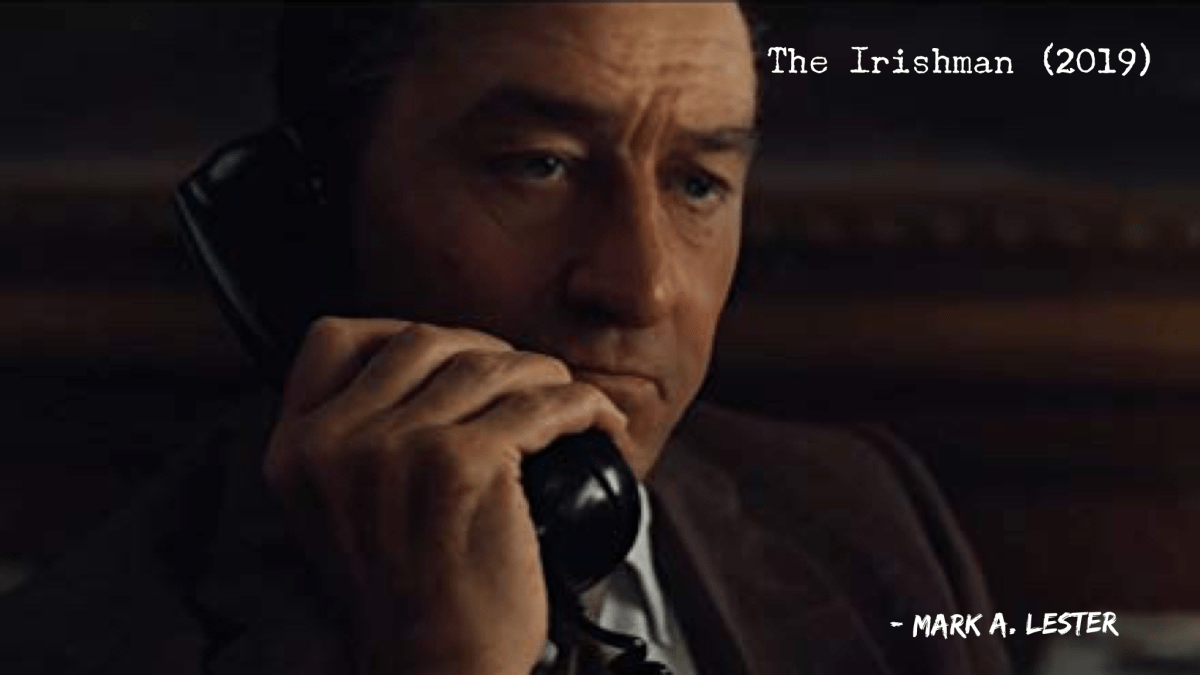
The Irishman (2019)

Last year, when Netflix released the masterful film Roma, it was clear they were wanting the Academy to take them seriously. While it did win a good amount of awards (including Best Director), it did lose the big one, Best Picture, to Green Book (a film that, while charming at first, may be destined to be forgotten as time goes on). Much of this had to do with voters not liking the fact that a movie on a streaming service would win the night’s biggest honor, hoping instead for the winner to be one that was released theatrically.

Somewhat ironically, during the same Oscar telecast, we got the first (and very brief) teaser trailer for Martin Scorsese’s The Irishman, the film I personally have waited for all year. Along with Scoresese, names like De Niro, Pacino, Pesci, and Keitel filled the screen.

 With Roma, Netflix was clearly swinging for the fences. With The Irishman, they are swinging for the parking lot past the outfield bleachers, which, bluntly put, is the result we get.

I admit that it takes me more than a viewing or two to totally understand even the best of mafia themed films, but I will do my best. The film tells the story of a real life mob hitman named Frank Sheeran (Robert De Niro, in his first Scorsese film in almost a quarter century). Towards the end of his life, we hear him narrate as he recalls making his way through the mob with the Buffalino Family, after encountering Russell Buffalino (Joe Pesci), Frank’s new employer who reports to the big boss Angelo (Harvey Keitel). Eventually, they make there connections with helping the infamous union leader Jimmy Hoffa (Al Pacino), the man now most famous for his mysterious disappearance.

There are others in the cast who fill their roles with uncanny professionalism, as we see actors like Jesse Plemons and Bobby Cannavale. Though the film is indeed a male dominated one, Anna Paquin does some of her best work in years as Peggy, one of Frank’s grown up daughters. Still, I was most delighted and surprised to see Ray Romano as Russell’s cousin who acts as Hoffa’s main attorney. I have always loved Romano ever since I saw Everybody Loves Raymond as a kid, but it never crossed my mind that he would be cast a lawyer in a Scorsese crime drama, much less be as good as he is.

The normal themes of Scorsese films are present. I am not just talking about the swearing and the violence. The master film maker has indeed been vocal about being influenced by his cathlocism, which is evident in his films (at least the ones I have seen). The thought of having one’s occupation take priority over one’s morality. The idea of characters feeling utter remorse after the act of sinning, and seeking forgiveness afterwards (similar to Raging Bull and Goodfellas).

Though The Irishman does stand as its own achievement, it probably has more in common with Goodfellas than any other Scorsese film. Both are about two separate men rising in the mob world, only to enter that aforementioned remorse at the end. Goodfellas did dive more into the “family” aspect of the mafia, as well as it being more biographical than The Irishman (which centers more on a part of life than the whole life).

Parents, there is no beating around the bush: the film is rated R for good reason. Even if there is no hint of sexual content (despite one or two times characters kiss), it is more than compensated for with the swearing and graphic violence.

It is not much of a surprise that the 2010s have not been the best of decades for either Robert De Niro, Al Pacino, or Joe Pesci (mainly since Pesci came out of retirement to do this film), at least when compared to past decades. That said, it is easy to say that it is the best any of them have been in years. Much of that credit should also be given to the film’s screenwriter, Oscar winner Steve Zallian (Schindler’s List, American Gangster, Moneyball).

We get a much more subtle De Niro than we are used to, but that does not make him any less affective. It is a little strange seeing Pesci being the authoritative figure to De Niro, but Pesci is just as brilliant even if he is not as bulldog crazy as he was in Goodfellas. The one with the most to do is Pacino. To me, Pacino has always been the only actor who you can always hear even if you put the mute button on. Here, he is not overacting because he chooses to, but because we sense that is how the character would be.

The three main lead actors are in their mid to late 70s, yet the special effects mixed with the superior acting makes us not think of anything but the story. The only flaw with the film (and it is as minor a flaw as can be) is that some moments do show the actor’s age (they can make the face look younger, but certain body movements do seem a lot slower for that young age).

One thing I have not yet mentioned is the runtime, which stands at nearly 3 ½ hours. Yes, that is a long time, but I assure you not one second of that is wasted. If the film seems slow, it is because it is patient in the storytelling (most notably in the last hour when we see Hoffa’s outcome. Nothing is on screen that does not need to be.

The Irishman clearly marked all of my expectations, and then some.

Overall:

Rating: 5 out of 5.
Categories
3 1/2 Stars Movies

A Beautiful Day in the Neighborhood (2019)

For one reason or another, I was very worried when I first heard that Tom Hanks would be playing “Mister” Fred Rogers, especially only a year after the superb documentary Won’t you be my Neighbor? (which I am surprised was not nominated for an Oscar). The great Fred Rogers was someone we all, to some extent, truly took for granted. A soul of pure kindness that everyone would have given anything to have called neighbor, and ended up being the host of one of the greatest children’s programs in TV history (probably second only to Sesame Street). Truly one of a kind, I did not even think someone like Tom Hanks could replicate the aura of Rogers.

Obviously, I was wrong. It is the best Hanks has been in years, even though he is not the true center piece of A Beautiful Day in the Neighborhood. That falls on Lloyd Vogel (Emmy winner Matthew Rhys), a journalist known for writing profiles that seem to always bring the negative out in the subject. When asked to do a piece on heroes, no one wants him to do the profile. No one, that is, except Mr. Rogers. When he mentions it to his wife Andrea (Susan Kelechi Watson from the TV show This is Us), she begs her husband, “Please don’t ruin my childhood”.

It does not take long for the viewer to realize Lloyd’s own troubles, as he has a rather rocky (to say the least) relationship with his father Jerry (Oscar winner and always reliable Chris Cooper), resulting in some punches thrown at the beginning of the film (he assures others who see his wounds that it was a softball incident). This part of the plot does teeter a bit towards the mundane, if only because experienced movie goers will know the expected outcome. Thankfully, that does not mean it is not effective at times. This mainly occurs when Lloyd finally begins to open up about his feelings, first with Rogers.

One of the more interesting things of the film is how director Marielle Heller (who was at the helm of 2018’s Can You Ever Forgive Me?) structures it like an actual episode of Mr. Roger’s Neighborhood. I found this both effecting and sometimes perplexing. It is how we are introduced to the Lloyd Vogel character (who is based on real life journalist Tom Junod), as Rogers asks us if we know what it means to “forgive” (something all ages need to remember these days). I was okay with the fourth wall breaks that occurred, but some segments seemed almost superfluous, such as Rogers spending a few minutes showing us how a magazine is made.

There is no way for me to continue with the review without talking about Tom Hanks. It must have been truly inevitable that, when the time came for Mr. Rogers to be portrayed on screen, only Hanks could have done so. When looking back, perhaps I was worried about the casting because Hanks does not show much of a physical resemblance to Fred (my expectations can be high at times). Thankfully, I soon realized that did not matter, because the attributes of Mr. Rogers’ character were the crucial part, and Hanks has those in spades. The kindness. The smile. The heart. The unrivaled sense of decency.

There are very few (if any) celebrities who have been labeled as being one of the nicest people ever than Hanks. Think about it: When was the last time you heard Tom Hanks in the headlines for a scandal, or seen in the tabloids? His quality of the “every man” has resonated with him for years, similar to acting icon (and also acclaimed nice guy) James Stewart. This is not to even mention his highly underrated sense of humor (he is one of the funnier guests I have seen on late night talk shows). In a nutshell, my little brother Connor put it best: “When Tom Hanks dies, the world will be sad.”

Parents, the film is a rather soft PG rating. Along with the one brief early fight scene, I counted only a couple of the most minor of swearing, and nothing else. This is the type of film families are perfectly fine with seeing.

The film did not hit me in the feels as much as the documentary Won’t you be my Neighbor? (though few films have done so like that in the last few years), but the lessons are still clear (Rogers clearly is breaking the fourth wall when he asks Lloyd to take one minute to think of all the people who have helped him in life, something the real Rogers did many times). The lesson of everyone needing to give a little kindness. The lesson of how to forgive. The lesson of how (as Rogers says in the film),

“Fame is a four-letter word. What matters is what we do with it.”

Overall:

Rating: 3.5 out of 5.

Categories
4 1/2 Stars Movies

Ford v Ferrari (2019)

Of all sports, car racing is easily the one I have had the least knowledge or interest in. That is not to say I hate the sport, just that various factors in my life have made me unmoved by the idea of fast car driving. The same can be said for me about cars in general (when ever people ask me what type of car I drive, my immediate reaction is “Silver”). Up until seeing Ford v. Ferrari, I did not even consider that race cars would be equipped with windshield wipers. Aside from names like Dale Earnhardt and Jeff Gordon, the most I know about racing was that the cars did not shoot off red turtle shells or banana peels.

Like all good sports movies, Ford v Ferrari is about much more than just the sport. It is about the drama (and sometimes comedy) behind the scenes. In 1966, Henry Ford II (Tracy Letts) decides to put all that the company has to making a new car that kids today would like. After failing to merge with the Ferrari company and having his character insulted (“he called you fat, sir”), he vows to beat Ferrari at the 24 hour le mans in France. Enter retired race car driver/car designer Carroll Shelby (Matt Damon). He brings in his long time friend Ken Miles (Christian Bale) as the lead driver, though some at the corporate office do not like Ken’s attitude.

I have yet to mention the rest of the stellar cast, all of whom fill their roles perfectly. Two of the key roles of the film are Lee Iacocca (Jon Bernthal) and Leo Beebe (Josh Lucas), both assistants to Mr. Ford. It was Iacocca who initially came up with the idea for the Ford company to have a new racing program, though Beebe was against it. As an actor, Bernthal has been known for playing really tough guy roles (he was The Punisher on Netflix, as well as Shane in AMC’s The Walking Dead). Here, it is a rather subdued, kinder performance, and rather impressive at that. Lucas, on the other hand, is nothing short of a brownnoser. He is sneaky, slimey, and so believable you want to have someone just punch him in the face.

There is also nice work from Caitriona Balfe as Ken’s wife Mollie and the very talented young actor Noah Jupe (who was the son in A Quiet Place) as Ken’s son Peter.

Undoubtedly, the key component that keeps the film afloat is the on screen chemistry bromance of Damon and Bale. Damon has always had star quality (sorry if you are reading this, Jimmy Kimmel), and Bale has yet to show me a bad performance. Each are struggling with their own personal demons (Shelby had to quit racing for health reasons and Miles is having IRS issues). They truly have moments of sharpening one another (bringing Proverbs 27:17 to mind). One of the more comical scenes of the film comes when Carroll tries to apologize to Ken, only to get a good sock in the nose. Soon, they are both wrestling each other (as Mollie brings a chair out to watch). In other words, it is not two enemies duking it out, but each friend unleashing inner feelings at each other.

Another key scene to the film involves Carroll and Ford, in which Ford suddenly breaks down in tears. At first, this seems really funny, only to realize it is somewhat symbolic to the Ford dynasty. It is rather brilliant done by Letts.

Perhaps the film’s stand out star is the director, James Mangold. Some of his previous work includes the 2005 Johnny Cash biopic Walk the Line (with Joaquin Phoenix), 2007’s underrated Western 3:10 to Yuma (with Bale and Russell Crowe), and 2016’s Logan, which gave us an uncanny swan song performance by Hugh Jackman. There are hardly any current directors who can make films like he does that display real authentic grit (sometimes literally) and poetic backbone. 

As is the case with all great directors, he knows that action sequences are only part of the movie, not the main part. That is not at all to say that the racing scenes are sub par. In fact, they are nothing short of riveting.

Parents, the film is rightly rated as PG-13. While there is plenty of drama, the rating is mainly due to swearing, but nothing that a typical middle schooler would not hear in the hallways. There are no sex scenes of any kind.

I have never seen a 24 hour le mans event (or any car race for that matter), but I can imagine it has a sense of surrealism. The same can be said about this film, which is indeed long at two and a half hours. Still, the movie reminds us that races are not always about who gets to the end first, but the trip taken there in the first place.

Overall:

Rating: 4.5 out of 5.
Categories
Movies

How Hollywood is Tearing Us Apart

In the history of film, no aspect of the movie making process is easier to see how far we have come than that of special effects. From 1903’s A Trip to the Moon to King Kong to Star Wars to James Cameron to the MCU, it is no secret that CGI is a key factor (if not the key factor) to a box office smash.


Back in 2008, the movie The Curious Case of Benjamin Button told the story of how the title character (played by Brad Pitt) lives a life in reverse: being born old then gradually getting younger. Since then, we have seen more examples of Hollywood using technology to either bring back actors to life, such as in Rogue One: A Star Wars Story, with the character of General Tarkin being brought back despite the fact that the actor, Peter Cushing, died in 1994. The same movie used the same trick with Princess Leia, played by the late great Carrie Fisher (from what I have read, this will not be the case for the upcoming Star Wars: The Rise of Skywalker). Actors are also now able to look younger, most recently with Will Smith in Gemini Man and with characters in Martin Scoresese’s newest film, The Irishman (unseen by me at this writing, though I have been waiting for this more than any other 2019 film).


However, this technology has taken a big hit of criticism last week, when it was revealed that a film would be made using this form of CGI to bring back James Dean to star in a movie.


If this is the first time you are hearing about this, I assure you it is not a joke.


James Dean, who died over half a century ago, will be “brought back” to star in a movie. This ranks up with the “colorizing” of old movies (in which Ted Turner made Black and White classics look like trashy coloring books) as the most ludicrous of Hollywood ideas.


Anyone even remotely interested in film history will have heard of James Dean. Born in Indiana in 1931, he starred in only three films: East of Eden, Rebel without a Cause, and Giant (the only one of which I have yet to see).

Though he lived to see East of Eden released, he died in a car crash at the age of 24 nearly a month before the release of Rebel (for which he is probably most famous for). He was the first actor nominated posthumously for an Oscar, then received another posthumous Oscar the next year (for East of Eden and Giant, respectively). The true legend of Dean was now born.


In the 1950s, he grew up when it was cool to rebel, and became one of the symbols of the term (the others would be Elvis Presley and Dean’s own idol, Marlon Brando). Like Brando, he brought a new type of acting to the screen (most commonly known as “the method”), making Dean seem more visceral and raw than others before him. Who knows what kind of career he would have had if it weren’t for his fatal car crash (he was a notorious fan of high speed racing).


His influence is clearly felt to this day (even The Room‘s Tommy Wiseau is a fan, hence “You’re tearing me apart, Lisa!”), or else directors Anton Ernst and Tati Golykh would not have had the idea to use him (well, his image) in their upcoming movie Finding Jack. Based off of a book of the same name by author Gareth Crocker, the film is about a Vietnam soldier named Fletcher Carson (Dean) who is recovering from a recent tragedy. Despite wishing to die in the war, he befriends a dog that brings his life new meaning.


According to the filmmakers, they did plenty of auditions for the role of Carson, but decided that Dean would be the only actor who could play him, despite the fact that another actor will have to voice the character.


There are a few instances where this has been used are far back as commercials in the 1990s, such as soda commercials involving Humphrey Bogart and James Cagney. During the 84th Academy Awards (the one that was sadly hosted by James Franco and Anne Hathaway), there was a segment when Billy Crystal came out to talk about the legendary Bob Hope as a projection of Hope was on stage cracking jokes. Though there was no real reason for this other than to show the technology (the image of Hope basically introduced the next presenters), I still found it cool (I mean, Bob Hope was arguably the greatest Oscar host of all time. Even Billy Crystal would say the same.) The difference is that was the performer representing themselves, not used to serve a work of fiction as some sort of puppet.


God gave us Artistic freedom, but I would argue that this is robbing others of their freedom. Not just the living actors who could perform these parts (the filmmakers said they auditioned many before they determined only James Dean could play the part, but since the Screen Actors Guild has roughly 160,000 members, I have some doubts), but also the director. Film director/icon Alfred Hitchcock said, “In feature films the director is God; in documentary films God is the director”.


Thankfully, the idea of digitally “reanimating” deceased stars is being shot down in the media. Captain America himself Chris Evans has called it “shameful”, as have others such as Dylan Sprouse and Elijah (“Frodo Baggins”) Wood. Perhaps the biggest opponent of the idea is Zelda Williams, daughter of the late great comic Robin Williams, pointing out how her father would not let anyone use his likeness of this sort for 25 years after his death (and if there is ANYONE you can not replicate, it is Robin Williams).


It gets even worse. A licensing specialist CMG Worldwide has combined with a creation studio named Observe Media to form Worldwide XR. According to their website, James Dean is just the beginning (they do plan on using his image more, using the shameless phrase “Think of it as James Dean 2.0”). They have plans for other celebrities, not just film stars like James Stewart, Ingrid Bergman, Dorothy Dandridge, Rock Hudson, and Christopher Reeve. From what I have seen, this would include people such as wrestler Andre the Giant, baseball legends “Shoeless” Joe Jackson & Lou Gehrig, jazz drummer Buddy Rich, and aviation icon Amelia Earhardt.


The idea of this is not only foolish, but borderline dangerous. I don’t just mean from a financial aspect (the cost of The Irishman was mainly related to the technology). It is bringing people back to life who more than likely did not know about this advanced tech in the first place (let alone any tech, for that matter. It is almost like necromancy for the 21st century.

Imagine if Jordan Peterson had his image taken, and someone was able to have him talk (or someone imitate his voice) about the wonders of atheism. It would be like me, someone who is five foot, made to look like I can out dunk Kareem Abdul-Jabbar.


It is as if the people in charge failed to remember the advice given from Jurassic Park in which Dr. Ian Malcom (Jeff Goldblum) argues about why bring dinosaurs back to life is a bad idea.


“Yeah, but your scientists were so preoccupied with whether or not they could that they didn’t stop to think if they should.”