Categories
4 Stars Movies

JoJo Rabbit (2019)

Growing up, I had a slight impression that film comedies that were called “satirical” were always a little “smarter” than other comedies, not to mention sometimes riskier.

When Charlie Chaplin made The Great Dictator in 1940 (one year before the US entered the war), he was finally playing off the premise of how Adolf Hitler (who, it is said copied his mustache off of Chaplin) looked just like him. During the 1960s, Stanley Kubrick decided to make a satire off of nuclear war, and in the process, his Dr. Strangelove: Or, How I learned to Stop Worrying and Love the Bomb (1964) became one of the best of the genre (“You can’t fight in here: This is the war room!”)

All that said, it is not hard to see how some will be disturbed (to say the least) about the newest film by Director/Writer Taika Waititi (who made 2017’s Thor: Ragnarok, as well as played the film’s sidekick Korg), JoJo Rabbit, which has been billed as an anti-hate satire. Set in the last year or so of the war, the film centers on its protagonist Jojo (Roman Griffin Davis, who gives quite a film debut) as a somewhat precocious ten year old. Having lost his older sister years ago and having his father fighting in the war, he is left basically alone with his loving mother Rosie (Scarlett Johansson).

As is the case with every 10 year old boy (and I would assume girls as well), he needs someone to look up to. Due to the time period and the fact that he lives in Germany, there is really no one else he could idolize other than Hitler, who shows up as his imaginary friend (played by Waititi). He goes to help at the local Nazi center which is run by Captain Klenzendorf (Oscar winner Sam Rockwell) and his assistant Fraulein Rahm (Rebel Wilson). Even in this setting, Jojo is somewhat of an outcast desperately trying to fit in, with the exception of his friend Yorkie (played by a scene stealing Archie Yates). Jojo’s life is thrown a curveball when he realizes that his mother has been hiding a young Jewish girl named Elsa (Thomasin McKenzie, who starred in 2018’s criminally under seen great film Leave No Trace).

Most of the film is indeed shown through young Jojo’s eyes, with the exception of a few scenes. The most affecting ones are those with him and Elsa (who I was friends with Jojo’s sister years before). There is some funny imagery of their first encounter, where McKenzie is showing movements like she was almost out of a horror film (she does this on purpose). The rest I won’t spoil for you, except to say that it is proof that these are two young talents worthy of future attention.

The character arc of Jojo is well executed (no small thanks to the young Davis). His mother is out during the day, so most of what he experiences and learns from Elsa (as well as from the Nazi center) is authentic and direct. There also were not as many scenes as I was anticipating with Waititi’s Hitler (though they are rather amusing). By the end of the film, it has indeed died down on the comedy, as the whole situation of the war is finally revealed to the titular character. Moral relativism does not abide in this film: there is a true understanding of what happened and why it was bad. Moral implications also arise, given the nature of hiding a Jewish person from the authorities.

Parents, the film is PG-13 mainly due to swearing (one F bomb) and some violence. Mainly, the content and premise is what to watch out for if anyone sees this movie without knowing it is a comedy.

As an aside, I feel I should point out that I am more than aware of the atrocities that the real Hitler executed during his time of rule. Millions of lives were lost, and the affects are still felt to this day. How there are people who actually believe the Holocaust did not happen is something I will never know, nor want to. Sometimes humor is a way that people deal with evil and suffering, so having a comedy set in Nazi Germany is one of the ways we can emotionally deal with the atrocities that occurred.

The issue I had with the film was how, at times, it seemed to have difficulty finding its tone . The movie really only started working for me once Elsa was introduced. Still, credit should be given to the cast and crew for attempting something not only risky, but original.

It isn’t every day you see Hitler jumping out the window.

Overall:

Rating: 4 out of 5.
Categories
3 Stars Movies

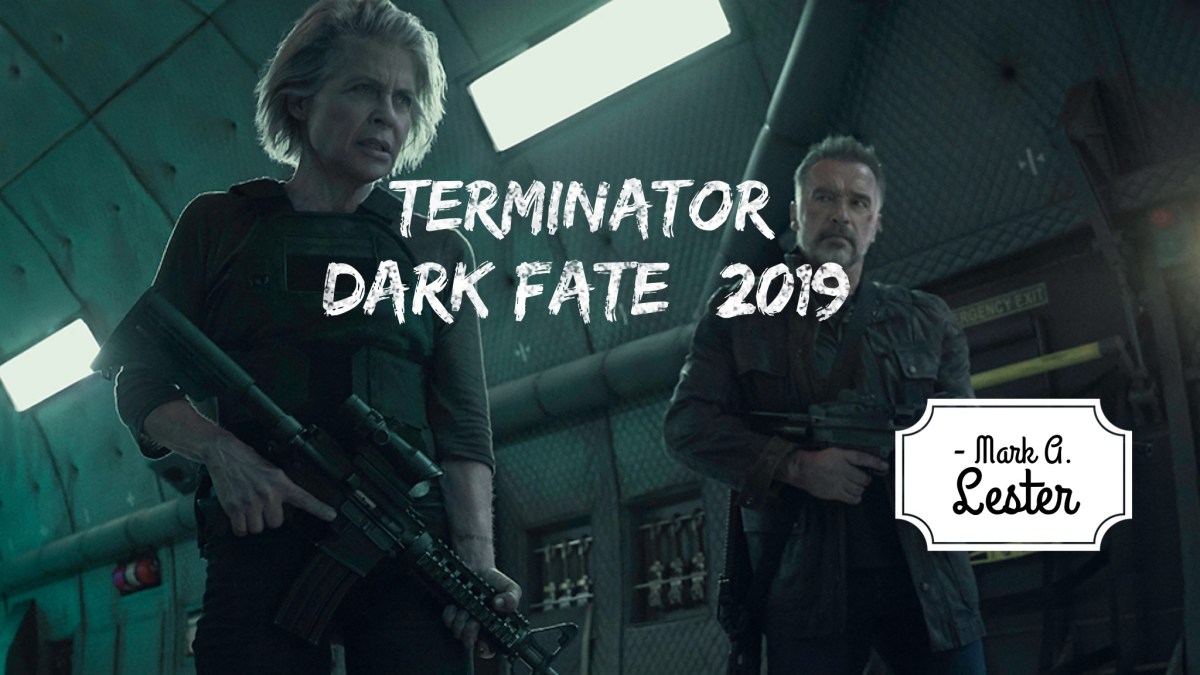
Terminator: Dark Fate (2019)

Going as far back as the 1927 German film Metropolis (by renown filmmaker Fritz Lang), we as humans have been exposed to the idea of robots (or cyborgs: I know there is probably a difference of some kind). Ever since, we have gotten examples ranging from the Cybermen of Doctor Who (of which I am a huge fan), 2001’s HAL 9000, and the Blade Runner replicants to the lovable animated robots of Big Hero 6 ‘s BayMax and the titular hero of WALL:E. Which leads us, of course, to the Terminator franchise.

The newest film, Terminator: Dark Fate, takes place after 1991’s T2: Judgement Day (which I would rank in the top five or so greatest sequels in the history of cinema), meaning it disregards the previous films, only one of which I have seen, 2015’s Terminator” Genisys (which was a disappointment to say the very least). After the success of preventing Judgement Day, we learn that Sarah Connor (Linda Hamilton) and her son John made it past that day in August of 1997, but that did not mean they were completely safe. The film opens with John’s murder from a terminator, leaving Sarah on her own. She lives live now gettting mysterious texts from a source letting her know when other terminators will enter her time line.

One such event occurs as she helps protect a young Mexican woman named Dani (Natalie Reyes) from a newly evolved terminator called a Rev-9 (Gabriel Luna), which is somewhat of a cross between the normal t-800 and t-1000 (except its liquid state is much darker and muddier). Sent back in time to protect Dani is Grace (Mackenzie Davis), who is somewhat of a machine but more on the human side. Before her arrival, Grace had a tattoo applied, showing her cooridinates that match those of the mysterious texter (though it is really easy to predict who it is).

Of course, being a terminator film, you have to have Schwarzeneggar, being this is the role that made him a household name (and, as a kid, made me believe robots/cyborgs were real). As always, he is perfectly convincing, even when he is saying lines that are hard for me to comprehend the silliness. Just as convincing is Hamilton, playing a character that has become synonymous with the idea of a woman you don’t mess with (the only one more intense would be Sigourney Weaver’s Ripley from the Alien franchise). She also has to face the idea of forgiveness towards a certain character, which is something not in her blood. Davis does a decent job of being a protector who becomes more friendly as the film progresses, and there is a fine character arc for Reyes as her Dani quickly goes from “What is happening?!?” to “Enough is enough”. Luna also does an okay job as the villain, though he lacks the amount of cold menace from the 1991 film given by the great Robert Patrick.

The time travel formula is basically the same as the original two (which is where I learned the effects of time travel): protect the past to save the future (in this film, the company that has made new forms of technology is called Legion, as Skynet is now just a word only known to Connor and the T-800). Unlike Terminator: Genisys, this film thankfully is easier to follow the time travel aspect (Genisys was, to borrow a line from Doctor Who, was too “wibbly wobbly” and “timey wimey”).

The action sequences are just basic, but sometimes impressive. There are other nice touches from the original films, such as car chases in actual vehicles, not just sports cars. It also takes place, for the most part, in just two days or so.

One of the more interesting aspects of the film is how the Arnie character has been living as a human (he goes by the name Carl, and works selling draperies. He has fallen in love (so to speak) with a single mother (Alicia Borrachero) and taken care of her son Mateo (Manuel Pacific). He has almost learned to have a soul, so to speak, though his relationship with his wife is not physical (“Does she know you weight 400 pounds?”, quips Connor). It is not entirely clear if Carl has developed a full imbodied soul, but he does truly know how to keep a family safe.

Parents, as is the case in the other films, there is some nudity (though it is not sexual here). There is still a good amount of violence and much swearing that makes this R rating what it is.

There is an intriguing line by Grace, after Sarah has mentioned what she had originally done in the previous films, which changed the future.

“You may have changed the future, but you didn’t change our fate.”

As humans, we are now more reliant (and, especially with cellphones, rather addicted) on technology than ever. Whether it will bring us to near extinction is up for debate. We as human beings are indeed supremely intelligent, but can we make intelligent beings that can think and feel for themselves? Comment below with your thoughts.

I am reminded of a joke from a minister. When scientists come to the conclusion that God is no longer needed, God asks if they are even able to make people from the dust of the earth, they say yes. Intrigued, God knows this is something he has got to see. When the scientists grab the dust of the ground, God quickly says, “No, make your own dirt.”

One thing that can be said is that, if we are in a future similar to that of the one we get in these films, what technology won’t be able to overpower is that of the human spirit, ensuring us that we will, in the end, be back.

Overall:

Rating: 3 out of 5.
Categories
5 Stars Movies

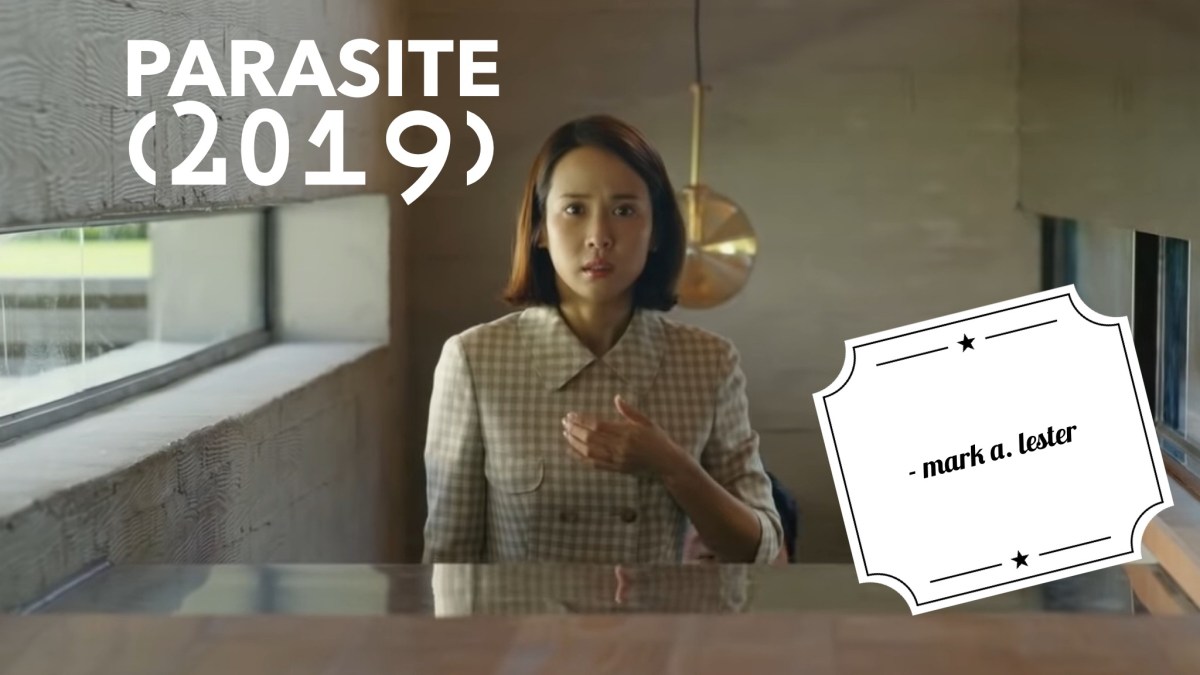
Parasite (2019)

I am on one heck of a narrow tight rope here, discussing Parasite. This is a movie that deserves to be seen cold: very little foreknowledge going in is essential. It’s not every day you travel an hour to the movie theater, pay over twice the amount of the ticket for parking (thank you Chicago), only to see a two hour movie from South Korea.

It was worth every cent.

For the plot, I will tread as lightly as possible (there will be no spoilers, but I would not at all blame you for stopping at this point in the review, only to return after seeing the film.) Set in modern day South Korea, we meet the Kim family, living in a run-down basement as they are all scraping by to survive. The father Ki -taek (Kang-ho Song) is flawed but loyal to his wife Chung-sook (Hye-jin Jang), and supportive of his (somewhat) kind hearted son Ki-woo (Woo-sik Choi) and daughter Ki-Jung (So-dam Park), who is truly street smart to say the least.

The family finds themselves soon in the company of a much weathier family, the Parks, also a family of four. The wife Yeon-kyo (Yeo-jeong Jo) is simple (to say the least) but kind, as she looks over her teenage daughter Da-hye (Ji-So Jung) and her son Da-Song (Hyun-jun Jung) while her husband Dong-ik (Sun-kyun Lee) is at work.

The true star of the film, without question, is director Bong Joon Ho (who also wrote the film). If you have not heard the name before, get used to the name now. I admit I have only seen two of his other films (I guess I am late to the party): 2013’s Snowpiercer (with the MCU’s Chris Evans) and 2017’s Okja. The plan to see many more of his films is cemented in my mind, and I would hope in others’ as well (Okja is a Netflix original and Snowpiercer is streaming on the service at the moment as well).

All three films talk a good amount about the clashing of class in society to one degree or another. I have virtually no knowledge at all when it comes to the economy of South Korea, but I am also sure that is not necessary. We all have been guilty to a certain extent of being guilty of coveting our neighbor, be it for money (the root of all evil) or other things . What is great about the characters of Parasite is that there is no real sense of who is “good” and “bad”. Virtually all the characters are, in a sense, very gray.

Parents, the film is rated R, and for good reason. There is a good amount of swearing and some violence. There is also a scene of sexual content (very brief nudity) with two character lying on a couch that lasts about two or three minutes. Trust the rating on this one.

A few months ago, during my review of Once upon a time…in Hollywood, I mentioned how Quentin Tarantino is one of the few filmmakers today who can truly surprise me, giving me the truly unexpected. Bong Joon Ho (who Tarantino has said he is a big fan of) can now be added to the list. Parasite is more than just a thriller. It has plenty shares of laughs (sometimes out loud), wonderful performances (in particular Kang-ho Song and Yeo-jeong Jo), stellar set design (I am bewildered to have found out the locations were made for the film and are not actually legitimate places), and thought provoking to the core.

This is clearly one of the best films of 2019, and anyone who calls themselves a cinephile needs to seek it out.

Overall:

Rating: 5 out of 5.
Categories
1 1/2 Stars Movies

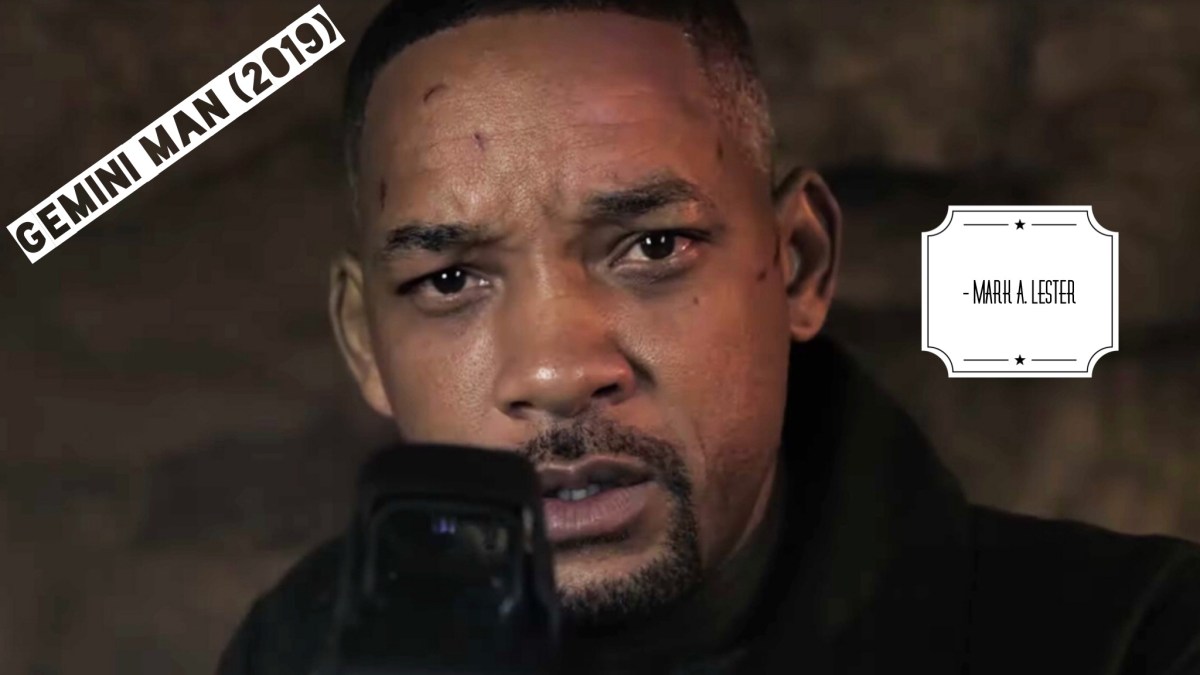
Gemini Man (2019)

When Jesus said to build your house on the rock and not the sand (Matthew 7: 24-27), it is hard to argue that he would be talking about a movie, but this story ran through my mind frequently while watching Gemini Man. The film may have a big star, interesting premise, and high profile director, but the story it is set on is, well, sandy at best. This is the type of movie that seems to have missed its premiere in the public eye by a decade or so.

Fresh off his last mission, veteran hit man Henry Brogan (Will Smith) is looking forward to retirement. He soon finds out that he and his few close friends are sought after by the government (don’t ask why, for it is simple yet confusing at the same time), led by one of his old cohorts, Clay Verris (Clive Owen). Along for the ride is an upcoming agent (or whatever the proper title is), Danny Zakarweski (Mary Elizabeth Winstead).

If you have seen any of the previews for this film, it comes as no surprise that Henry faces off against a cloned version of himself (also played by Smith). This is a younger version (I believe the film said 25 years younger), who, we learn, has been brought up and raised by Verris. The movie does talk a lot about the issue of cloning (which I don’t remember being a hot topic since my freshman English Class of High School, which I lost the debate against cloning). The cloned version of Henry (called Junior) has all the skills and attributes of Henry, but would not have to experience the after affects such as PTSD and depression.

The action sequences are not much to marvel at (save for a cool motorcycle sequence). There are few (and I mean very few) glimpses of images that look affective, but they are muddled by choreography that ranges from the mediocre to the implausible. There are parts in the motorcycle chase (at the end of it) that seem to defy logic of any kind. What is more, none of that matters. We don’t get enough time with these characters to actually feel something about them when they are in these action set pieces.

Will Smith is undoubtedly one of the top five or so movie stars these days, but he dials down his talents here in both roles. Yes, we can tell the two characters he is playing apart through CGI, vocal work, and a shave, but there is so little to care about these characters that there is no point. This is also one of the first times I can every remember Will Smith having virtually zero chemistry with a female star. That is nothing against the actors. It is just clear the chemistry is not present at all.

Parents, there is one scene where Danny is forced to strip to her underwear that lasts only a minute or so. Nothing sexual. There is some swearing (one F bomb that I caught), and some intense action scenes. The PG-13 rating is just, so middle-schoolers and up would be okay.

The film does take a stance against the idea of cloning. It does not dive into the religious aspects of the idea of cloning (how we are, truly, made in God’s image). It is a topic (as is many of the branches of science) that is hotly disputed by Christians, and I will not try to start an argument about it here. What I will say is I would rather the movie be wrong over it’s stance of a topic and be presented in an effective way than have a film be correct about a stance of the topic and be boring.

Smith is indeed no stranger to having his share of what many consider bad movies. These include (but are not limited to) films like Bright (2017) Collateral Beauty (2016), After Earth (2013), Shark Tale (2004), and, of course, Wild Wild West (1999). Having a bad Will Smith movie is not something completely new to us. What does seem new (and completely shocking) is that this film was made by director Ang Lee. An Oscar winner for Best Director twice over, he has given us revered films like Crouching Tiger, Hidden Dragon (2000), Brokeback Mountain (2005), and The Life of Pi (2012).

When I say that Gemini Man is one of the director’s worst films, keep in mind that includes his movie Hulk from 2003.

Overall:

Rating: 1.5 out of 5.

Categories
4 1/2 Stars Movies

Joker (2019)

One of the key aspects of the clown prince of crime was that we never really knew his backstory, which is why I was very hesitant (as I am sure others also were) to here we would be getting an origin story on a character that is possibly the greatest comic book villain ever (certainly the most popular).

In a sort of preparation for Director Todd Phillips’ (known for R rated comedies like 2009’s The Hangover) new Joker film,  I decided to revisit two films: one that was an inspiration to this current film and another that was one of the very first to galvanize the character in general. The former was Martin Scoresese’s 1976 classic Taxi Driver, about a man (played by Robert De Niro) who is basically shunned by the public despite wanting to “clean up” the garbage of the city. The second (and lesser known) was the 1928 silent german film The Man who Laughs, a story (from Victor Hugo) that tells about a man who has been surgically disfigured to always be smiling (I recently posted a picture of Conrad Veidt, the actor in the titular role,  to social media, and I still got friends saying that it is eerie, even over nine decades later).

The film opens in Gotham, where we meet a struggling Arthur Fleck (Joaquin Phoenix). He works on the side as a clown, as he keeps his dream somewhat alive of trying to be a stand up comic, like his hero, talk show host Murray Franklin (Robert De Niro). Arthur is indeed a kind man, but troubled to the core. We learn right away he has a certain disease (somewhat like tourettes) where he can’t stop laughing. It is clear that this laughter is desperately trying to hide unimaginable pain. Despite some nice co-workers, the only guiding light in Arthur’s life is his mother Penny (Frances Conroy), and the potential to go talk more with his crush in the apartment down the hall, single mother Sophie (Zazie Beetz).

The plot of the film is light and easy to follow, as Penny is trying to get Arthur to help her get a hold of her former boss, Thomas Wayne (Brett Cullen), who is currently running for Gotham Mayor. Yet the film is not about plot so much as it is about witnessing an tragic life event. In this case, it is the clear descent into madness that Arthur undertakes. The film will require more than one viewing, but the first viewing will undoubtedly be (as it was in my case) focused on one thing: the performance by Joaquin Phoenix.

The role of the Joker has been played by many actors over the years: Cesar Romero, Jack Nicholson, Mark Hamill (voice only, but still brilliant), Heath Ledger, and Jared Leto. Of those, Ledger is the one who has probably had the most impact (he won a posthumous Oscar for the role he had in 2008’s The Dark Knight). It is a role that demands to have an actor who is has the ability to be give a chameleon effect in their approach, and make us realize that we are not watching an actor (think of actors like Gary Oldman, Christian Bale, and my personal favorite, Daniel Day-Lewis).

Phoenix also qualifies, and is simply astounding in this film. He even is given more work to do than Ledger had. Ledger’s Joker was already past the point of redemption, and was a sociopathic madman. When we first meet Phoenix, we can’t help but sympathize with him at times, as someone who has been shunned from society and left to the wolves.

Parents, this is not a movie for kids. While there is mild nudity (the joke book that Arthur keeps is filled with some cut outs of naked models from magazines), it more than makes up for it in the swearing and violence. That is not to mention the exuberant dark tone the film even after you left the theater. High School and above.

There is no clear cut answer to what type of mental issues that Fleck/Joker has (though it is safe to say there are many). The real question is how we react to someone with these issues. I am not trying to excuse the actions he exhibits, but trying to understand why he does them in the first place. At the core of it all, Arthur just wants some guidance, a soul to connect with (Sophie is one example). When we push those who are “different” from us away, it damages them in ways we can’t imagine.

Most of the scenes do work, but some that fail (not sure we needed another rendition of the outcome of Bruce’s parents). One that caught me off guard was when Fleck goes to try and talk to Thomas Wayne, and encounters his young son Bruce (Dante Pereira-Olson). The jury is still out for me on this scene, but I would be lying if I said it did not give me goosebumps. I am sure there are a lot of people who will find this movie to speak out to them in some political way, but I was not looking at that. I was simply watching what happens when we forget to love our neighbor.

That, and one of the year’s best performances.

Send in the awards.

Overall:

Rating: 4.5 out of 5.
Categories
3 Stars Movies

Judy (2019)

It is more than likely true that other Hollywood stars had problems behind the scenes before the arrival of Judy Garland, but few would become as well known. As a young teen, Francis Gumm became Judy Garland, and the ruby red-slippered star of The Wizard of Oz had a tumultuous and wild start, to say the least. At MGM (where she stayed until 1950), she was looked over by the tyrannical Louis B. Mayer (who referred to the 4 ft 11 Garland as his “little hunchback”).

After the death of her father, the family was run with an iron fist by Judy’s domineering mother. The pills that Garland had to take at a young age started her down the path of drug addiction, and her cries for help to her mother fell on deaf ears, making it a surprise to no one that she would later refer to her mother as the “real wicked witch of the west.” Future husbands (she would marry five times) only added to a crushed soul in desperate need of care and understanding.

But hot dog, could she carry a tune.

Categories
1 Star Movies

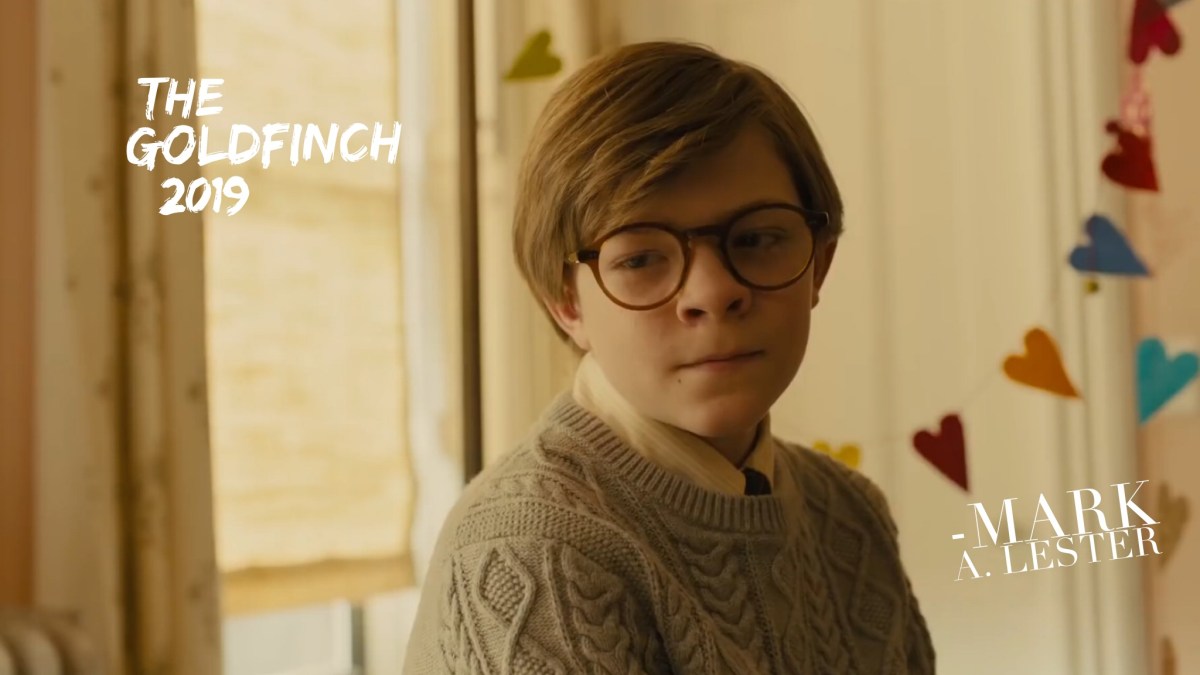
The Goldfinch (2019)

It was film critic Gene Siskel who normally would ask “Is this movie as interesting as the same actors having lunch together?” Had he lived to see The Goldfinch, the answer would be a short and direct no. With actors like Ansel Elgort, Nicole Kidman, Oakes Fegley, Finn Wolfhard, Sarah Paulson, and Luke Wilson, it can be safetly assumed that the making of this film would almost be riveting (not to mention some of those behind the camera). Oh how I wish these people were in a different movie.

Alas, that is not the case, and we are stuck with The Goldfinch, based off the 2014 Pulitzer Prize winning novel by Donna Tart (unread by me). The film starts in the aftermath of a (fictional) terrorist attack at the Metropolitan Museum of Art, leaving few survivors. One of which is 13 year old Theo (young talented Oakes Fegley), whose mother was killed in the attack. He is taken in briefly by an upper class family, the Barbour, and finds a somewhat newer mother figure in Mrs. Barbour (Nicole Kidman).We learn that one of the other victims in the attack was an acquaintance of a antiques dealer named Hobie (Jeffrey Wright), who takes young Theo under his wing as the young soul is more than intrigued by “old things” (not to mention Hobie’s adopted daughter Pippa, who also survived the attack and was catching Theo’s eye before the explosion). It is soon discovered by the audience that Theo has stolen a priceless artwork from the rubble, known as The Goldfinch.

He is soon taken away from his deadbeat dad (Luke Wilson) and his girlfriend Xandra (Sarah Paulson) to live with in the outskirts of Las Vegas. Though both seem loving, it does not take much to see that these two only want Theo for the money that his mother left him. The only light in Theo’s young life is his new friend Boris (Finn Wolfhard of Stranger Things and the IT films), a Russian immigrant (though he mentions he is from many places).

There is a lot (to say the least) jumping around in this movie, as we fast forward to an adult Theo (Ansel Elgort), who now deals in antiques, and finds pieces of his past childhood experiences, which were mostly nothing short of bad, as certain people of the past have died (and in tragic ways). It is melodrama cranked to the max. I forgot to mention how, when he first moved in with the Harbour family, Mrs. Harbour introduced him to a prescription drug that helped with the affects of the aftermath of the attack (PTSD I guess). This starts Theo into a drug habit that escalates even more when he meets Boris (whose own home life is chaotic with his father). The end of the film shows a crime caper of sorts, which legit makes no sense.

I am sure this film had all the best of intentions (and I am sure the book is great), but the translation from page to screen is not merely lost: it vanishes. There was a lot of source material to work from (I found out the book is in the 700-800 page range), but the film still drags on for too long. Sure, the run time is long (two and a half hours), but even films at that length don’t always seem to drag as much (the first film to come to mind that had about that same length of runtime is The Dark Knight, which never dragged on). The Goldfinch had me checking my watch constantly, and that started about 20 or 30 minutes into the film.

Parents, the film is rated R mainly for language and drug use. There is no sexuality (though it is inferred that some characters have slept with each other). High School and above.

The film is directed by John Crowley, who was at the helm of 2015’s criminally under seen gem Brooklyn. He is clearly a talented filmmaker, but even the best of them have flops. The one bit of light for The Goldfinch is (somewhat poetically) that the man behind the lighting (i.e., the cinematographer) is the legendary Roger Deakins, meaning the film is indeed wonderful to look at.

Toward the end of the film, one character mentions how some good can come from bad. It will be sometime before I discover what good has come from seeing this film.

Overall:

Rating: 1 out of 5.

Categories
4 Stars Movies

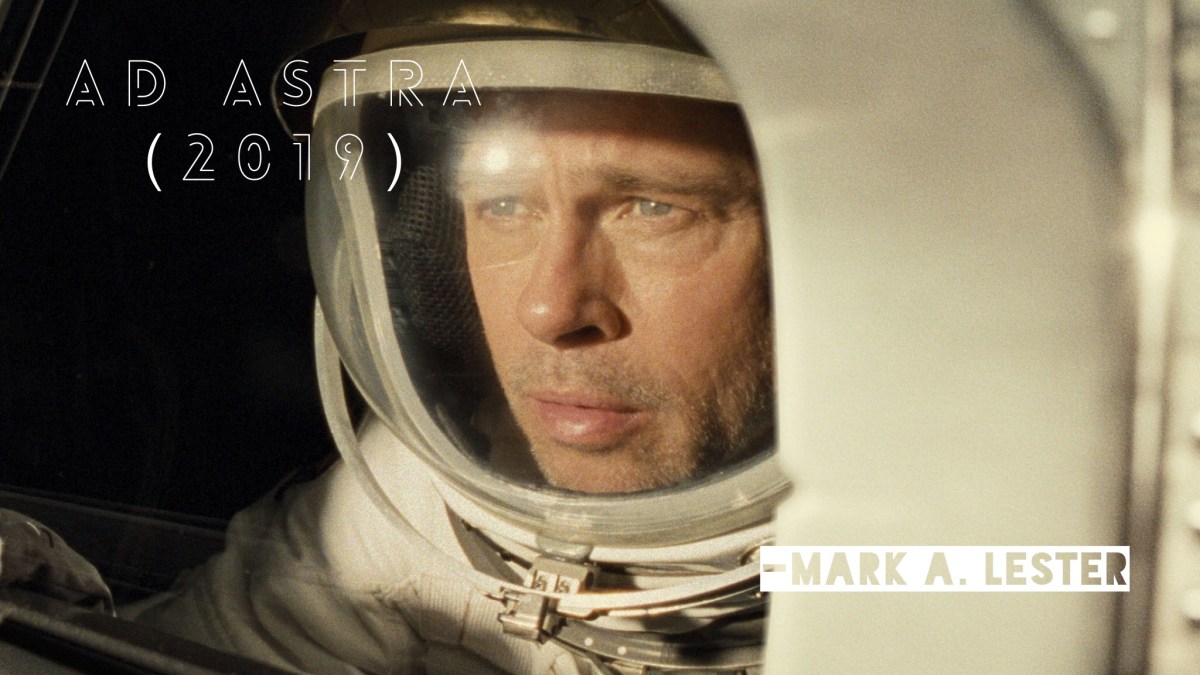
Ad Astra (2019)

In my mind, the two elements that are best exemplified in science fiction is that of fantasy and of the philosophical. We are intrigued by the technical wonder, yet still have reflections of our own life and world as we leave the theater. Certain movies make us think of one of said elements over the other (Star Wars is more fantasy), but others can balance them well (the all time great sci-fi film 2001: A Space Odyssey does this, though it leans a bit more slightly on the philosophical side). The same is the case with Ad Astra, and while it is not up there with 2001 (to be fair, very few are), it is still a wonder to behold.

Set in the near future, Ad Astra (which means “to the stars”) centers on veteran astronaut Roy McBride (Brad Pitt), who also narrates. When a power surge occurs that affects all of mankind, he is approached to undertake a top secret mission and contact the leader of a past mission, Project Lima. The crew of that project was sent to the outer reaches of the solar system in search of extra terrestrial life. It launched nearly three decades prior, led by Roy’s father, H. Clifford McBride (Tommy Lee Jones).

Roy is told his father has made it as far as Neptune, where the source of the power surge occurred. Along the way, he gets some help from an old friend/collegue of his dad, Thomas Pruitt (Donald Sutherland) and Helen Lantos (Ruth Negga).

Nearly the whole movie revolves around Roy, and Brad Pitt is no stranger to being able to carry a movie (he ranks up with Tom Cruise and Will Smith as one of the biggest stars in the world). He is much more subdued here than he was in Once upon a time…in Hollywood, and that is because the script demands it. Roy is required to keep self check ins, making sure he is fit emotionally and psychologically for each mission (it is said his heart rate has never exceded past 85 during a mission). He is so focused he is barely there mentally for his wife Eve (Liv Tyler).

What’s more, Roy must also live the life of knowing his father is a hero in the public eye, somewhat riding the coat tails. He has indeed looked up to his father, but soon realizes that being like him will indeed take a heavy toll on his life and soul.

Undoubtably, the film is breathtaking in how it handles its visuals. Long before the movie started, a part of me wondered if I should have taken the chance to see this in IMAX, and how I wish I had! Consider the scene on the service of the moon, where the Pitt and Sutherland characters are chased by pirates (since the moon has been colonized) on rovers. We know it is fiction, but it seems like it could actually happen in a century or so. The dangers of space travel are always shown in film (most notably 2013’s Gravity), but the views one would see make those dangers almost worth the risk.

Parents, the film is a very moderate PG-13. There is no sexual content of any kind, and only a few curse words (at least one F bomb I remember). There is also some violence, but nothing too much that would scare a preteen senseless.

There are still many questions raised that will puzzle some audience members (how an animal test subject was alive when the crew wasn’t was confusing). Still, the end result is more than satisfactory. The best part of the film I won’t give away, but it is what Roy discovers at the end of his journey, is something all of us need to remember, and what makes it unique among nearly any science fiction film I have ever seen.

Overall:

Rating: 4 out of 5.
Categories
5 Stars Movies

The Witch (2016)

When it comes to paranoia, very few historical events are brought up before that of the various witch hunts (actual ones) that have occurred throughout human history (Salem being one of the most popular). I am not an expert (though I was rather intrigued when I did visit Salem), but it is hard to think that many of these incidents actually involved truth behind the accusations that were deployed. Of course, the fear behind the accusers would be more than understandable if they had been witness to the events of Director Robert Egger’s The VVitch, one of the best horror films of the decade (which has produced quite a good amount of horror classics).

Set in New England during the 1600s (a prime time of witch hunting), God fearing William (Ralph Ineson) and his Katherine (Kate Dickie) are kicked out of the local puritan village after accusing the villagers of being false Christians. Along with their five children, they set out to edge of the forest to start anew (“We will conquer this wilderness. It will not consume us.”). While it is clear that the family tries as hard as they can to be humble servants of God, things begin to slowly fall apart for them, as their newborn baby Samuel vanishes without a trace.

While the family believes a wolf had taken the baby, we the audience learn right away that it is indeed a witch (no real spoilers, since that is the title). What causes the sudden mysterious acts soon leads to the members of the family blaming each other, including Katherine, the oldest daughter Thomasin (Anya Taylor-Joy) and even the young twins Mercy (Ellie Grainger) and Jonas (Lucas Dawson). The only two who seem to start having a cool level head about it is William and his second born son Caleb (Harvey Scrimshaw).

The imagery of the film is terrifying (only amped up by the searing soundtrack). What Eggers does so wonderfully (alone with cinematographer Jarin Blaschke) is there is little to no added light to any of the scenes: it is all purely natural (which is fitting, since electricity was nonexistent at the time). When you revisit the film (if you are not too frightened), you can honestly almost stop paying attention the narrative and just look at the artistry of the landscapes and texture of all that is onscreen. It is said that there needs to be darkness in order for light to shine, and the example here is pitch perfect. In short, it is breathtaking.

One of the true hidden gems of the film is how the script (also written by Robert Eggers) uses the common speech of the times, yet it does not confuse us. When we hear phrases like “Wouldst thou…” and “thy”, we may at first be a bit uneasy (since no one uses those phrases anymore). However, it does not take us long to put that aside and realize that we not just watching some English pilgrims talking weird: we are watching humans experiencing emotions both relatable and terrifying.

When it comes to horror films, one of the crucial elements is the pacing. A close friend of mine (and horror film fan) told me that, while he likes this film, he thought it went a little slow. I told him I thought it was perfectly paced. While other cheap horror films try to give you a lot of “gotcha!” moments all over the place, the true great horror films build the suspense, and (as Hitchcock would say) play you like a piano.

All of the performances are highly affective, but the three that stand out are Ineson, Taylor-Joy, and Scrimshaw. Ineson’s William is indeed loving but still firm, making sure his family knows he will put God first in any circumstances. Though I have not seen him in anything since, Scrimshaw still shows talent beyond his young years (especially in one scene). Overall, it is Anya Taylor-Joy who steals the show, and is still showing promise of being a star in the making (since this film, she went on to star in 2016’s Split and 2019’s Glass, both by M. Night Shyamalan).

Parents, this film is High School and above, by far. There is haunting imagery that will scare people of any age, not to mention some rather graphic (albeit brief and mostly non sexual) nudity. Kids today may think of witches as something intriguing (no doubt due to Harry Potter), but this deals with the true horror of the nature of witches. It makes you realize for certain why the bible did say to stay away from witchcraft.

As the movie progresses, we find out that each member of the family has hidden sin to confess (even Caleb). For Christians, unconfessed sin is a bad thing, and something that Satan always will feed off of (not just a witch).  While God always wins over Satan, the movie shows what can happen when true evil takes over. That is the true horror of the film.

That, and the goat and rabbit. Those will plague you for sometime.

Overall:

Rating: 5 out of 5.

Categories
2 1/2 Stars Movies

It Chapter Two (2019)

I have often stated that, for one reason or another, I have yet to read a single Stephen King book, meaning I am not always sure if the films are entirely faithful to the material (thought it is wildly known that Stanley Kubrick’s The Shining was not, resulting in King vocally hating the film). It is true that most (if not all) film adapations will differ from the original source, so I feel compelled to judge the film as a whole rather than just how well the film was accurate or not. Whether or not IT Chapter Two is in the loyal category or not, the end result is still rather disappointing, especially since the first IT film two years ago was one of the better horror films of recent memory (I even went to declare it as the best film of 2017).

The film (directed by Andy Muschietti, who also directed the first film) opens twenty seven years after the events of the first film (2016, so modern day in some form), we see the return of the terrifying Pennywise (once again, played radiantly by Bill Skarsgard). We see that only one member of the Loser’s Club, Mike (Isaiah Mustafa) has decided to stay in the town of Derry, Maine (in flashbacks, he is played by Chosen Jacobs). He begins to call the remaining members back.

As expected, a lot has changed in twenty seven years, which is shown through a good number of flashbacks (where all the child actors from the original return). When last seen, young Bill (Jaeden Martell) was the leader and getting over his stuttering problem (let alone the death of his little brother Georgie). Now as an adult, Bill (James McAvoy) is a writer who seems to have problems coming up with good endings. Young Ben (Jeremy Ray Taylor) was last overweight yet still kind hearted. Now, the adult Ben (Jay Ryan) has clearly been working out, yet his heart is the same as ever (and still turned toward the one person who signed his yearbook twenty seven years ago). Ever the comic relief, young Richie (Finn Wolfhard) has grown up to be a comedian (played by Bill Hader). There is still the hypochondriac Eddie (James Ransone, who looks the most like his younger self when played by Jack Dylan Grazer), Stanley (Wyatt Oleff as a child, and Andy Bean as an adult), and, finally, Beverly (Sophia Lillis as a child and Jessica Chastain as an adult).

One of the shocking parts to me (which I believe was in the book) was that it takes the characters a good amount of time to remember the events of the past (with the exception of Mike, who, due to staying in Derry, has remembered everything). I guess it would make sense that, due to the oddities of Derry (“I’m kind of used to it by now”, Bill says), memories may have faded in time (all of us have faded memories as well). However, some seem to take a long time for the characters to remember (it does not seem to cross Bill’s mind for sometime that he once had a little brother).

It is said that, in order to defeat IT, each member must retrieve a piece of their past, which must be done by themselves. This results in the flashbacks to the parts of that summer when the kids were not on speaking terms (after Eddie broke his arm and Bill punched Richie in the face). While the first film showed how we have to face our fears, the second film dives deeper, as it shows we sometimes do all we can to bury our fears and insecurities in the past. Facing our past mistakes can be scary in itself (think of Moses).

While I know there are parts of the story that needed to be told, the film still runs too long. There are some moments that are well done, but don’t really drive the story at all. One main scene I can think of is with a little girl who discovers Pennywise under the bleachers of a local baseball game. The scene is well done and affective, but what does it add to the story? We already knew that Pennywise was taking bloodcurdling to the next level.

Another one of the flaws of the film was the return of a certain character from the first one. While I won’t give it away (and the new actor looked like this character would in the future so well I was borderline flabbergasted), I will say how this character manages to escape predicaments and interact with the other characters is too bizarre to take into account.

As was the case with the first film, the cast is practically pitch perfect. Everyone fits their roles like a glove (I read that, when the child stars were asked who they would like to play their roles as adults, both Finn Wolfhard and Sophia Lillis picked the performers who would eventually play them). We also get two nice cameos that I for one was not expecting at all.

Parents, it should not take much thought to know that this is not a film for children. The movie deserves its R rating, though if your kids did see the first film, they would probably be okay here.

One thing the sequel has more of is CGI, which tends to dampen the scares down a bit (though there are still a good amount of “jump scares” to go around). While the CGI is not bad in a sense, the very idea of seeing Pennywise in his true form takes away some of the imaginative properties we had going into the theater. There is a point in the film where Mike talks about how, sometimes, we tend to keep the memories we like and not the bad ones. That being said, I plan to remember the greatness of the first film and not a lot from the second film.

Overall:

Rating: 2.5 out of 5.