It is no secret: in a world of ups and downs, 2025 had many more of the latter than the former.
Yet I will try to stay more optimistic, as I remember a moment from the 75th Academy Awards, when film legend Olivia De Havilland took the stage. As she was presenting the Past Oscar Winner reunion, she stated the following (and I am paraphrasing a bit):
“Much has changed in our world…but what hasn’t changed is our love for the movies, and their ability to inspire us and to help us through troubled times.”
Over two decades later, those words have not lost their meaning in the slightest.
For those unfamiliar, there is a story in the book of Genesis (specifically in chapter 19) that talks about a man named Lot.
He is told by an angel of the Lord to take his family and leave Sodom and Gomorrah before they are destroyed, and not look back. As they are leaving, Lot’s (unnamed) wife looks back, and turns into a pillar of salt.
Looking back at my Letterboxd ratings of the first two Avatar films, I realize that there is a slight decline.
That is not at all to say that “The King of the World,” James Cameron, is losing his touch as a filmmaker. His original world-building of Pandora and the Na’vi is so mesmerizing to see that it is becoming redundant to say so. In Avatar: Fire and Ash, the tradition of outdoing the previous film with truly special effects continues. The problem, as has been stated, is the writing (which is also by Cameron).
Who would have thought that a Predator had personal problems?
Apparently, director Dan Trachtenberg.
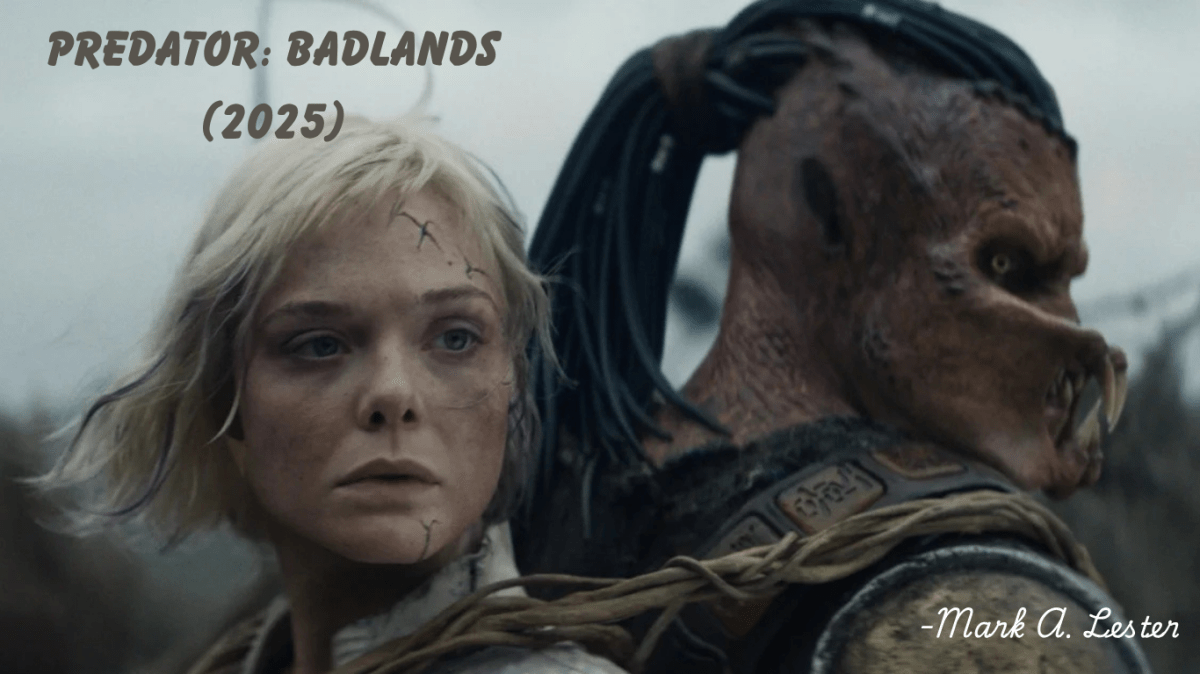
The formula for the first few Predator films (I have only seen the first two of the ones made before Trachtenberg) was reminiscent of the Alien films (which, oddly enough, I also have only seen the first two of that franchise): a bunch of humans are in the near vicinity of an extraterrestrial monster, and only a few survive. Then, in 2022, Trachtenberg came in and made the film Prey, which used somewhat of the same approach but in the early 1700s with Indigenous peoples. Now, he flips the script with Predator: Badlands, asking the question: What does it mean to actually be a Predator?
The predator protagonist in question is Dek (Dimitrius Schuster-Koloamantangi), considered the runt of the clan (and in the Predator species, runts are seen as too weak to be allowed to live), but still eager to prove himself. So eager, in fact, that when it comes to finding the adversary, he must hunt to be accepted, he goes after an unkillable monster called a Kalisk.
Upon landing on the creature’s home planet of Genna, Dek runs into Thia (Elle Fanning), a damaged android who is only accepted by Dek (since Predators only work alone) when she is seen as a “tool”. She is in search of her counterpart, Tessa (also Fanning), whom she was separated from after their last encounter with the Kalisk. They also encounter a monkey-esque creature that Thia names Bud, whose true objective is to steal every scene it is in (and succeeds with hardly any effort).
The planet of Genna itself is indeed dangerous, but not “bad”. It does have some rather inventive naturalistic dangers to behold, such as blade grace, an unstable purple cactus thingy, and exploding caterpillars/slugs. The result is (mostly) rather profound CGI that does not feel like a low-rent MCU film that is almost always in front of a green screen.
Parents, this is a rare case where I actually agree with a film being PG-13 instead of R. There is indeed violence and blood (albeit green blood, since that is what a Predator’s blood color is), but there is no sexual content or nudity. There is some swearing, but nothing drastic. In my theater, I saw a dad with his two sons, who were probably between 10 and 15. I would argue this is a great “guys’ night out” type of film.
There are clear homages to other films such as Aliens and The Empire Strikes Back (Thia is basically C-3PO even before she is being carried around like him). I read on Wiki how Trachtenberg is hoping to do at least one more film in this universe if Badlands makes enough money back.
I’d be down for it because he definitely has a caring mind for the material. Plus, I am a fan of Elle-3PO…or maybe it should be C-3P Elle.
It is rather difficult trying to put into words my feelings on the films of Yorgos Lanthimos.
Granted, I have now only seen four of his films, which started with 2018’s The Favourite. I then went back to discover The Lobster (2015), which is possibly my personal favorite to date. Then came 2023’s Poor Things, which, despite having a wonderful performance by Emma Stone, was way too much for me (a reincarnated woman with a childlike mind discovering sex is just…no).
Perhaps I am late to this realization, but with short films, it is much easier to find out the intent of the filmmaker(s) since there is not too much to worry about plot wise.
Such was the case with two new short films I saw by Chris Paicely and Miles August (“Chris and Miles”): Silk (directed by August) and The Girl in the Street (directed by Paicely), both of which each of them wrote.
Nearly a month ago, I caught up with an old romantic fantasy called Somewhere in Time from 1980.
As I have always been a fan of time travel, I managed to overlook the questionable approach to that phenomenon because the leads (Christopher Reeve and Jane Seymour) had such palpable chemistry and the John Barry score was enjoyably hypnotic.
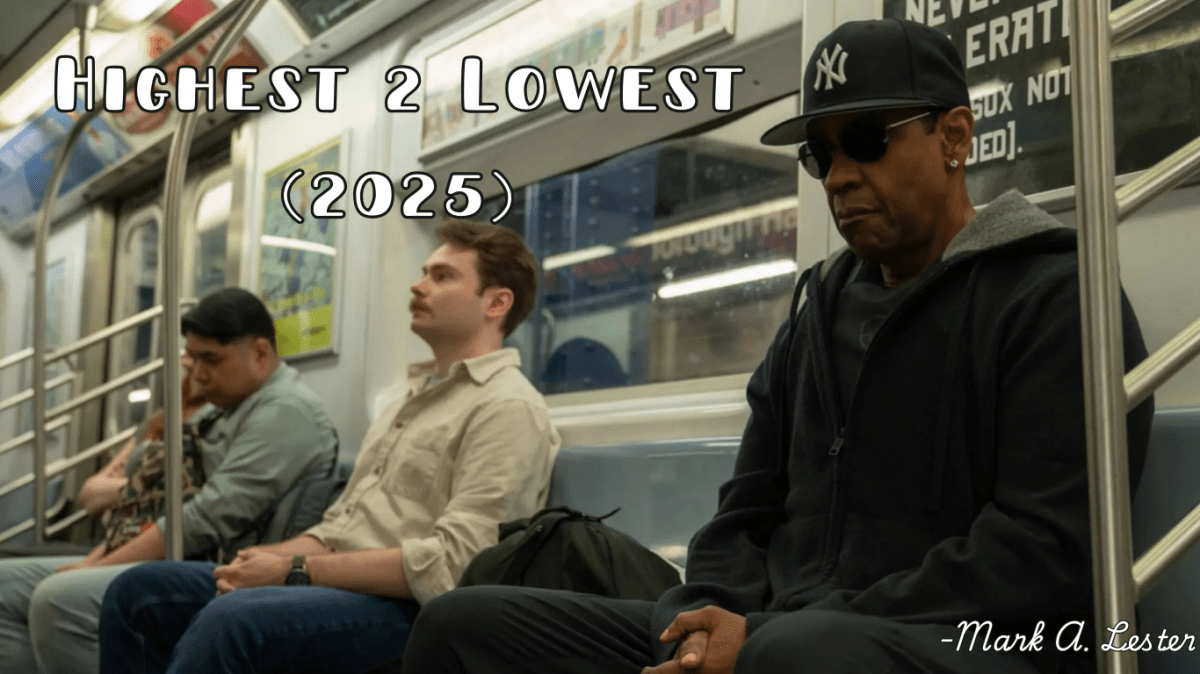
As someone who has yet to visit New York City (still near the top of my bucket list), I in no way feel I can say what director in the history of cinema has best captured the city.
A few names do come to mind: Martin Scorcese, Nora Ephron, Sidney Lumet, and Woody Allen (despite his troubled personal life). Then of course there is Spike Lee. While he has not entirely relied on New York for all of his films, his best ones (namely Do the Right Thing in 1989) have helped shape parts of the city that never sleeps in our movie going psyche.
It’s been around a year and a half since Pepsi had the unfortunate plug in Madame Web, making Pepsi supporters redder in the face than the red in the can of its rival soda company.
There were scarce a number of product placement that were unfortunate in recent cinematic history, but at least Pepsi was not in the shameless promotion. What Amazon has going for it in the newest version of War of the Worlds is so wanton I legit thought of spending some time apart with my Prime Benefits relationship.
On one side, you have movies like the recent KPop Demon Hunters, a title that tells you directly what it is about yet can scare people away from its subject matter (for the record, I loved that film and can’t stop listening to the soundtrack.) Then you have a movie titled Weapons, which, while singular and simplistic, is about so much more.
This is one of the best premises for a film I can remember. In a normal town, a child narrator explains that, at 2:17 AM, all but one of the kids of an Elementary classroom woke up, ran into the night, never to return. That is as far as I can go, because …well, you will thank me later.






 Nothing else to say