There are a few variables as to why it took me longer than I would have hoped to get to see a Quentin Tarantino film.
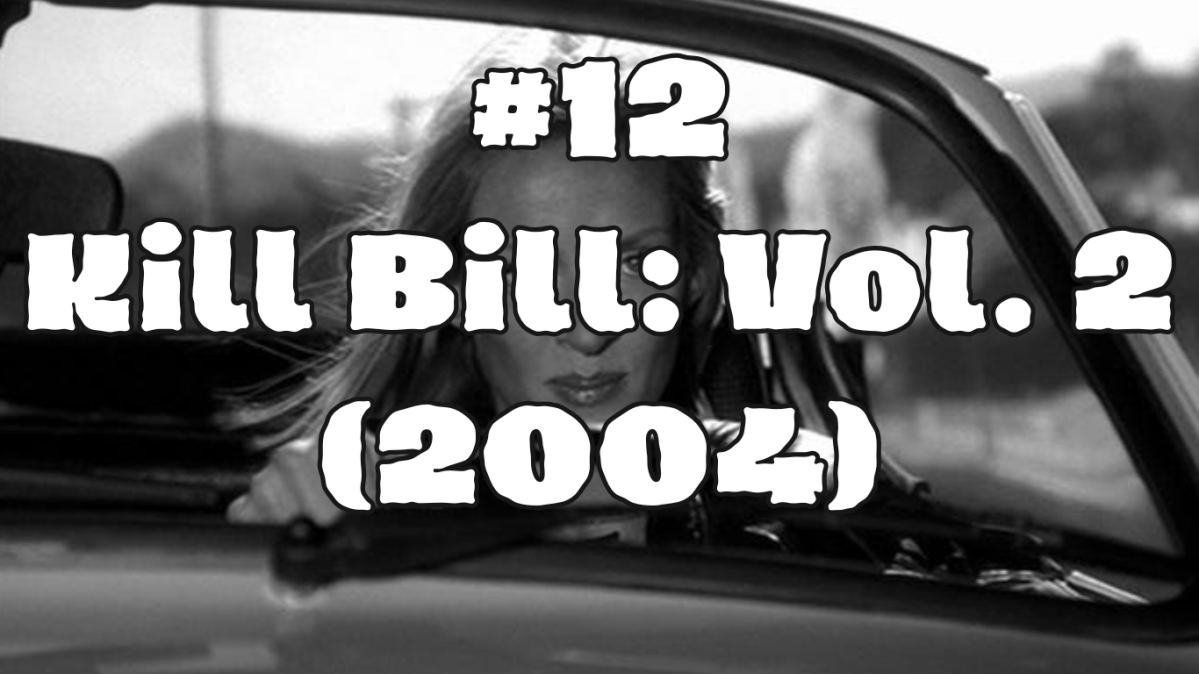
For starters, my mom had only two movies I was not allowed to see growing up, and one was Pulp Fiction because she thought it too weird (the other was The Exorcist, which one cannot blame her for in the long run). My older brother’s last bit of cinematic knowledge I remember him passing on to me (before he lost interest) was on QT, and I eventually got to Pulp as well as other films of his, the first being Kill Bill Vol. 1 in 2003. Yet my mind was truly opened a year later, with Kill Bill, Vol. 2.
It’s no secret that movie trailers nowadays are prone to giving away too much of the movie* (a prime example is the remake of Speak No Evil).
Recently, I have made a personal choice to see a trailer only once or so (and very rarely do I seek out a second trailer of a film). This is one of the key reasons as to why I went into Blink Twice without knowing anything about it other than seeing the poster and possibly (I can’t remember) seeing the trailer once a few months ago.
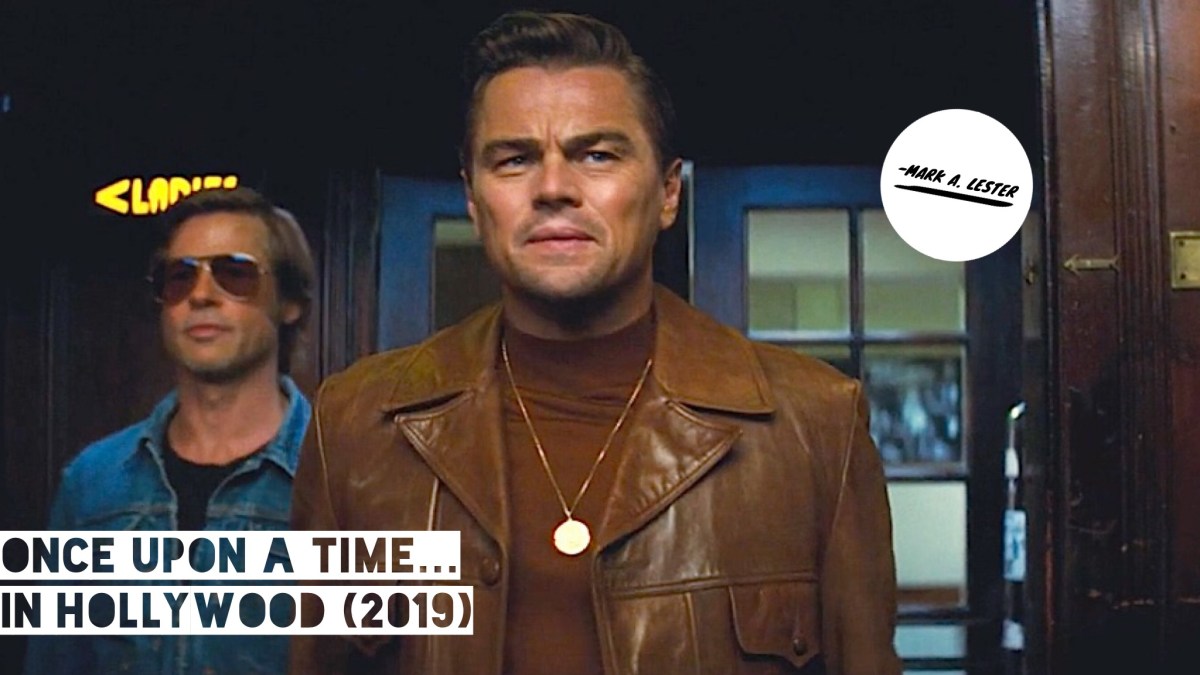
Nowadays, I am to the point where very few film makers are able to still deliver me with shock and awe. Some of them are still working, like Wes Anderson, the Coen Brothers, Martin Scorsese, and, of course, Quintin Tarantino. With only eight previous movies to his (directorial) credit, his newest one, Once Upon a Time…in Hollywood, is one of his more (somewhat) subtle films, but is still nevertheless a borderline masterpiece, riddled with plenty of the expected humor only QT could provide.
While the setting is in the title, the time is 1969. We soon
meet former TV star, now fading movie actor Rick Dalton (Leonardo Di Caprio,
who, like Tarantino, is in his first film in four years). Never feeling that
the public has ever forgave him for leaving TV for film, he is heading for a
mid life crisis. The only solid support he has is his stunt double and friend
Cliff Booth (Brad Pitt). His dream of making it big are only escalated when he
realizes he is living next to actress Sharon Tate (Margot Robbie), actress of
filmmaker Roman Polanski (who would later go on to have his own dark history).
Of course, being a Tarantino film, the movie is not at all
as simple as that. From lead roles to the smallest of supporting (more on the
cast in a bit), every character is as deeply developed as need be. This can be
seen especially when Cliff is paying a visit to the old Spahn Ranch, where he
used to shoot old westerns. It has now been taken by the Manson “family”
(“Charlie’s gonna dig you.”). Even those on screen with no lines seem like they
have their own back story.
The old saying “There are no small parts…only small actors”
has always applied to a Tarantino film. As to be expected, no one here gives a
bad performance. Just a few of the actors include Dakota Fanning as one of the
main Manson girls, Damon Herriman as Charles Manson, Bruce Dern as the old
Spahn Ranch owner, Emile Hisch as Tate’s friend Jay Sebring, Al Pacino (!) as a
studio executive, and the late Luke Perry (in his final role) as one of the
actors on set. We also get roles from normal Tarantino faces such as Kurt
Russell and Michael Madsen.
It also helps that (as in all his films), there are countless scenes that nearly live as their own small films (which helps when some of the scenes are about filming). My favorite involves the scenes between Rick and a young upcoming child actress (an absolutely delightful young talent named Julia Butters). The chemistry between her and DiCaprio is truly special. Yet the one who steals the film is Pitt. His unparralled charm and delicious line delivery are truly mesmerizing. He truly should get some awards consideration here.
Another key aspect in the film is what Tarantino may be better at then any other working director: a solid soundtrack. As someone who grew up listening to “oldies” (shout out to my parents), I can say that most of these are songs I had heard at one point or another, but forgot the name of (with the main exception being the use of Simon and Garfunkel’s Mrs. Robinson). We don’t get what would be considered “the best” of the 1960s, but we do get the perfectly placed songs in accordance with the story. These include hits from Paul Revere & the Raiders, Bob Seger, The Rolling Stones, the Box Tops, and Neil Diamond.
The relationship between DiCaprio and Pitt is the true heart of the film (Tarantino has said they are the most dynamic film duo since Paul Newman and Robert Redford.) We see this at the beginning as Cliff must drive Rick around, offering his sunglasses to Rick as he breaks down in tears. The only other real relationship Cliff has in the film is with his dog (love that dog). It truly brings out a cinema friend who “sticks closer than a brother” (Proverbs 18:24). The same could also be said for Proverbs 17:17: “A friend loves at all times, and a brother is born for a time of adversity”.
Parents, it is Tarantino, so there is virtually no way this
film is for kids. Though the violence is somewhat toned down (at least compared
to his other films), the scenes that do show violence is really graphic. Add in
the language and the sexual dialogue (though there is no nudity, there is one
scene with a younger teen in a car with an older character that is rather
disturbing, even though it does not go anywhere further), and you have a movie
that deserves its R rating.
Despite some minor flaws (there are some scenes, especially with Margot Robbie, that drag on a bit long), this is another Tarantino classic, proving that originality still exists in film. In my years as a movie goer, he is one of the select few who (like Cliff) have stuck closer than a brother.

 Nothing else to say