Categories
5 Stars Movies Vintage

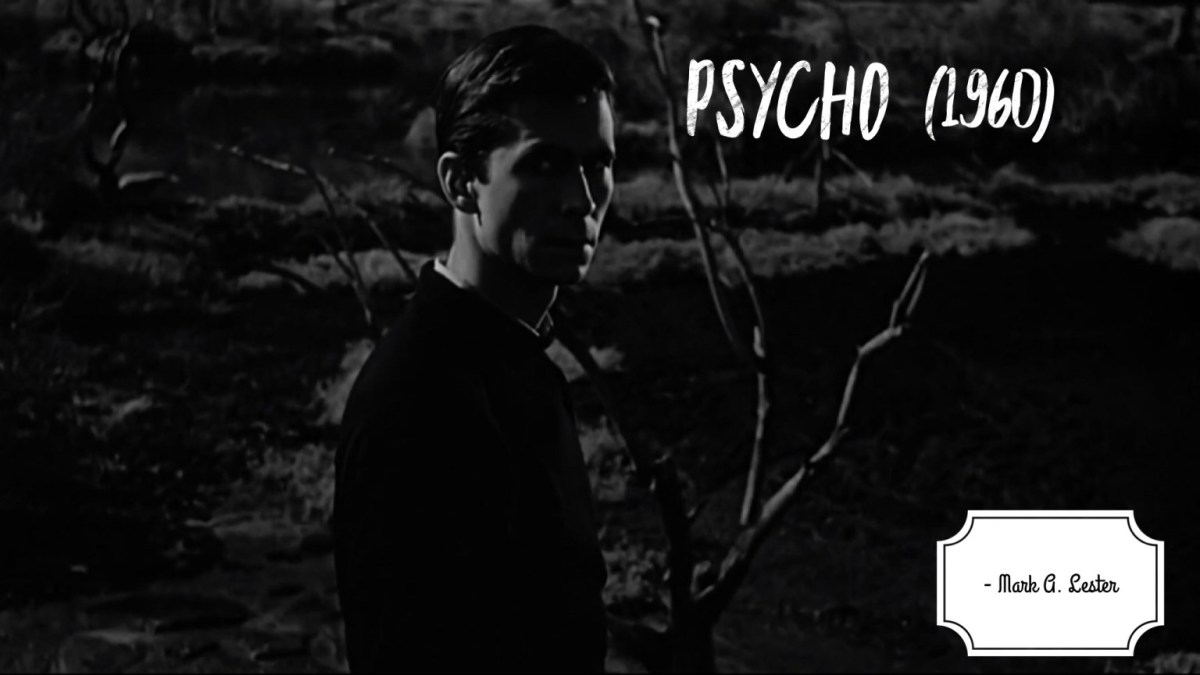
Psycho (1960)

It was a spine tingling time as a 13 year old on a Tuesday in June of 2001.

The American Film Institute was revealing their annual Top 100 list that they would do every year. That year’s was entitled 100 Years, 100 Thrills. As the countdown was concluding, I had made a $5 bet with my dad (the most I could afford at that time) over which would be number one. He was going with Jaws, while I was rooting for Psycho. By the end, Jaws was number 2, and I had won five dollars, bragging for some time afterwards.

Categories
5 Stars Movies Vintage

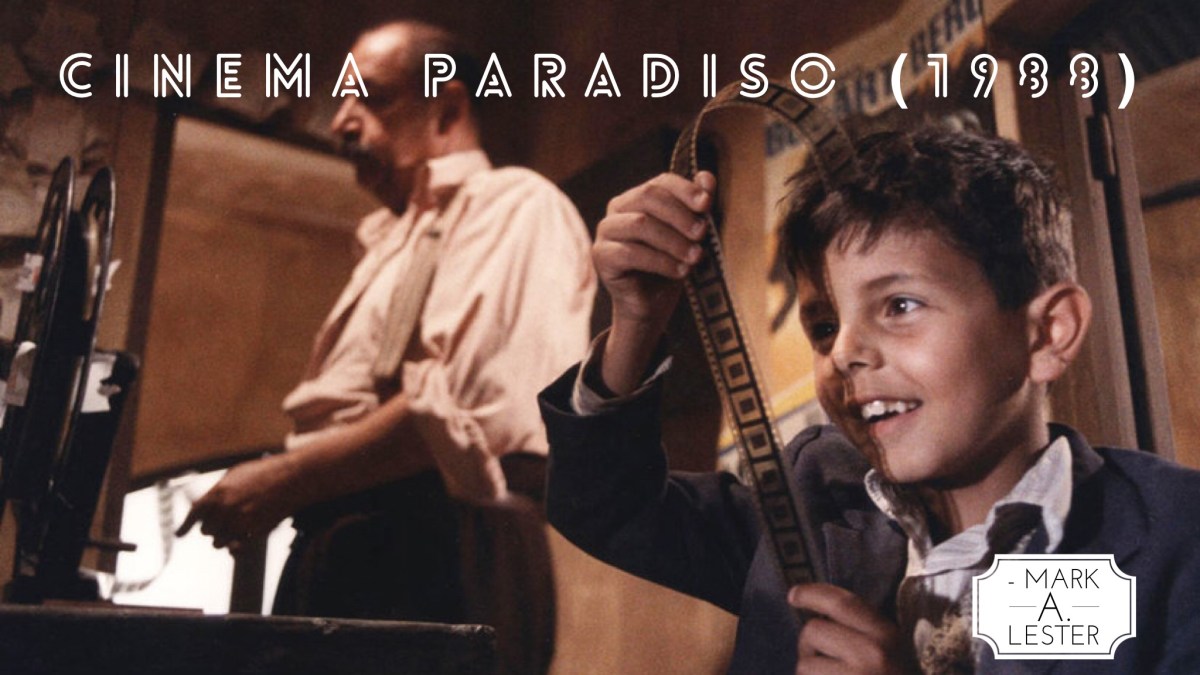
Cinema Paradiso (1988)

Of the countless times that the Oscars have had a segment for montages (excluding the “In Memorium” ones), there was one they did that I wish they would bring back.

At the 62nd Academy Awards (the first to be hosted by Billy Crystal), there was a surprise appearance by an even bigger Hollywood legend, Bob Hope, there to introduce a short video of cinema’s best sharing the first time they ever went to a movie. It was proper that the video used the music from the night’s eventual winner of Best Foreign Language Film, Cinema Paradiso, which brought to mind many movie “firsts” for me (first in a theater, first date movie, etc).

Categories
4 Stars Movies

Crip Camp (2020)

For nearly a decade, I have truly been blessed with the seven summers I was able to spend a week of being a counselor at a Christian Youth Camp.

The memories are indeed too many: Small group bible lessons, archery, paintball, inside jokes about having too much bread (Wade and Hudson know), starlight devos, my alarm clock being thrown out by my co-counselor, sacrificing a pair of socks for a camper, out door movie nights, having another camper ask if I knew how to talk to girls (my initial response: “No one does.”), the countless nicknames I would give and be given (“The Cap” is the best nickname I have ever gotten).

Categories
5 Stars Movies Vintage

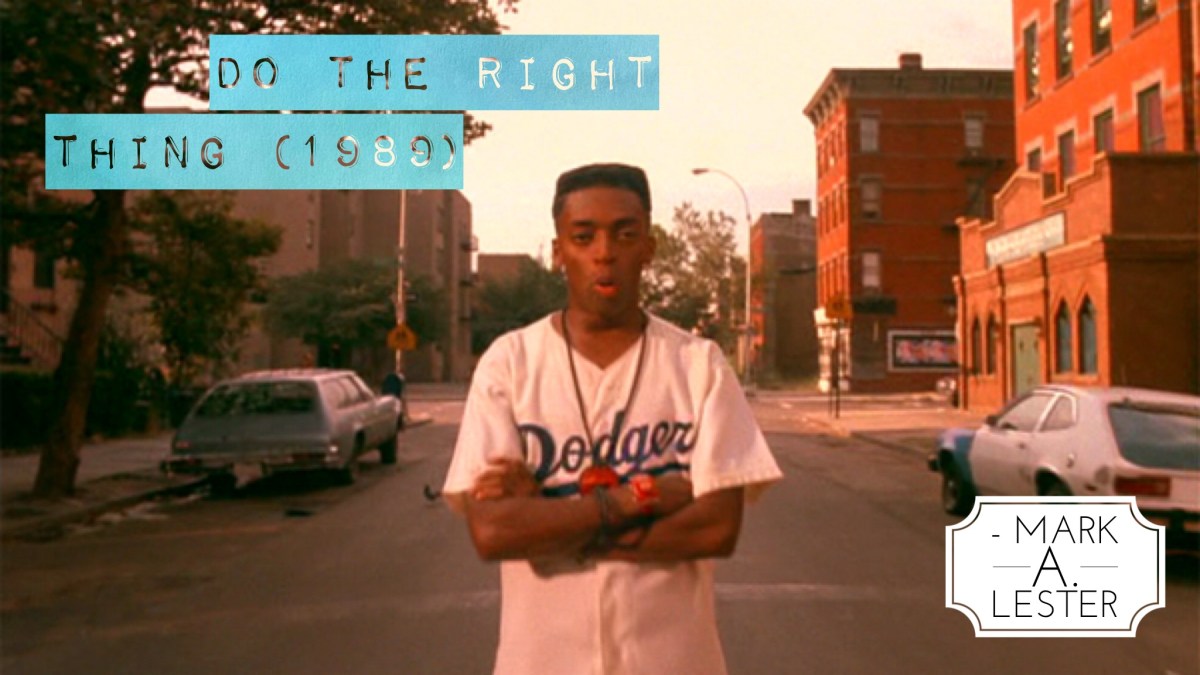
Do the Right Thing (1989)

In a perfect world, Do the Right Thing is a movie that should not exist.

The ideal world would be without the things demonstrated in the film: anger, prejudice, racism. Yet that is the world we live in, and have before the late 80s and still to this day. The list of names belonging to lives lost due to racial injustice is far to the point of many of them being forgotten by all who did not know them. This is why Spike Lee’s uncanny piece of art will almost always be a film that will resonate with any generation.

Categories
5 Stars Movies Vintage

The Breakfast Club (1985)

Despite being an extroverted child with Asperger’s, it still seems to surprise some of my friends who did not know me growing up that I never once had a detention. Of course, it helps when nearly every person in your family history was a teacher in some capacity.

When I mentioned this to one of the minister’s at my church, he said he found that rather hard to believe. I responded simply, “That’s because you never met my dad”. That is not to say my dad was deeply strict or anything. My dad was totally loving and supportive. The issue was that, as a High School social studies teacher turned Dean turned Assistant Principal, he would tell me stories at the dinner table about what all the “bad” kids did (to be fair, it was more entertaining than what the “good” kids did). These stories, which must have started as far back as when I was a 1st grader were ingrained in my mind to know when to not mess around (despite being a self confessed class clown from time to time.)

Categories
5 Stars Movies

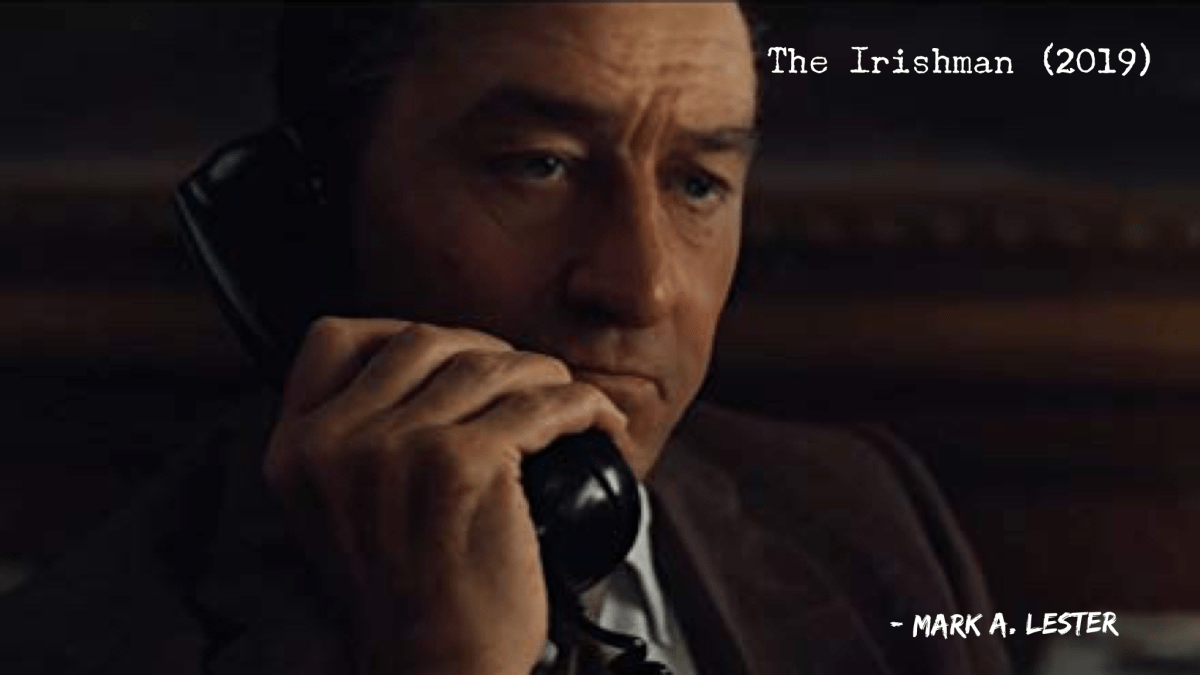
The Irishman (2019)

Last year, when Netflix released the masterful film Roma, it was clear they were wanting the Academy to take them seriously. While it did win a good amount of awards (including Best Director), it did lose the big one, Best Picture, to Green Book (a film that, while charming at first, may be destined to be forgotten as time goes on). Much of this had to do with voters not liking the fact that a movie on a streaming service would win the night’s biggest honor, hoping instead for the winner to be one that was released theatrically.

Somewhat ironically, during the same Oscar telecast, we got the first (and very brief) teaser trailer for Martin Scorsese’s The Irishman, the film I personally have waited for all year. Along with Scoresese, names like De Niro, Pacino, Pesci, and Keitel filled the screen.

 With Roma, Netflix was clearly swinging for the fences. With The Irishman, they are swinging for the parking lot past the outfield bleachers, which, bluntly put, is the result we get.

I admit that it takes me more than a viewing or two to totally understand even the best of mafia themed films, but I will do my best. The film tells the story of a real life mob hitman named Frank Sheeran (Robert De Niro, in his first Scorsese film in almost a quarter century). Towards the end of his life, we hear him narrate as he recalls making his way through the mob with the Buffalino Family, after encountering Russell Buffalino (Joe Pesci), Frank’s new employer who reports to the big boss Angelo (Harvey Keitel). Eventually, they make there connections with helping the infamous union leader Jimmy Hoffa (Al Pacino), the man now most famous for his mysterious disappearance.

There are others in the cast who fill their roles with uncanny professionalism, as we see actors like Jesse Plemons and Bobby Cannavale. Though the film is indeed a male dominated one, Anna Paquin does some of her best work in years as Peggy, one of Frank’s grown up daughters. Still, I was most delighted and surprised to see Ray Romano as Russell’s cousin who acts as Hoffa’s main attorney. I have always loved Romano ever since I saw Everybody Loves Raymond as a kid, but it never crossed my mind that he would be cast a lawyer in a Scorsese crime drama, much less be as good as he is.

The normal themes of Scorsese films are present. I am not just talking about the swearing and the violence. The master film maker has indeed been vocal about being influenced by his cathlocism, which is evident in his films (at least the ones I have seen). The thought of having one’s occupation take priority over one’s morality. The idea of characters feeling utter remorse after the act of sinning, and seeking forgiveness afterwards (similar to Raging Bull and Goodfellas).

Though The Irishman does stand as its own achievement, it probably has more in common with Goodfellas than any other Scorsese film. Both are about two separate men rising in the mob world, only to enter that aforementioned remorse at the end. Goodfellas did dive more into the “family” aspect of the mafia, as well as it being more biographical than The Irishman (which centers more on a part of life than the whole life).

Parents, there is no beating around the bush: the film is rated R for good reason. Even if there is no hint of sexual content (despite one or two times characters kiss), it is more than compensated for with the swearing and graphic violence.

It is not much of a surprise that the 2010s have not been the best of decades for either Robert De Niro, Al Pacino, or Joe Pesci (mainly since Pesci came out of retirement to do this film), at least when compared to past decades. That said, it is easy to say that it is the best any of them have been in years. Much of that credit should also be given to the film’s screenwriter, Oscar winner Steve Zallian (Schindler’s List, American Gangster, Moneyball).

We get a much more subtle De Niro than we are used to, but that does not make him any less affective. It is a little strange seeing Pesci being the authoritative figure to De Niro, but Pesci is just as brilliant even if he is not as bulldog crazy as he was in Goodfellas. The one with the most to do is Pacino. To me, Pacino has always been the only actor who you can always hear even if you put the mute button on. Here, he is not overacting because he chooses to, but because we sense that is how the character would be.

The three main lead actors are in their mid to late 70s, yet the special effects mixed with the superior acting makes us not think of anything but the story. The only flaw with the film (and it is as minor a flaw as can be) is that some moments do show the actor’s age (they can make the face look younger, but certain body movements do seem a lot slower for that young age).

One thing I have not yet mentioned is the runtime, which stands at nearly 3 ½ hours. Yes, that is a long time, but I assure you not one second of that is wasted. If the film seems slow, it is because it is patient in the storytelling (most notably in the last hour when we see Hoffa’s outcome. Nothing is on screen that does not need to be.

The Irishman clearly marked all of my expectations, and then some.

Overall:

Rating: 5 out of 5.
Categories
3 Stars Movies

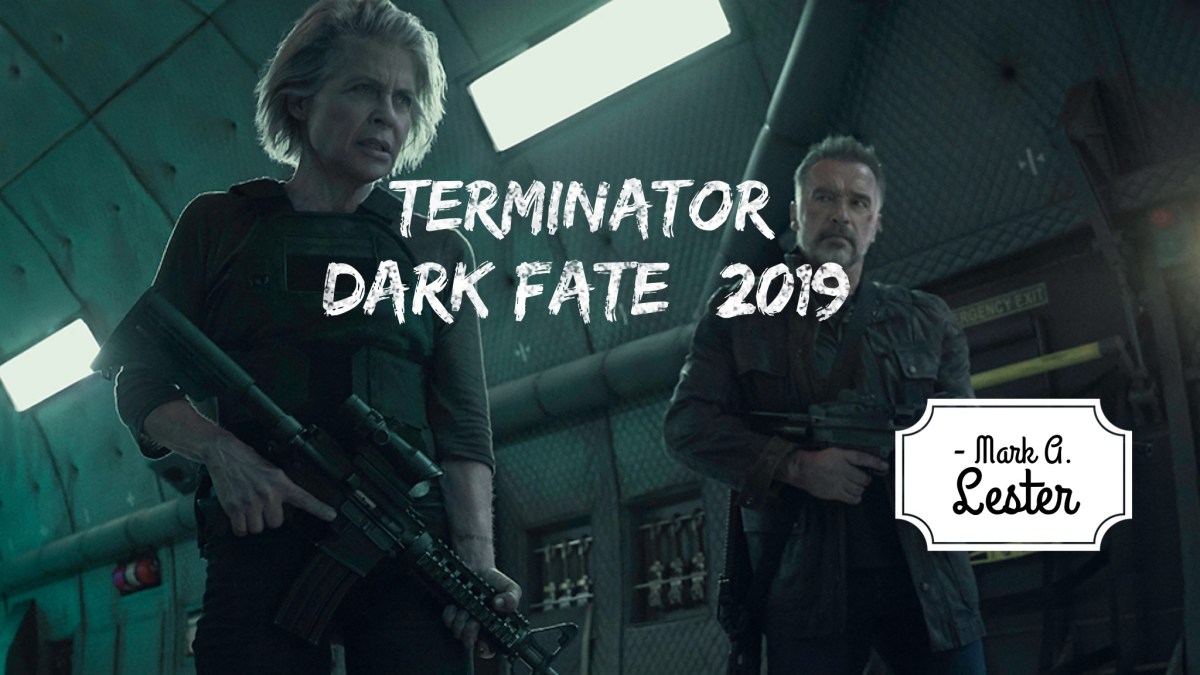
Terminator: Dark Fate (2019)

Going as far back as the 1927 German film Metropolis (by renown filmmaker Fritz Lang), we as humans have been exposed to the idea of robots (or cyborgs: I know there is probably a difference of some kind). Ever since, we have gotten examples ranging from the Cybermen of Doctor Who (of which I am a huge fan), 2001’s HAL 9000, and the Blade Runner replicants to the lovable animated robots of Big Hero 6 ‘s BayMax and the titular hero of WALL:E. Which leads us, of course, to the Terminator franchise.

The newest film, Terminator: Dark Fate, takes place after 1991’s T2: Judgement Day (which I would rank in the top five or so greatest sequels in the history of cinema), meaning it disregards the previous films, only one of which I have seen, 2015’s Terminator” Genisys (which was a disappointment to say the very least). After the success of preventing Judgement Day, we learn that Sarah Connor (Linda Hamilton) and her son John made it past that day in August of 1997, but that did not mean they were completely safe. The film opens with John’s murder from a terminator, leaving Sarah on her own. She lives live now gettting mysterious texts from a source letting her know when other terminators will enter her time line.

One such event occurs as she helps protect a young Mexican woman named Dani (Natalie Reyes) from a newly evolved terminator called a Rev-9 (Gabriel Luna), which is somewhat of a cross between the normal t-800 and t-1000 (except its liquid state is much darker and muddier). Sent back in time to protect Dani is Grace (Mackenzie Davis), who is somewhat of a machine but more on the human side. Before her arrival, Grace had a tattoo applied, showing her cooridinates that match those of the mysterious texter (though it is really easy to predict who it is).

Of course, being a terminator film, you have to have Schwarzeneggar, being this is the role that made him a household name (and, as a kid, made me believe robots/cyborgs were real). As always, he is perfectly convincing, even when he is saying lines that are hard for me to comprehend the silliness. Just as convincing is Hamilton, playing a character that has become synonymous with the idea of a woman you don’t mess with (the only one more intense would be Sigourney Weaver’s Ripley from the Alien franchise). She also has to face the idea of forgiveness towards a certain character, which is something not in her blood. Davis does a decent job of being a protector who becomes more friendly as the film progresses, and there is a fine character arc for Reyes as her Dani quickly goes from “What is happening?!?” to “Enough is enough”. Luna also does an okay job as the villain, though he lacks the amount of cold menace from the 1991 film given by the great Robert Patrick.

The time travel formula is basically the same as the original two (which is where I learned the effects of time travel): protect the past to save the future (in this film, the company that has made new forms of technology is called Legion, as Skynet is now just a word only known to Connor and the T-800). Unlike Terminator: Genisys, this film thankfully is easier to follow the time travel aspect (Genisys was, to borrow a line from Doctor Who, was too “wibbly wobbly” and “timey wimey”).

The action sequences are just basic, but sometimes impressive. There are other nice touches from the original films, such as car chases in actual vehicles, not just sports cars. It also takes place, for the most part, in just two days or so.

One of the more interesting aspects of the film is how the Arnie character has been living as a human (he goes by the name Carl, and works selling draperies. He has fallen in love (so to speak) with a single mother (Alicia Borrachero) and taken care of her son Mateo (Manuel Pacific). He has almost learned to have a soul, so to speak, though his relationship with his wife is not physical (“Does she know you weight 400 pounds?”, quips Connor). It is not entirely clear if Carl has developed a full imbodied soul, but he does truly know how to keep a family safe.

Parents, as is the case in the other films, there is some nudity (though it is not sexual here). There is still a good amount of violence and much swearing that makes this R rating what it is.

There is an intriguing line by Grace, after Sarah has mentioned what she had originally done in the previous films, which changed the future.

“You may have changed the future, but you didn’t change our fate.”

As humans, we are now more reliant (and, especially with cellphones, rather addicted) on technology than ever. Whether it will bring us to near extinction is up for debate. We as human beings are indeed supremely intelligent, but can we make intelligent beings that can think and feel for themselves? Comment below with your thoughts.

I am reminded of a joke from a minister. When scientists come to the conclusion that God is no longer needed, God asks if they are even able to make people from the dust of the earth, they say yes. Intrigued, God knows this is something he has got to see. When the scientists grab the dust of the ground, God quickly says, “No, make your own dirt.”

One thing that can be said is that, if we are in a future similar to that of the one we get in these films, what technology won’t be able to overpower is that of the human spirit, ensuring us that we will, in the end, be back.

Overall:
Rating: 3 out of 5.
Categories
4 Stars

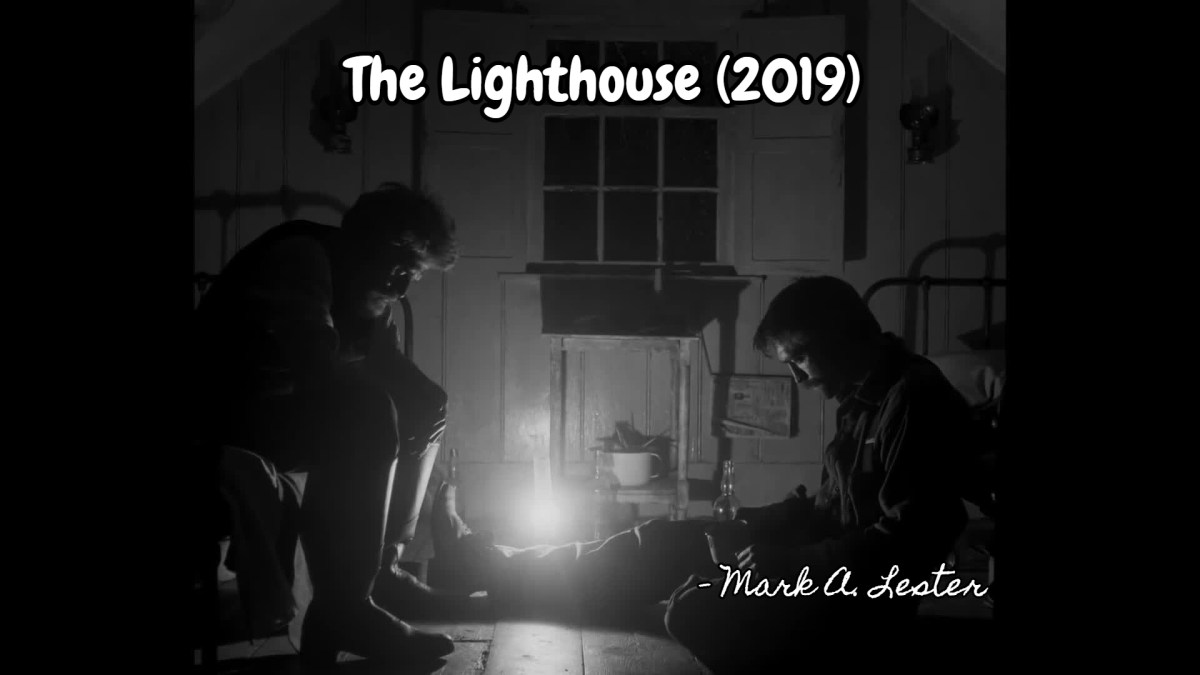
The Lighthouse (2019)

When I started my DVD/Blu-Ray collection as a teenager, one of my key rules was that the film had to be in widescreen format. I quickly realized that not all films were made in widescreen, but still preferred the aspect of seeing all the screen that I could.

The first thing one would notice about The Lighthouse (along with it being in Black & White) is that it is filmed in 4:3. This is a vital film choice from the director Robert Eggers (who made 2016’s The Witch), as it is one of many key factors that makes his latest film so chill inducing.

Set in the late 1800s, the film revolves around two men tending a lighthouse somewhere off the shores of New England. Most of the story is seen through the eyes of the younger Ephraim Winslow (Robert Pattison), who just took the job as a lighthouse keeper and is being trained by Thomas Wake (Willem Dafoe). We learn right away that one of Wake’s sincere orders is to never go to the top of the lighthouse and locks it up from Winslow.

Much of what Winslow learns is by the hard way (like cleaning the sewage before drinking from the well, how to deal correctly with seagulls (more on those later), and keeping the wind factor in mind when emptying the toilet bowls). While Wake is tough, he is not without reason (he does cook for both of them).

Not to mention the flatulence. This film has quite a lot of flatulence for a movie that is not strickly comedic.

I can’t remember entirely if the film has a concrete reason for the two to be on the island (aside from keeping it in order). We do get some background of the characters (failed marriages, failed jobs, and so on), but it is what happens on the island that is important. To say that cabin fever (or lighthouse fever?) ensues is a gross understatement. We get striking visuals (thanks in large part to the cinematography of Jarin Blaschke, who also worked with Eggers on The Witch) that make the film’s horror aspects more palpable than that of a film that tries to give us cheap jump scares. Eggers is patient in waiting to frighten us.

Both of the two actors are in top form. Dafoe has always been an actor who commands a unique force, and is never boring on screen. Still, I admit to being completely surprised by Pattison. Like many, I went in remembering this is the same guy from the Twilight film series (unseen by me), only to realize I had only seen him in one other film, Harry Potter and the Goblet of Fire, which was way back in 2005. I am not alone in saying I had my doubts when I heard Pattison would be the new film version of Batman, but now some of those doubts are dissipating.

Parents, this is indeed not a film for children. The film does have at least two main scenes with sexual content (as well as female nudity). There is a moment where (minor spoiler) a character is fantasizing about having sex with a mermaid (end minor spoiler). There is also a good amount of violence (especially at the end, with a truly haunting, visceral, yet somehow memorable shot), and swearing. Trust the R rating.

It is this fantasy aspect of the film, I think, that keeps the movie from being truly great. I am not sure if we needed all the fantasy aspects added, and instead just focused on the two men. Human’s diving into insanity (not unlike what we saw recently in Joker) is just as scary as the scenes we see involving seagulls (anyone who knows me is aware of my legit fear of birds).

I mentioned before how the film was shot in 4:3, giving a clear feeling of the characters being boxed in. There is indeed a sense of sheer loneliness, both for the men as individuals and together. It reminded me of moments in movies set in prison, when they would send the prisoner to “solitary”, or “the hole”. For a specific (or maybe not) amount of time, they are alone with only themselves and their thoughts.

And thoughts (mainly the sinful ones), is where horror can sometimes be birthed.

Overall:

Rating: 4 out of 5.
Categories
4 1/2 Stars Movies

Joker (2019)

One of the key aspects of the clown prince of crime was that we never really knew his backstory, which is why I was very hesitant (as I am sure others also were) to here we would be getting an origin story on a character that is possibly the greatest comic book villain ever (certainly the most popular).

In a sort of preparation for Director Todd Phillips’ (known for R rated comedies like 2009’s The Hangover) new Joker film,  I decided to revisit two films: one that was an inspiration to this current film and another that was one of the very first to galvanize the character in general. The former was Martin Scoresese’s 1976 classic Taxi Driver, about a man (played by Robert De Niro) who is basically shunned by the public despite wanting to “clean up” the garbage of the city. The second (and lesser known) was the 1928 silent german film The Man who Laughs, a story (from Victor Hugo) that tells about a man who has been surgically disfigured to always be smiling (I recently posted a picture of Conrad Veidt, the actor in the titular role,  to social media, and I still got friends saying that it is eerie, even over nine decades later).

The film opens in Gotham, where we meet a struggling Arthur Fleck (Joaquin Phoenix). He works on the side as a clown, as he keeps his dream somewhat alive of trying to be a stand up comic, like his hero, talk show host Murray Franklin (Robert De Niro). Arthur is indeed a kind man, but troubled to the core. We learn right away he has a certain disease (somewhat like tourettes) where he can’t stop laughing. It is clear that this laughter is desperately trying to hide unimaginable pain. Despite some nice co-workers, the only guiding light in Arthur’s life is his mother Penny (Frances Conroy), and the potential to go talk more with his crush in the apartment down the hall, single mother Sophie (Zazie Beetz).

The plot of the film is light and easy to follow, as Penny is trying to get Arthur to help her get a hold of her former boss, Thomas Wayne (Brett Cullen), who is currently running for Gotham Mayor. Yet the film is not about plot so much as it is about witnessing an tragic life event. In this case, it is the clear descent into madness that Arthur undertakes. The film will require more than one viewing, but the first viewing will undoubtedly be (as it was in my case) focused on one thing: the performance by Joaquin Phoenix.

The role of the Joker has been played by many actors over the years: Cesar Romero, Jack Nicholson, Mark Hamill (voice only, but still brilliant), Heath Ledger, and Jared Leto. Of those, Ledger is the one who has probably had the most impact (he won a posthumous Oscar for the role he had in 2008’s The Dark Knight). It is a role that demands to have an actor who is has the ability to be give a chameleon effect in their approach, and make us realize that we are not watching an actor (think of actors like Gary Oldman, Christian Bale, and my personal favorite, Daniel Day-Lewis).

Phoenix also qualifies, and is simply astounding in this film. He even is given more work to do than Ledger had. Ledger’s Joker was already past the point of redemption, and was a sociopathic madman. When we first meet Phoenix, we can’t help but sympathize with him at times, as someone who has been shunned from society and left to the wolves.

Parents, this is not a movie for kids. While there is mild nudity (the joke book that Arthur keeps is filled with some cut outs of naked models from magazines), it more than makes up for it in the swearing and violence. That is not to mention the exuberant dark tone the film even after you left the theater. High School and above.

There is no clear cut answer to what type of mental issues that Fleck/Joker has (though it is safe to say there are many). The real question is how we react to someone with these issues. I am not trying to excuse the actions he exhibits, but trying to understand why he does them in the first place. At the core of it all, Arthur just wants some guidance, a soul to connect with (Sophie is one example). When we push those who are “different” from us away, it damages them in ways we can’t imagine.

Most of the scenes do work, but some that fail (not sure we needed another rendition of the outcome of Bruce’s parents). One that caught me off guard was when Fleck goes to try and talk to Thomas Wayne, and encounters his young son Bruce (Dante Pereira-Olson). The jury is still out for me on this scene, but I would be lying if I said it did not give me goosebumps. I am sure there are a lot of people who will find this movie to speak out to them in some political way, but I was not looking at that. I was simply watching what happens when we forget to love our neighbor.

That, and one of the year’s best performances.

Send in the awards.

Overall:

Rating: 4.5 out of 5.
Categories
1 Star Movies

The Goldfinch (2019)

It was film critic Gene Siskel who normally would ask “Is this movie as interesting as the same actors having lunch together?” Had he lived to see The Goldfinch, the answer would be a short and direct no. With actors like Ansel Elgort, Nicole Kidman, Oakes Fegley, Finn Wolfhard, Sarah Paulson, and Luke Wilson, it can be safetly assumed that the making of this film would almost be riveting (not to mention some of those behind the camera). Oh how I wish these people were in a different movie.

Alas, that is not the case, and we are stuck with The Goldfinch, based off the 2014 Pulitzer Prize winning novel by Donna Tart (unread by me). The film starts in the aftermath of a (fictional) terrorist attack at the Metropolitan Museum of Art, leaving few survivors. One of which is 13 year old Theo (young talented Oakes Fegley), whose mother was killed in the attack. He is taken in briefly by an upper class family, the Barbour, and finds a somewhat newer mother figure in Mrs. Barbour (Nicole Kidman).We learn that one of the other victims in the attack was an acquaintance of a antiques dealer named Hobie (Jeffrey Wright), who takes young Theo under his wing as the young soul is more than intrigued by “old things” (not to mention Hobie’s adopted daughter Pippa, who also survived the attack and was catching Theo’s eye before the explosion). It is soon discovered by the audience that Theo has stolen a priceless artwork from the rubble, known as The Goldfinch.

He is soon taken away from his deadbeat dad (Luke Wilson) and his girlfriend Xandra (Sarah Paulson) to live with in the outskirts of Las Vegas. Though both seem loving, it does not take much to see that these two only want Theo for the money that his mother left him. The only light in Theo’s young life is his new friend Boris (Finn Wolfhard of Stranger Things and the IT films), a Russian immigrant (though he mentions he is from many places).

There is a lot (to say the least) jumping around in this movie, as we fast forward to an adult Theo (Ansel Elgort), who now deals in antiques, and finds pieces of his past childhood experiences, which were mostly nothing short of bad, as certain people of the past have died (and in tragic ways). It is melodrama cranked to the max. I forgot to mention how, when he first moved in with the Harbour family, Mrs. Harbour introduced him to a prescription drug that helped with the affects of the aftermath of the attack (PTSD I guess). This starts Theo into a drug habit that escalates even more when he meets Boris (whose own home life is chaotic with his father). The end of the film shows a crime caper of sorts, which legit makes no sense.

I am sure this film had all the best of intentions (and I am sure the book is great), but the translation from page to screen is not merely lost: it vanishes. There was a lot of source material to work from (I found out the book is in the 700-800 page range), but the film still drags on for too long. Sure, the run time is long (two and a half hours), but even films at that length don’t always seem to drag as much (the first film to come to mind that had about that same length of runtime is The Dark Knight, which never dragged on). The Goldfinch had me checking my watch constantly, and that started about 20 or 30 minutes into the film.

Parents, the film is rated R mainly for language and drug use. There is no sexuality (though it is inferred that some characters have slept with each other). High School and above.

The film is directed by John Crowley, who was at the helm of 2015’s criminally under seen gem Brooklyn. He is clearly a talented filmmaker, but even the best of them have flops. The one bit of light for The Goldfinch is (somewhat poetically) that the man behind the lighting (i.e., the cinematographer) is the legendary Roger Deakins, meaning the film is indeed wonderful to look at.

Toward the end of the film, one character mentions how some good can come from bad. It will be sometime before I discover what good has come from seeing this film.

Overall:

Rating: 1 out of 5.