Categories
2 Stars

Here (2024)

There has always been a special place in my heart for Forrest Gump.

It was always that “gateway” movie for me when I realized that movies are more than just kids entertainment (Disney or otherwise): they could also be for grown ups. While many a cynic may have dismissed it at the time (and in the following years), it’s straightforward charm has not diminished on all of us. That makes it all the more clear why marketers are pushing the new movie Here as one by the stars, director, and writers of the 1994 classic.

Regretfully, that is where the similarities end, as Here strives for the cinematic magic, and misses the mark by a fair amount. The idea of how this movie would be presented would have totally sounded like a wonderful idea at the pitch meeting. Based off of a graphic novel of the same name by Richard McGuire, the film is basically one long take from the corner of a living room (or where it would be in moments when we are in the past before the house was built).

Like many a Robert Zemeckis film, it is impressive on a technical level (each scene is interlocked with these blocks on screen connecting the different scenes/time periods). Also like many of his films, it stars Tom Hanks, playing Richard Young. He is married to Margaret (Robin Wright), who he has been with since High School.

The film decides to jump back and forth in time to other families, including time spent with the inventor of the lazy boy chair (David Fynn), a romantic pair of indigenous people (Joel Oulette and Dannie McCallum), a modern day African American family with a teenage son, and the times of Benjamin Franklin himself along with his family. And that is just to name a few of them.

I have no problem with a movie having multiple story lines and characters to follow, yet one of my main issues with the film is that each segment is on screen for no more than a few minutes, each one ending just before we are able to have any connection to the characters. It also does not help when the stories are not in any specific order, jumping both forward in time and backward in time as well.

As I mentioned before, it is impressive at a technical level, but not entirely. This is another film that uses AI to de age certain characters (mainly Hanks and Wright), yet it runs into the same problem seen in movies like Indiana Jones and the Dial of Destiny (2023) and The Irishman (2019). While they look younger, they don’t always move as a young person (there are also times when Hanks clearly does not sound young at all when he is supposed to.) The same cannot be said for Paul Bettany as Hanks’ father. Bettany is a good actor of course, but he barely seems to age at all in this film (both physically and in his voice).

Parents, aside from swearing (one F bomb), minor sexual content (no nudity), and thematic elements, there is nothing else to watch out for. Middle Schoolers and up would be fine (if it appeals to them).

Robert Zemeckis is indeed a very talented filmmaker, but his movies since winning Oscars for Forrest Gump three decades ago have not been able to match his earlier work. Since Gump, the only movies of his I’ve actually liked (that I have seen) are Contact (1997), Cast Away (2000), The Polar Express (2004), and Flight (2012). Again, good movies, but since Flight, he has not done much to be proud of (while I have not seen Allied (2016) or Welcome to Marwen (2018), I have heard not the best of reports about them). Mainly, I think I am still recovering from his abomination that was the 2022 Disney Live Action remake of Pinocchio.

I have nothing at all against movies that take place in a single location (who could dislike movies like Rear Window or 12 Angry Men?), but not when the idea of staying in one location (no matter how it is filmed) is the main selling point. I remember in the intro of his first Great Movies book, Roger Ebert talked about the masterful Japenese director, Yasujiro Ozu (who very seldomly moved his camera). Ebert mentioned about how, when a movie lover gets to Ozu (as all eventually do, he says), then one learns that cinema is not about moving, but about when to move.

By the time Here learns this, it is too late.

Overall:

Rating: 2 out of 5.
Categories
"Top Tens", and others Movies

Top 20 Films of 2019

Toward the end of 2019, only when looking back did I realize how truly strong of a year this was for movies. As I progress in life as a movie goer, finding the good movies becomes easier. I always equate it to picking raspberries when I was a kid: the better ones are not always out in front. As has been the case of the past few years, I have decided to do a top 20 instead of a top 10. Even with 20, movies shown above such as The Two Popes, A Beautiful Day in the Neighborhood, Pain and Glory, and Star Wars: The Rise of Skywalker did not make the cut.

So without further ado…

Cinephiles!…ASSEMBLE!

Categories
5 Stars Movies

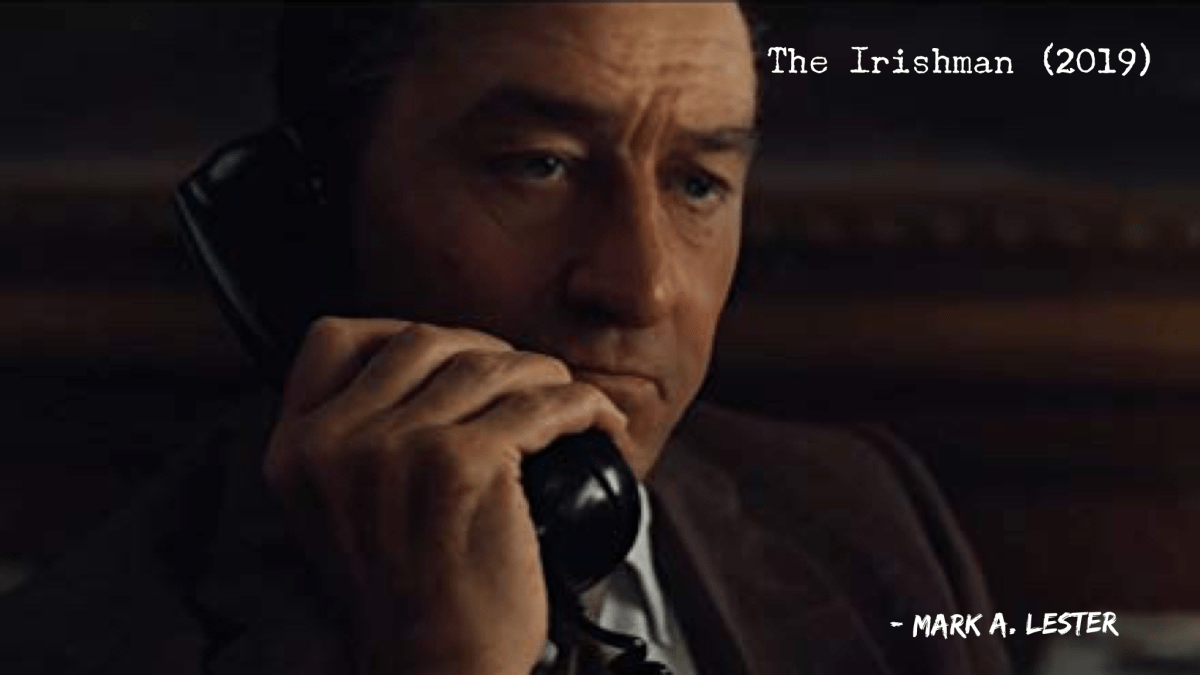
The Irishman (2019)

Last year, when Netflix released the masterful film Roma, it was clear they were wanting the Academy to take them seriously. While it did win a good amount of awards (including Best Director), it did lose the big one, Best Picture, to Green Book (a film that, while charming at first, may be destined to be forgotten as time goes on). Much of this had to do with voters not liking the fact that a movie on a streaming service would win the night’s biggest honor, hoping instead for the winner to be one that was released theatrically.

Somewhat ironically, during the same Oscar telecast, we got the first (and very brief) teaser trailer for Martin Scorsese’s The Irishman, the film I personally have waited for all year. Along with Scoresese, names like De Niro, Pacino, Pesci, and Keitel filled the screen.

 With Roma, Netflix was clearly swinging for the fences. With The Irishman, they are swinging for the parking lot past the outfield bleachers, which, bluntly put, is the result we get.

I admit that it takes me more than a viewing or two to totally understand even the best of mafia themed films, but I will do my best. The film tells the story of a real life mob hitman named Frank Sheeran (Robert De Niro, in his first Scorsese film in almost a quarter century). Towards the end of his life, we hear him narrate as he recalls making his way through the mob with the Buffalino Family, after encountering Russell Buffalino (Joe Pesci), Frank’s new employer who reports to the big boss Angelo (Harvey Keitel). Eventually, they make there connections with helping the infamous union leader Jimmy Hoffa (Al Pacino), the man now most famous for his mysterious disappearance.

There are others in the cast who fill their roles with uncanny professionalism, as we see actors like Jesse Plemons and Bobby Cannavale. Though the film is indeed a male dominated one, Anna Paquin does some of her best work in years as Peggy, one of Frank’s grown up daughters. Still, I was most delighted and surprised to see Ray Romano as Russell’s cousin who acts as Hoffa’s main attorney. I have always loved Romano ever since I saw Everybody Loves Raymond as a kid, but it never crossed my mind that he would be cast a lawyer in a Scorsese crime drama, much less be as good as he is.

The normal themes of Scorsese films are present. I am not just talking about the swearing and the violence. The master film maker has indeed been vocal about being influenced by his cathlocism, which is evident in his films (at least the ones I have seen). The thought of having one’s occupation take priority over one’s morality. The idea of characters feeling utter remorse after the act of sinning, and seeking forgiveness afterwards (similar to Raging Bull and Goodfellas).

Though The Irishman does stand as its own achievement, it probably has more in common with Goodfellas than any other Scorsese film. Both are about two separate men rising in the mob world, only to enter that aforementioned remorse at the end. Goodfellas did dive more into the “family” aspect of the mafia, as well as it being more biographical than The Irishman (which centers more on a part of life than the whole life).

Parents, there is no beating around the bush: the film is rated R for good reason. Even if there is no hint of sexual content (despite one or two times characters kiss), it is more than compensated for with the swearing and graphic violence.

It is not much of a surprise that the 2010s have not been the best of decades for either Robert De Niro, Al Pacino, or Joe Pesci (mainly since Pesci came out of retirement to do this film), at least when compared to past decades. That said, it is easy to say that it is the best any of them have been in years. Much of that credit should also be given to the film’s screenwriter, Oscar winner Steve Zallian (Schindler’s List, American Gangster, Moneyball).

We get a much more subtle De Niro than we are used to, but that does not make him any less affective. It is a little strange seeing Pesci being the authoritative figure to De Niro, but Pesci is just as brilliant even if he is not as bulldog crazy as he was in Goodfellas. The one with the most to do is Pacino. To me, Pacino has always been the only actor who you can always hear even if you put the mute button on. Here, he is not overacting because he chooses to, but because we sense that is how the character would be.

The three main lead actors are in their mid to late 70s, yet the special effects mixed with the superior acting makes us not think of anything but the story. The only flaw with the film (and it is as minor a flaw as can be) is that some moments do show the actor’s age (they can make the face look younger, but certain body movements do seem a lot slower for that young age).

One thing I have not yet mentioned is the runtime, which stands at nearly 3 ½ hours. Yes, that is a long time, but I assure you not one second of that is wasted. If the film seems slow, it is because it is patient in the storytelling (most notably in the last hour when we see Hoffa’s outcome. Nothing is on screen that does not need to be.

The Irishman clearly marked all of my expectations, and then some.

Overall:

Rating: 5 out of 5.
Categories
Movies

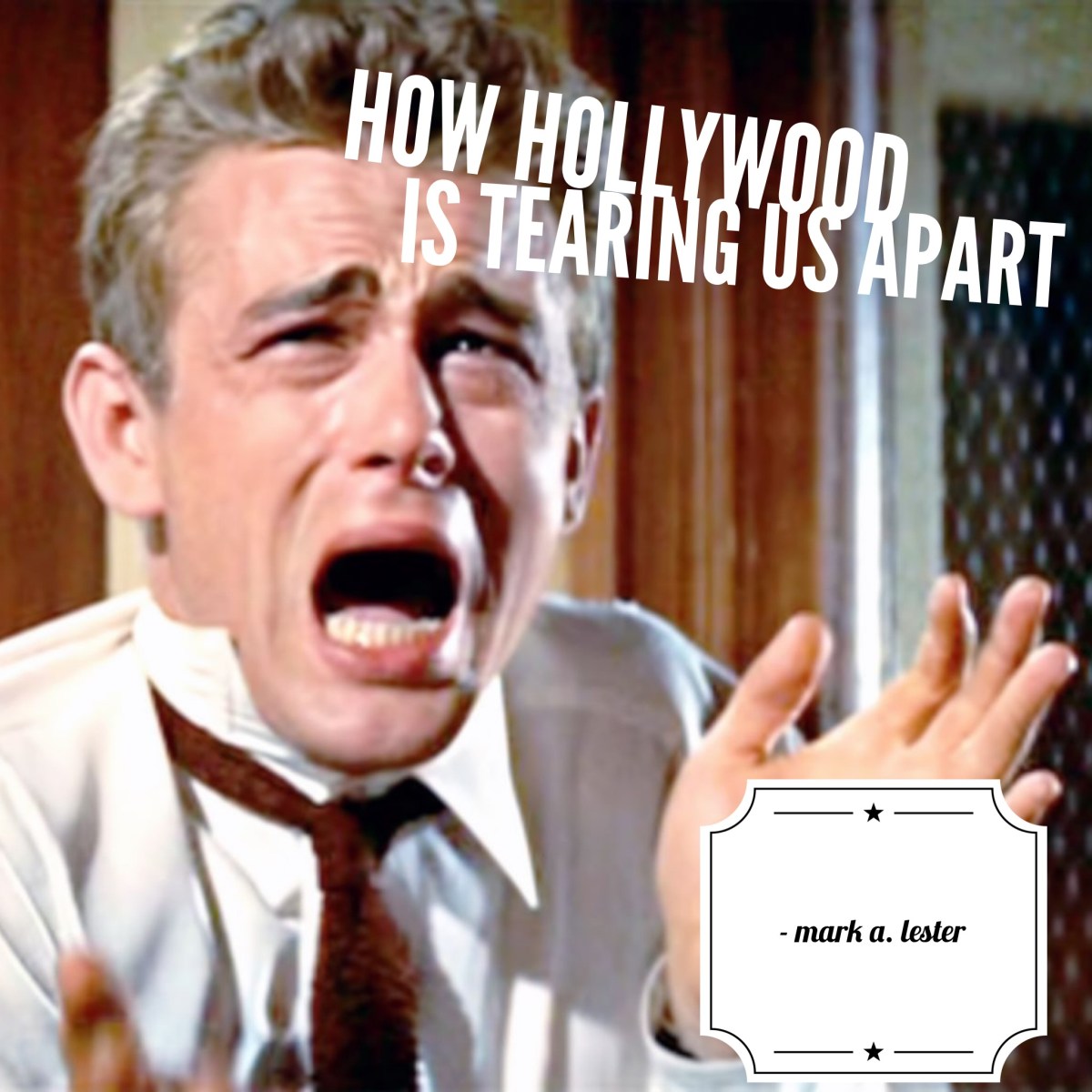
How Hollywood is Tearing Us Apart

In the history of film, no aspect of the movie making process is easier to see how far we have come than that of special effects. From 1903’s A Trip to the Moon to King Kong to Star Wars to James Cameron to the MCU, it is no secret that CGI is a key factor (if not the key factor) to a box office smash.


Back in 2008, the movie The Curious Case of Benjamin Button told the story of how the title character (played by Brad Pitt) lives a life in reverse: being born old then gradually getting younger. Since then, we have seen more examples of Hollywood using technology to either bring back actors to life, such as in Rogue One: A Star Wars Story, with the character of General Tarkin being brought back despite the fact that the actor, Peter Cushing, died in 1994. The same movie used the same trick with Princess Leia, played by the late great Carrie Fisher (from what I have read, this will not be the case for the upcoming Star Wars: The Rise of Skywalker). Actors are also now able to look younger, most recently with Will Smith in Gemini Man and with characters in Martin Scoresese’s newest film, The Irishman (unseen by me at this writing, though I have been waiting for this more than any other 2019 film).


However, this technology has taken a big hit of criticism last week, when it was revealed that a film would be made using this form of CGI to bring back James Dean to star in a movie.


If this is the first time you are hearing about this, I assure you it is not a joke.


James Dean, who died over half a century ago, will be “brought back” to star in a movie. This ranks up with the “colorizing” of old movies (in which Ted Turner made Black and White classics look like trashy coloring books) as the most ludicrous of Hollywood ideas.


Anyone even remotely interested in film history will have heard of James Dean. Born in Indiana in 1931, he starred in only three films: East of Eden, Rebel without a Cause, and Giant (the only one of which I have yet to see).

Though he lived to see East of Eden released, he died in a car crash at the age of 24 nearly a month before the release of Rebel (for which he is probably most famous for). He was the first actor nominated posthumously for an Oscar, then received another posthumous Oscar the next year (for East of Eden and Giant, respectively). The true legend of Dean was now born.


In the 1950s, he grew up when it was cool to rebel, and became one of the symbols of the term (the others would be Elvis Presley and Dean’s own idol, Marlon Brando). Like Brando, he brought a new type of acting to the screen (most commonly known as “the method”), making Dean seem more visceral and raw than others before him. Who knows what kind of career he would have had if it weren’t for his fatal car crash (he was a notorious fan of high speed racing).


His influence is clearly felt to this day (even The Room‘s Tommy Wiseau is a fan, hence “You’re tearing me apart, Lisa!”), or else directors Anton Ernst and Tati Golykh would not have had the idea to use him (well, his image) in their upcoming movie Finding Jack. Based off of a book of the same name by author Gareth Crocker, the film is about a Vietnam soldier named Fletcher Carson (Dean) who is recovering from a recent tragedy. Despite wishing to die in the war, he befriends a dog that brings his life new meaning.


According to the filmmakers, they did plenty of auditions for the role of Carson, but decided that Dean would be the only actor who could play him, despite the fact that another actor will have to voice the character.


There are a few instances where this has been used are far back as commercials in the 1990s, such as soda commercials involving Humphrey Bogart and James Cagney. During the 84th Academy Awards (the one that was sadly hosted by James Franco and Anne Hathaway), there was a segment when Billy Crystal came out to talk about the legendary Bob Hope as a projection of Hope was on stage cracking jokes. Though there was no real reason for this other than to show the technology (the image of Hope basically introduced the next presenters), I still found it cool (I mean, Bob Hope was arguably the greatest Oscar host of all time. Even Billy Crystal would say the same.) The difference is that was the performer representing themselves, not used to serve a work of fiction as some sort of puppet.


God gave us Artistic freedom, but I would argue that this is robbing others of their freedom. Not just the living actors who could perform these parts (the filmmakers said they auditioned many before they determined only James Dean could play the part, but since the Screen Actors Guild has roughly 160,000 members, I have some doubts), but also the director. Film director/icon Alfred Hitchcock said, “In feature films the director is God; in documentary films God is the director”.


Thankfully, the idea of digitally “reanimating” deceased stars is being shot down in the media. Captain America himself Chris Evans has called it “shameful”, as have others such as Dylan Sprouse and Elijah (“Frodo Baggins”) Wood. Perhaps the biggest opponent of the idea is Zelda Williams, daughter of the late great comic Robin Williams, pointing out how her father would not let anyone use his likeness of this sort for 25 years after his death (and if there is ANYONE you can not replicate, it is Robin Williams).


It gets even worse. A licensing specialist CMG Worldwide has combined with a creation studio named Observe Media to form Worldwide XR. According to their website, James Dean is just the beginning (they do plan on using his image more, using the shameless phrase “Think of it as James Dean 2.0”). They have plans for other celebrities, not just film stars like James Stewart, Ingrid Bergman, Dorothy Dandridge, Rock Hudson, and Christopher Reeve. From what I have seen, this would include people such as wrestler Andre the Giant, baseball legends “Shoeless” Joe Jackson & Lou Gehrig, jazz drummer Buddy Rich, and aviation icon Amelia Earhardt.


The idea of this is not only foolish, but borderline dangerous. I don’t just mean from a financial aspect (the cost of The Irishman was mainly related to the technology). It is bringing people back to life who more than likely did not know about this advanced tech in the first place (let alone any tech, for that matter. It is almost like necromancy for the 21st century.

Imagine if Jordan Peterson had his image taken, and someone was able to have him talk (or someone imitate his voice) about the wonders of atheism. It would be like me, someone who is five foot, made to look like I can out dunk Kareem Abdul-Jabbar.


It is as if the people in charge failed to remember the advice given from Jurassic Park in which Dr. Ian Malcom (Jeff Goldblum) argues about why bring dinosaurs back to life is a bad idea.


“Yeah, but your scientists were so preoccupied with whether or not they could that they didn’t stop to think if they should.”