When discussing the best films of the 21st century, there seems to be a near-universal consensus that 2010’s The Social Network must always be in the conversation.
While certainly a great movie (and comparatively better than The King’s Speech, which it lost Best Picture to), there is still this small voice in my brain thinking that it may be just a tad over hyped at times. When I did my list of the 100 best films of the 2010s, I had it at number 67 (6 7?! That was not planned). That placement is one of many of the absurdities of the list when I look back, but I still feel there are, simply put, better films that came out this century.
Perhaps this is one of many reasons why people feel sour towards The Social Reckoning 16 years later. While neither the original director (David Fincher) nor any of the original cast return (Eisenberg was apparently asked many times, but has grown tired of his association with the role of Mark Zuckerberg, and who can blame him), Aaron Sorkin has returned not only at the helm of the script, but in the director’s chair as well (cinematographer Jeff Cronenweth is the only other returning crew member from the 2010 film).
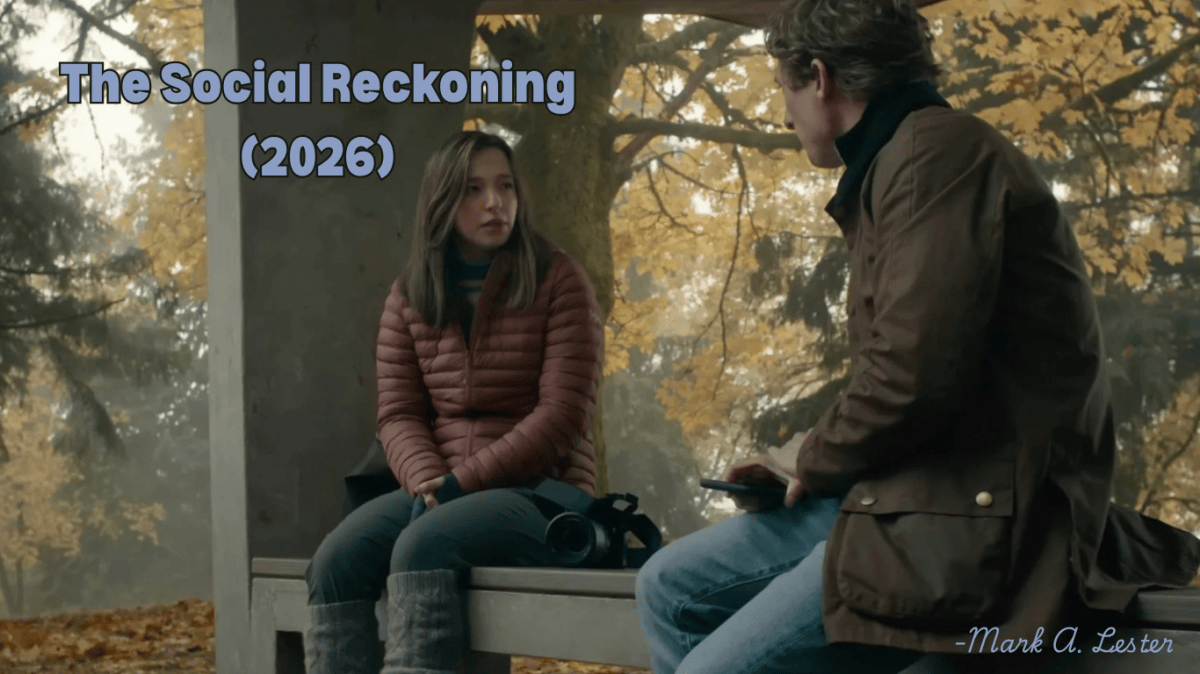
It is clear from the get-go that the film is more interested in informing us about the 2021 Facebook leak than any type of character study we saw in the original. That said, a part of me realized the film works not so much as a legacy sequel but more as a spin-off. After seeing a former friend post video proof of being radicalized, Frances Haugen (Mikey Madison, fresh off her Anora Oscar win) begins to question her position working at Facebook (she is still a strong believer in its core belief to connect people). She is the only one to respond to the many messages sent out by reporter Jeff Horwitz (Jeremy Allen White), looking for certain practices that have become harmful to the users of Facebook (even though he is very tech-illiterate).
There is a good amount of time jumping in the film, which I admit I can be prone to being confused by at times (there is a timeline at the bottom of the screen to compensate). This leads to behind-the-scenes scenes with Wunmi Mosaku, Billy Magnussen, and Bill Burr. All are there trying to guide the ways of the big boss Zuckerberg, now played by Jeremy Strong.
No other screenwriter comes to mind before Sorkin when I think of someone who has writing dialogue as their bread and butter. It is his directing I am still on the fence on. One can assume he picked up some tricks from others he has worked for in the past (Bennet Miller, Danny Boyle, Mike Nichols, and twice for the late great Rob Reiner), but I’ve yet to see any of them or (more importantly) any that stand out as Sorkian. Now, after four films, my patience is getting a tad thin.
As for the dialogue, his best work comes when two people are not just chatting, but going after each other. Obvious answers like Cruise vs Nicholson in A Few Good Men (1992), Eisenberg vs the cast in the original film, and Jeff Daniels vs Michael Fassbender in Steve Jobs (2015) come to mind (not to mention all the Sorkin dialogue on TV shows since the 1990s). It is the cinematic equivalent of hearing bacon sizzle on a greased pan. It is no wonder the scenes with the most electricity are little moments between Madison/White and (especially) Strong/Burr.
All the actors are on point here. Madison proves she is a generational talent, even after winning an Oscar (for a role totally different from this one). White gets almost a throwaway role as Horowitz, but it is one in which the story would obviously not work. Then there is Strong (a renowned method actor), who is absolutely locked in as Zuckerberg. He is not yet in the upper tiers with names like Pacino, De Niro, Brando, or Day Lewis, but he is not far from them.
Parents, the film is R mainly for language and some minor sexual content (there is one scene where an intern is called in just before she is about to sleep with someone). High School and above.
Speaking of the youth, there are a good number of facts revealed about what Facebook has done to users over the years in terms of mental health (adults as well). When revealed, my immediate reaction was that they seemed too low. Even so, when leaving the theater, I thought of an even bigger social reckoning: I’ve been a user of Facebook for more than half of my life.
Overall:

