Categories
5 Stars Movies

The Witch (2016)

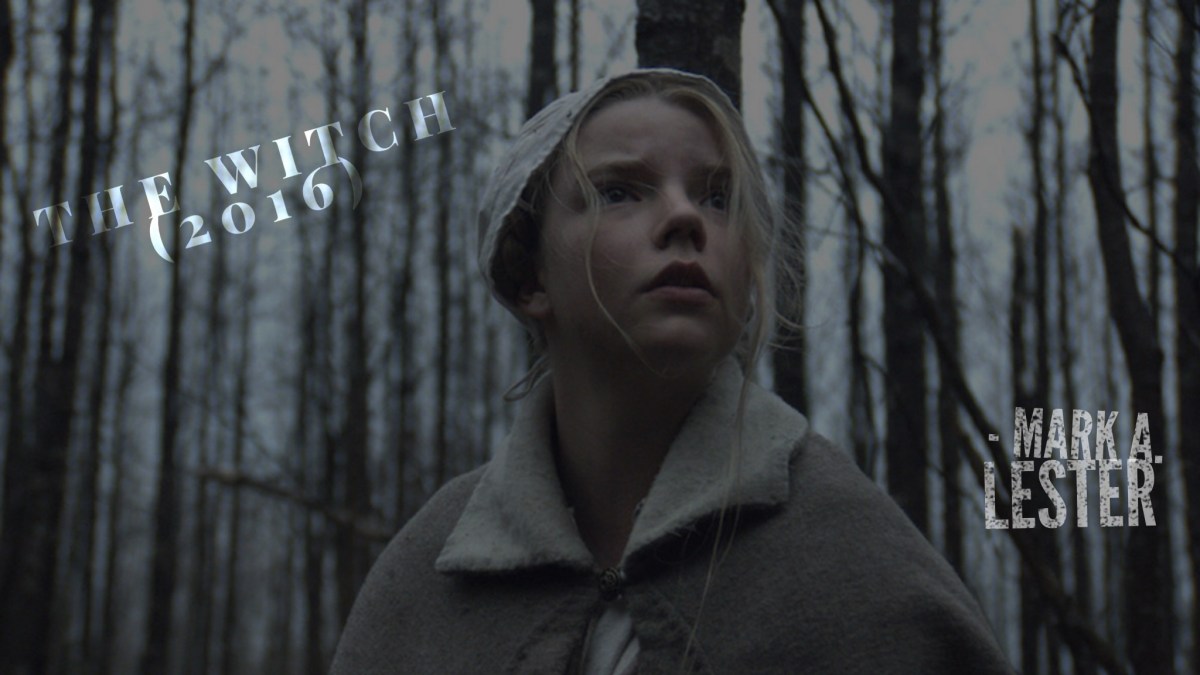
When it comes to paranoia, very few historical events are brought up before that of the various witch hunts (actual ones) that have occurred throughout human history (Salem being one of the most popular). I am not an expert (though I was rather intrigued when I did visit Salem), but it is hard to think that many of these incidents actually involved truth behind the accusations that were deployed. Of course, the fear behind the accusers would be more than understandable if they had been witness to the events of Director Robert Egger’s The VVitch, one of the best horror films of the decade (which has produced quite a good amount of horror classics).

Set in New England during the 1600s (a prime time of witch hunting), God fearing William (Ralph Ineson) and his Katherine (Kate Dickie) are kicked out of the local puritan village after accusing the villagers of being false Christians. Along with their five children, they set out to edge of the forest to start anew (“We will conquer this wilderness. It will not consume us.”). While it is clear that the family tries as hard as they can to be humble servants of God, things begin to slowly fall apart for them, as their newborn baby Samuel vanishes without a trace.

While the family believes a wolf had taken the baby, we the audience learn right away that it is indeed a witch (no real spoilers, since that is the title). What causes the sudden mysterious acts soon leads to the members of the family blaming each other, including Katherine, the oldest daughter Thomasin (Anya Taylor-Joy) and even the young twins Mercy (Ellie Grainger) and Jonas (Lucas Dawson). The only two who seem to start having a cool level head about it is William and his second born son Caleb (Harvey Scrimshaw).

The imagery of the film is terrifying (only amped up by the searing soundtrack). What Eggers does so wonderfully (alone with cinematographer Jarin Blaschke) is there is little to no added light to any of the scenes: it is all purely natural (which is fitting, since electricity was nonexistent at the time). When you revisit the film (if you are not too frightened), you can honestly almost stop paying attention the narrative and just look at the artistry of the landscapes and texture of all that is onscreen. It is said that there needs to be darkness in order for light to shine, and the example here is pitch perfect. In short, it is breathtaking.

One of the true hidden gems of the film is how the script (also written by Robert Eggers) uses the common speech of the times, yet it does not confuse us. When we hear phrases like “Wouldst thou…” and “thy”, we may at first be a bit uneasy (since no one uses those phrases anymore). However, it does not take us long to put that aside and realize that we not just watching some English pilgrims talking weird: we are watching humans experiencing emotions both relatable and terrifying.

When it comes to horror films, one of the crucial elements is the pacing. A close friend of mine (and horror film fan) told me that, while he likes this film, he thought it went a little slow. I told him I thought it was perfectly paced. While other cheap horror films try to give you a lot of “gotcha!” moments all over the place, the true great horror films build the suspense, and (as Hitchcock would say) play you like a piano.

All of the performances are highly affective, but the three that stand out are Ineson, Taylor-Joy, and Scrimshaw. Ineson’s William is indeed loving but still firm, making sure his family knows he will put God first in any circumstances. Though I have not seen him in anything since, Scrimshaw still shows talent beyond his young years (especially in one scene). Overall, it is Anya Taylor-Joy who steals the show, and is still showing promise of being a star in the making (since this film, she went on to star in 2016’s Split and 2019’s Glass, both by M. Night Shyamalan).

Parents, this film is High School and above, by far. There is haunting imagery that will scare people of any age, not to mention some rather graphic (albeit brief and mostly non sexual) nudity. Kids today may think of witches as something intriguing (no doubt due to Harry Potter), but this deals with the true horror of the nature of witches. It makes you realize for certain why the bible did say to stay away from witchcraft.

As the movie progresses, we find out that each member of the family has hidden sin to confess (even Caleb). For Christians, unconfessed sin is a bad thing, and something that Satan always will feed off of (not just a witch).  While God always wins over Satan, the movie shows what can happen when true evil takes over. That is the true horror of the film.

That, and the goat and rabbit. Those will plague you for sometime.

Overall:

Rating: 5 out of 5.

Categories
2 1/2 Stars Movies

It Chapter Two (2019)

I have often stated that, for one reason or another, I have yet to read a single Stephen King book, meaning I am not always sure if the films are entirely faithful to the material (thought it is wildly known that Stanley Kubrick’s The Shining was not, resulting in King vocally hating the film). It is true that most (if not all) film adapations will differ from the original source, so I feel compelled to judge the film as a whole rather than just how well the film was accurate or not. Whether or not IT Chapter Two is in the loyal category or not, the end result is still rather disappointing, especially since the first IT film two years ago was one of the better horror films of recent memory (I even went to declare it as the best film of 2017).

The film (directed by Andy Muschietti, who also directed the first film) opens twenty seven years after the events of the first film (2016, so modern day in some form), we see the return of the terrifying Pennywise (once again, played radiantly by Bill Skarsgard). We see that only one member of the Loser’s Club, Mike (Isaiah Mustafa) has decided to stay in the town of Derry, Maine (in flashbacks, he is played by Chosen Jacobs). He begins to call the remaining members back.

As expected, a lot has changed in twenty seven years, which is shown through a good number of flashbacks (where all the child actors from the original return). When last seen, young Bill (Jaeden Martell) was the leader and getting over his stuttering problem (let alone the death of his little brother Georgie). Now as an adult, Bill (James McAvoy) is a writer who seems to have problems coming up with good endings. Young Ben (Jeremy Ray Taylor) was last overweight yet still kind hearted. Now, the adult Ben (Jay Ryan) has clearly been working out, yet his heart is the same as ever (and still turned toward the one person who signed his yearbook twenty seven years ago). Ever the comic relief, young Richie (Finn Wolfhard) has grown up to be a comedian (played by Bill Hader). There is still the hypochondriac Eddie (James Ransone, who looks the most like his younger self when played by Jack Dylan Grazer), Stanley (Wyatt Oleff as a child, and Andy Bean as an adult), and, finally, Beverly (Sophia Lillis as a child and Jessica Chastain as an adult).

One of the shocking parts to me (which I believe was in the book) was that it takes the characters a good amount of time to remember the events of the past (with the exception of Mike, who, due to staying in Derry, has remembered everything). I guess it would make sense that, due to the oddities of Derry (“I’m kind of used to it by now”, Bill says), memories may have faded in time (all of us have faded memories as well). However, some seem to take a long time for the characters to remember (it does not seem to cross Bill’s mind for sometime that he once had a little brother).

It is said that, in order to defeat IT, each member must retrieve a piece of their past, which must be done by themselves. This results in the flashbacks to the parts of that summer when the kids were not on speaking terms (after Eddie broke his arm and Bill punched Richie in the face). While the first film showed how we have to face our fears, the second film dives deeper, as it shows we sometimes do all we can to bury our fears and insecurities in the past. Facing our past mistakes can be scary in itself (think of Moses).

While I know there are parts of the story that needed to be told, the film still runs too long. There are some moments that are well done, but don’t really drive the story at all. One main scene I can think of is with a little girl who discovers Pennywise under the bleachers of a local baseball game. The scene is well done and affective, but what does it add to the story? We already knew that Pennywise was taking bloodcurdling to the next level.

Another one of the flaws of the film was the return of a certain character from the first one. While I won’t give it away (and the new actor looked like this character would in the future so well I was borderline flabbergasted), I will say how this character manages to escape predicaments and interact with the other characters is too bizarre to take into account.

As was the case with the first film, the cast is practically pitch perfect. Everyone fits their roles like a glove (I read that, when the child stars were asked who they would like to play their roles as adults, both Finn Wolfhard and Sophia Lillis picked the performers who would eventually play them). We also get two nice cameos that I for one was not expecting at all.

Parents, it should not take much thought to know that this is not a film for children. The movie deserves its R rating, though if your kids did see the first film, they would probably be okay here.

One thing the sequel has more of is CGI, which tends to dampen the scares down a bit (though there are still a good amount of “jump scares” to go around). While the CGI is not bad in a sense, the very idea of seeing Pennywise in his true form takes away some of the imaginative properties we had going into the theater. There is a point in the film where Mike talks about how, sometimes, we tend to keep the memories we like and not the bad ones. That being said, I plan to remember the greatness of the first film and not a lot from the second film.

Overall:

Rating: 2.5 out of 5.

Categories
4 1/2 Stars Movies

Once Upon a Time…in Hollywood (2019)

Nowadays, I am to the point where very few film makers are able to still deliver me with shock and awe. Some of them are still working, like Wes Anderson, the Coen Brothers, Martin Scorsese, and, of course, Quintin Tarantino. With only eight previous movies to his (directorial) credit, his newest one, Once Upon a Time…in Hollywood, is one of his more (somewhat) subtle films, but is still nevertheless a borderline masterpiece, riddled with plenty of the expected humor only QT could provide.

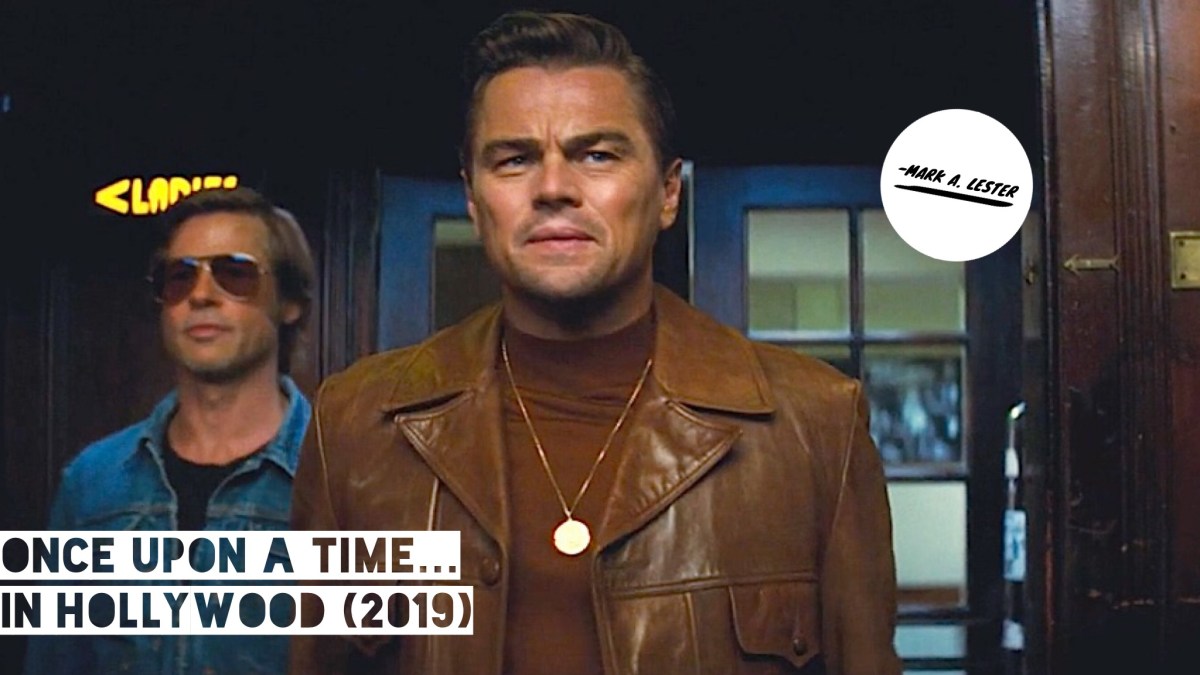
While the setting is in the title, the time is 1969. We soon meet former TV star, now fading movie actor Rick Dalton (Leonardo Di Caprio, who, like Tarantino, is in his first film in four years). Never feeling that the public has ever forgave him for leaving TV for film, he is heading for a mid life crisis. The only solid support he has is his stunt double and friend Cliff Booth (Brad Pitt). His dream of making it big are only escalated when he realizes he is living next to actress Sharon Tate (Margot Robbie), actress of filmmaker Roman Polanski (who would later go on to have his own dark history).

Of course, being a Tarantino film, the movie is not at all as simple as that. From lead roles to the smallest of supporting (more on the cast in a bit), every character is as deeply developed as need be. This can be seen especially when Cliff is paying a visit to the old Spahn Ranch, where he used to shoot old westerns. It has now been taken by the Manson “family” (“Charlie’s gonna dig you.”). Even those on screen with no lines seem like they have their own back story.

The old saying “There are no small parts…only small actors” has always applied to a Tarantino film. As to be expected, no one here gives a bad performance. Just a few of the actors include Dakota Fanning as one of the main Manson girls, Damon Herriman as Charles Manson, Bruce Dern as the old Spahn Ranch owner, Emile Hisch as Tate’s friend Jay Sebring, Al Pacino (!) as a studio executive, and the late Luke Perry (in his final role) as one of the actors on set. We also get roles from normal Tarantino faces such as Kurt Russell and Michael Madsen.

It also helps that (as in all his films), there are countless scenes that nearly live as their own small films (which helps when some of the scenes are about filming). My favorite involves the scenes between Rick and a young upcoming child actress (an absolutely delightful young talent named Julia Butters). The chemistry between her and DiCaprio is truly special. Yet the one who steals the film is Pitt. His unparralled charm and delicious line delivery are truly mesmerizing. He truly should get some awards consideration here.

Another key aspect in the film is what Tarantino may be better at then any other working director: a solid soundtrack. As someone who grew up listening to “oldies” (shout out to my parents), I can say that most of these are songs I had heard at one point or another, but forgot the name of (with the main exception being the use of Simon and Garfunkel’s Mrs. Robinson). We don’t get what would be considered “the best” of the 1960s, but we do get the perfectly placed songs in accordance with the story. These include hits from Paul Revere & the Raiders, Bob Seger, The Rolling Stones, the Box Tops, and Neil Diamond.

The relationship between DiCaprio and Pitt is the true heart of the film (Tarantino has said they are the most dynamic film duo since Paul Newman and Robert Redford.) We see this at the beginning as Cliff must drive Rick around, offering his sunglasses to Rick as he breaks down in tears. The only other real relationship Cliff has in the film is with his dog (love that dog). It truly brings out a cinema friend who “sticks closer than a brother” (Proverbs 18:24). The same could also be said for Proverbs 17:17: “A friend loves at all times, and a brother is born for a time of adversity”.

Parents, it is Tarantino, so there is virtually no way this film is for kids. Though the violence is somewhat toned down (at least compared to his other films), the scenes that do show violence is really graphic. Add in the language and the sexual dialogue (though there is no nudity, there is one scene with a younger teen in a car with an older character that is rather disturbing, even though it does not go anywhere further), and you have a movie that deserves its R rating.

Despite some minor flaws (there are some scenes, especially with Margot Robbie, that drag on a bit long), this is another Tarantino classic, proving that originality still exists in film. In my years as a movie goer, he is one of  the select few who (like Cliff) have stuck closer than a brother.

Overall:

Rating: 4.5 out of 5.
Categories
5 Stars

Roma (2018)

It should come as no real surprise that a lot of the original films by Netflix are not that good.

Some (at least ones I have seen and heard of) are pretty terrible. I would say that Roma is not one of them, but that is a putrid understatement. Here is one of the best films of this or any year, and to say it is not worth seeing because it is not in English or in color would show how shallow you are as a movie goer.

Categories
4 Stars

Blade Runner 2049 (2017)

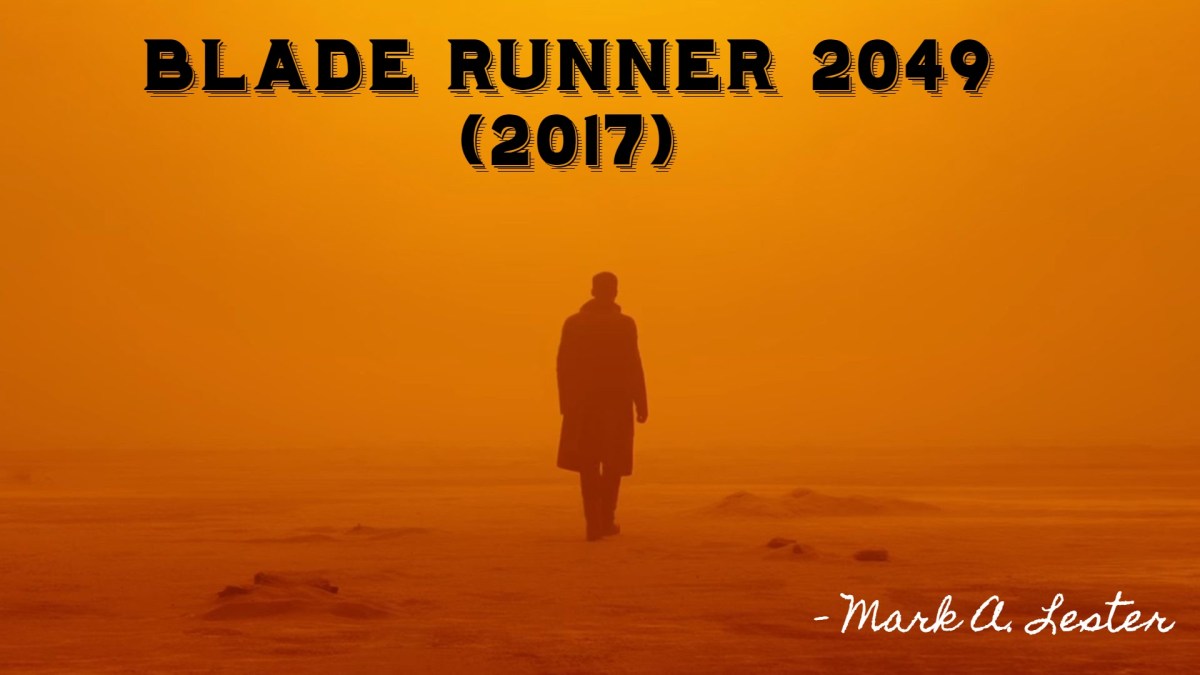
Despite some holes and question marks in the screenplay, Blade Runner 2049 still manages to be the best sci-fi sequel since 1991’s Terminator 2: Judgement Day.

It is a movie that challenges the mind and brightens your eyes with some of the most gorgeous imagery of recent years. I have only seen the original once, but I know that I have to return to get some answers (though not all the questions will have them).